
In what has been a long-term project involving multiple stakeholders, a research team has developed a new construct that they say better defines and measures teacher quality – one that encompasses various personal qualities alongside formal skills and qualifications.
Western Sydney University’s Dr Rachel White, one of the project’s leading researchers, says the study was born in the context of widespread ‘teacher bashing’ that was playing out across society.
“The catalyst was hearing years and years of people bagging out teachers,” White tells EducationHQ, “and just thinking, ‘well, where’s your evidence for that? What evidence do you actually have that says that teachers are terrible and not doing their job, or just not good at what they do’?”
The team contends that despite decades of research around the world on the ‘effective’ teacher, no set of standards to date has attempted to capture the full spectrum of teacher quality.
Taking aim at the Australian Professional Standards for Teachers (APST), the research asserts that these reduce the complexity of teachers’ work to “justify a focus on teaching and teaching practices”.
“A lack of support for the development of teacher qualities has led in many cases to teacher burnout, as the interpersonal labour of teaching takes a toll on teachers’ emotional capacity,” the team argues.
White says a shift in policy language is needed to more broadly consider the role teachers enact each day.
And while the APST do serve a purpose in their current form, she says, they fail to acknowledge the dispositions and personal characteristics that shape how teachers apply their expertise.
“We acknowledge that, yes, those [knowledge and skills] are definitely valuable, but what we then focused on was who the teacher is and how that influences the decisions they make about what they know about their students, what content they teach and how they teach it.
“So in that way, the teaching standards at the moment are restrictive, in that they pretty much almost exclusively focus on what teachers know and what they do…”
There is more to exceptional teaching than just possessing sound content and instructional knowledge, she emphasises.
“It’s not just that you go into a classroom, you know what you’re teaching, and therefore you’re a good teacher. It’s why are you making the decisions that you’re making? What level of resilience are you at? How are you being supported in creatively approaching your teaching, all of that kind of stuff.
“And that’s where the standards can be a bit restrictive, in that it doesn’t account for all of those differences that come into who teachers are that make them fabulous in front of different kinds of classrooms.”
Lead researcher Professor Alyson Simpson, from the University of Sydney, suggests that until now we haven’t formally recognised the ‘whole picture’ of teaching.
The profession at large has paid the price for this, she says.
“I guess what teachers would be feeling is they’re not seen as people. They’re seen as people who do things, but they’re not actually recognised for the values they have in terms of their capacity to self-reflect, which needs to be encouraged, their curiosity to learn more, their empathy, their skills and communication…”
AITSL has been a ‘stakeholder since the beginning’ in the project, Simpson reports, and is ‘very interested’ in the just-released findings.
“[AITSL] have acknowledged that whilst they wouldn’t change the standards completely, they are very open to looking at them to see, ‘how can we open them up more?...”
This is not about telling aspiring teachers that ‘you’ve got to be a nice, caring person’ to make it in the profession either, Simpson clarifies.
“That begins to reduce the complexity way too much.
“But [teaching] does require care, and it does require empathy and awareness of diversity, and willingness to be motivated and commit to something.”
As any teacher will tell you, the emotional labour of the job is intense and ongoing. This ought to be formally recognised, Simpson suggests.
“If you talk to teachers about being tired, it’s not just because they’ve got lots of marking to do and not enough support or free time and so on.
“It’s the personal energy that it takes to connect with every one of the children you’ve got in front of you.”
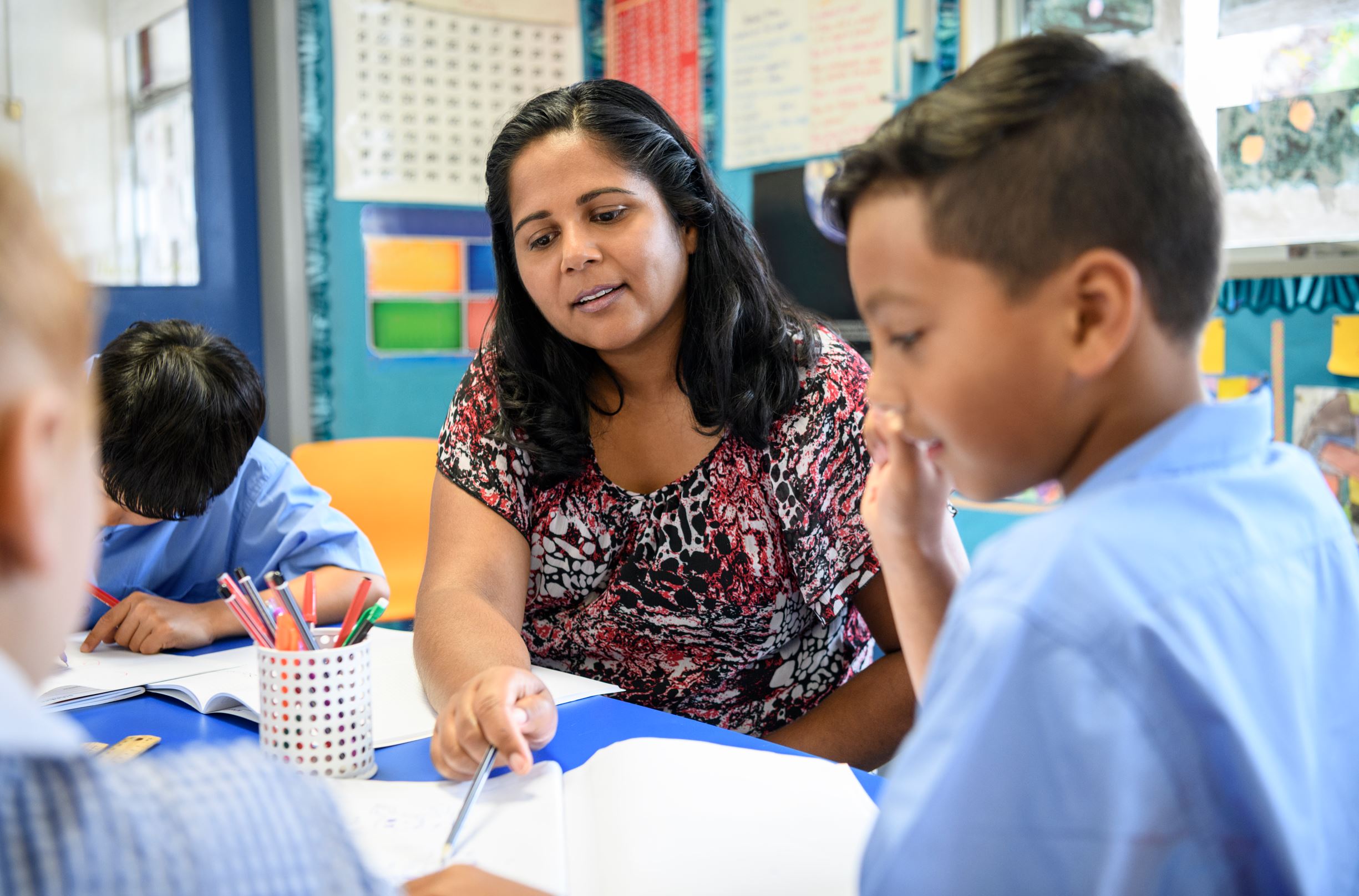
Broader claims of poor teacher quality in Australia are based on pure anecdote and not evidence, Professor Alyson Simpson says.
The research identified 50 indicators of quality that equate to teacher excellence, including traits which the team say cannot be taught in ITE courses or measured by student results.
The top ten traits of a quality teacher were found to include:
Reflection – deep thinkers who learn from experience
Resilience – able to work through challenges
Adaptability – flexible in the face of change
Motivation – driven to succeed and inspire
Respect – considerate of their educational community
Patience – understanding and tolerant
Clear Communication – skilled at explaining ideas
Collaboration – effective team players
Ethics – guided by integrity
Persistence – committed to supporting students over time
The new construct for measuring teacher quality (the ‘Teacher Quality Construct’) canvasses four key components: intellectual, interpersonal, affective and intrapersonal realms:
Intellectual: a teacher’s cognitive processing abilities and professional mindset.
Interpersonal: how teachers communicate and interact with others, understand alternative views in the community, but particularly with students.
Affective: a teacher’s capacity to be relatable or empathetic towards others.
Intrapersonal: a teacher’s ability to take personal responsibility for professional conduct.
Associate Professor Wayne Cotton says the construct “gives us an evidence-based foundation to reshape how we support and prepare teachers, from initial teacher education through to the professional development of principals”.
“If we’re serious about teacher quality, we need to look beyond content knowledge and focus on the personal and relational traits that underpin great teaching,” he says.
Simpson, meanwhile, hopes the development will alter how we deem preservice teachers to be ‘classroom ready’.
The Teaching Performance Assessment (TPA) – currently used to assess the quality of preservice teachers ready to graduate – could better recognise the holistic nature of teaching, she says.
“We hope there will be a very practical impact in the awareness of the profession that capacity building needs to take into account this part of being a teacher, as well as content knowledge and behaviour management and all the rest of it.
“Completely understanding, that yes, explicit teaching is needed. I’m not denigrating that. We have that as a given. It’s the people side of things [that needs to be taken into account].”
Broader claims of poor teacher quality are based on pure anecdote and not evidence, Simpson adds.
“Nobody has tried to reframe this concept of teacher quality in the way that we’re attempting. We’re just trying to crack the space open so that people will think differently.”
White would like to see more research follow on from here.
“What I feel like we’ve done is set a really, really good foundation for this area and for educators and teachers and researchers to take control of even just the phrase ‘teacher quality’, and to look at it and unpack it and explore it with a lot more nuance,” she explains.
The academic is keen to see the project’s impact unfold.
“I am so excited to see what kind of conversations this research is going to start, and how it’s going to change how teachers think about and talk about themselves – maybe even how the community, how society, how media, can perceive and talk about teachers and the work that they do.
“That’s what I’d really love to see happen.”