NSW public school students from Year 5 and onwards will have free access to the Department of Education’s app NSWEduChat from the start of Term 4.
Unlike similar platforms such as ChatGPT, the Department’s app does not give full or direct answers, ensuring security, privacy and equity while offering tailored content for the education environment.
Acting NSW Education Minister Courtney Houssos said the app will attempt to foster critical thinking skills by encouraging students to ask guided questions and reason on their answers.
“The development of this safe, curriculum-aligned tool shows the power of our public education system to deliver world-leading innovation to classrooms across NSW,” she said.
A trial of the app at 50 schools showed students most often used it for feedback on writing, brainstorming, the creation of study materials like quizzes, planning and structuring written responses, and as a virtual assistant.
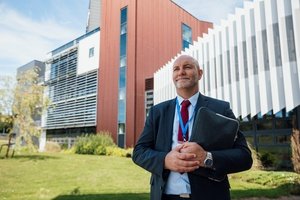
Hunter School of the Performing Arts principal Darren Ponman said schools across the state will benefit greatly from the tailored chatbot.
“I think it’s fantastic that the Department has jumped on the front foot and built a system with servers that are located here in NSW, and providing us with the opportunity to use all of the power of AI but in a safe way,” he said.
The Department said NSWEduChat can simulate many tasks that a human might perform but may not always be accurate.
A separate version of the app has already been made available to teachers.
Rebecca Hunter, a teacher at Irrawang Public School just north of Newcastle, said the app had reduced her workload at home and helped with resources. It has also helped her collaborate with staff.
“It’s asking other staff members things like, ‘what do you think would be a good prompt for this?’
“It allows me to access the success criteria, it outlines the outcomes, the indicators, what we’re looking for,” she said.
“It’s for my programming that I’ve been using it mainly, and for the differentiation in my program – so they’re still learning the same concepts, but it’s more suited to their abilities.
“It has given me back time that I didn’t have.”
School leaders, teachers and trained, experienced employees in non-teaching positions should apply professional judgement when using the app, the Department said on its website.
“Staff are expected to apply the safety and ethical checks outlined in our AI Guidelines.”
All NSW public school students in Years 5 to 12 will have access to NSWEduChat, our department-owned generative AI tool, from Term 4 Week 1 2025. This enables students to develop important AI & critical thinking skills in a safe & teacher-led environment. https://t.co/Eee7hZQqgW pic.twitter.com/gw94NsiX7m
— Murat Dizdar (@dizdarm) September 23, 2025
The app is based in the Department’s own cloud environment in Sydney. The data is secure, caters to the NSW educational context and aligns to the NSW AI Assessment Framework.
AI chatbots were initially met with resistance and many public school systems banned ChatGPT and similar apps during the first major wave of AI excitement.
But in 2023, education ministers from every Australian jurisdiction adopted a framework for the use of generative AI in schools, opening the door for ChatGPT’s entry to the classroom.
ChatGPT, however, has since come under scrutiny over privacy and content concerns. Its parent company Open AI is being sued by the family of a 16-year-old over allegations the chatbot encouraged him to die by suicide.
Houssos said NSWEduChat offers a safe environment for learners as it filtered content and secures their data.
The app incorporates several layers of security and optimisation features.
A ‘system prompt’ provides the context and boundaries of the platform, ‘jailbreak prevention’ scans user messages to ensure they are not trying to bypass established protections, ‘profanity filtering’ ensures that all language going into the bot and coming out is free from profanity and harmful language, and a ‘semantic content filter’ checks that the content the user provides is free from anything inappropriate.
Finally, an ‘orchestrator’ ensures that the most effective and efficient model and knowledge source is being used for each request.
The Department said student use of generative AI within department networks remains restricted due to concerns about data privacy, student safety, the potential for exposure to harmful or explicit content and content inappropriate for teaching and learning.
“AI tools and features are only enabled for student use on department networks when they have assessed against the Department’s Safe AI Ethics Assessment, deemed to meet the department’s safety standards and evaluated for pedagogical value and cybersecurity,” it said.