Chronic pain affects around one-in-five children and adolescents at some point in their lives, disrupting their education, social development, and emotional wellbeing, but while the impact on students is well documented, new research led by University of Technology Sydney PhD student Rebecca Fechner, has revealed that teachers are struggling to identify how best to support students who are suffering from chronic pain.
“Teachers are deeply committed to their students’ wellbeing,” Fechner says.
“But when it comes to pain, they’re often left to navigate complex situations without training or guidance, relying on instinct and personal experience.”
Children can experience chronic pain from conditions such as migraines, juvenile arthritis, or stomach pain, all of which can affect their learning and participation at school.
Teachers may need to manage issues like fatigue, concentration difficulties, social and emotional wellbeing, and the need for rest or movement breaks in the classroom.
The study involved interviews with 11 teachers across primary and secondary schools, and found that educators frequently feel helpless, emotionally drained, and unsupported when trying to respond to student pain, particularly when symptoms are medically unexplained.
It found one-in-four teachers have struggled to believe and respond to a student’s pain.
One teacher said: “I can only do what I can do based on my experience,” noting that managing student pain is common, but not something she has ever been taught.
Others spoke of sacrificing their own wellbeing to support students, working through lunch breaks, or losing sleep over whether they had responded appropriately.
“I wake up in the middle of the night, sometimes being like: ‘Did I say that thing right? Did I do that thing right?’” one participant said. “I just question whether or not I had done the right thing”.
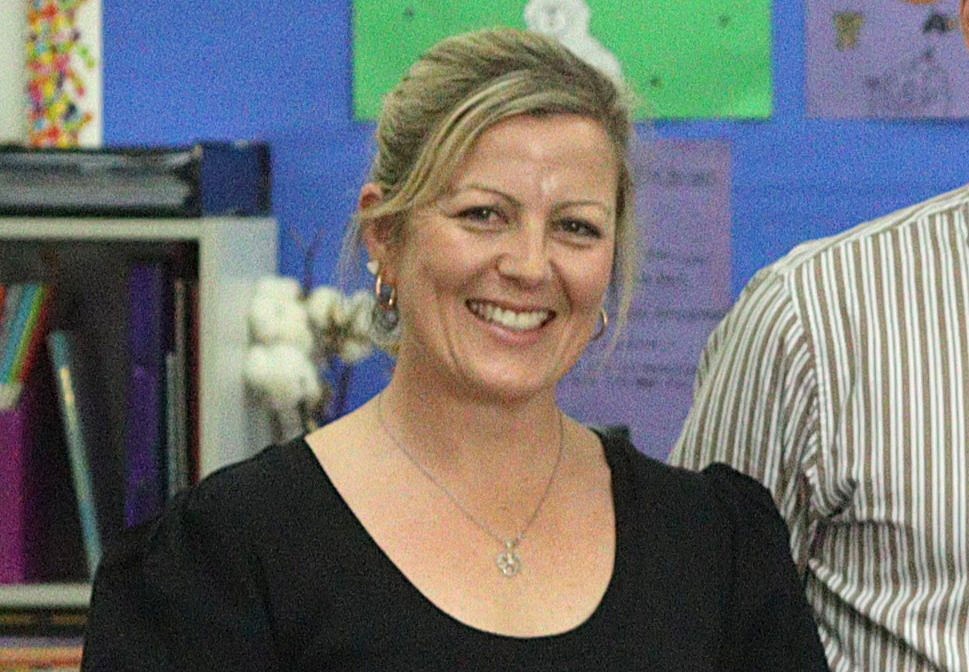
“It’s not just about teaching children. By educating teachers, we empower them to lead and inspire a new generation of students with the skills to better understand and support those in pain,” researcher Rebecca Fechner says.
Prior to her research, Fechner, a practicing senior physiotherapist who works in Queensland Children’s Hospital’s chronic pain clinic, was keen to learn more about her patients’ ongoing recovery in schools.
“I guess what I’d noticed is that dealing with the kids who have chronic pain, trying to get them back to school is a big part of treatment,” she tells EducationHQ.
“So the first thing we do is we try to engage them back in their school. Before I did my research, I realised that teachers play a big role in that, how they work with kids makes or breaks the success of kids reintegrating into school – and I just saw how hard that was. It’s why I wanted to do research about it.”
Fechner says systemic change has been hampered due to both the medical and education systems working in silos and not really recognising the role that each other plays.
“So from a health perspective, we know how common chronic pain is, but we look at it from a deficit-based biological lens.
“It’s only maybe in the last 15 or 20 years that we’ve done better at looking at from like a biopsychosocial approach, to really looking at the whole person.
“When it comes to teachers, I think that, from what I’ve learnt from education, is that they’re well ahead of the game in that they know that learning involves social, emotional and physical comfort and that kids can’t learn unless they feel well in all of those domains.”
Fechner suggests it’s likely that chronic pain hasn’t been recognised because teachers internalise things like how well a child is doing socially or how emotionally well they feel, because they know that it’s going to support the child’s learning, but don’t necessarily connect it to the chronic pain itself.
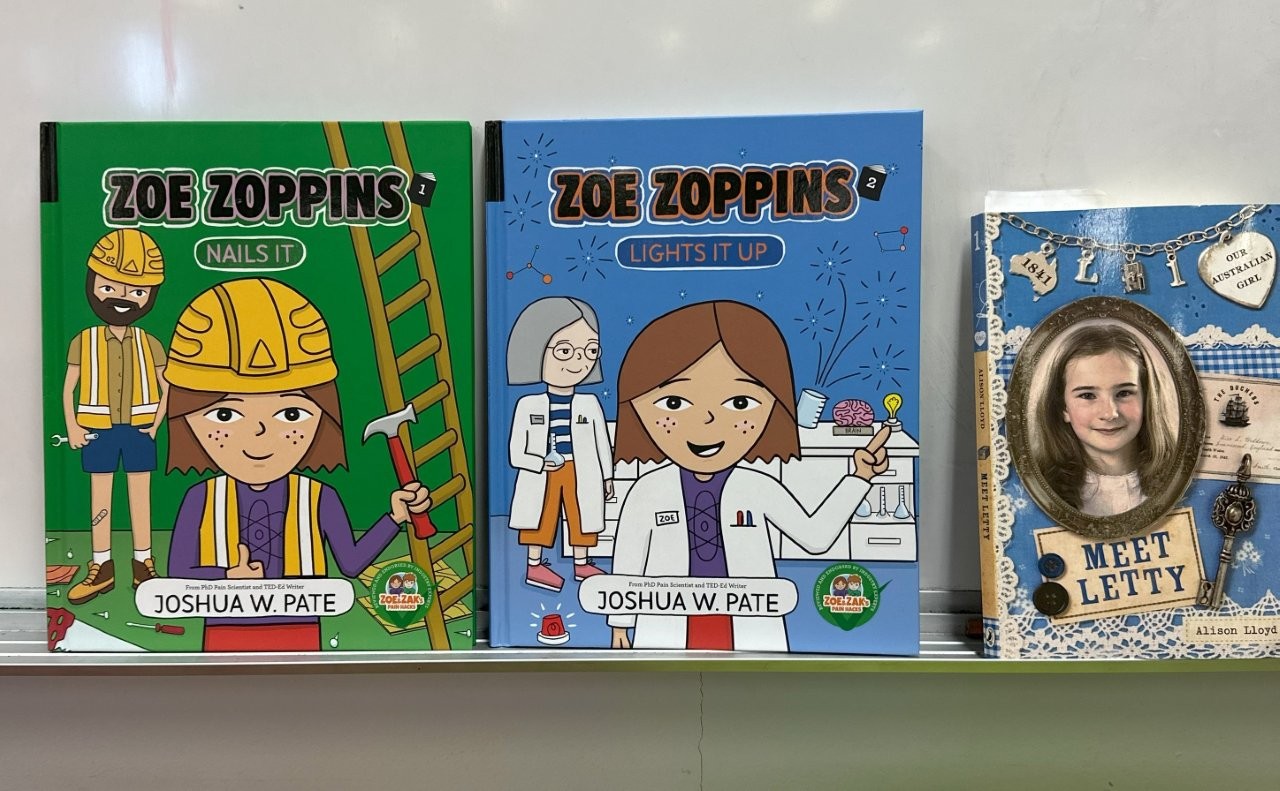
Author Joshua Pate’s series of five books, called ‘Zoe and Zak’s Pain Hacks’, helps children learn and talk about pain, because it can be a challenging subject for family, friends, teachers and health professionals.
The study shows that pain science education can create meaningful change for both teachers and students in several key areas.
Because pain is a social experience, student-teacher relationships can be harnessed with targeted training and as a result, positively change pain outcomes.
A collective understanding of the biopsychosocial nature of pain can optimise existing inclusive policies and supportive environments in schools, while misconceptions about pain, such as the idea that children exaggerate or that pain must be visible, need to be addressed through pain science education.
The study calls for pain awareness to be integrated into teacher training, school policy, and public health initiatives, recognising pain as a legitimate barrier to learning and empowering teachers to be part of the solution.
“Teachers want to help, but they need time, training, and support,” Fechner says.
“We must equip them with knowledge about pain science, and a framework to respond to their students with curiosity and validation.”
Pain is complex, but our response doesn’t have to be, Fechner suggests.
“With empathy, education, and collaboration, we can make schools safer and more supportive for every student and every teacher.”
Building on the findings of this study, Fechner’s PhD research explores how pain science can be embedded into the school curriculum through a teacher-led approach.
In collaboration with two pilot schools, one on Queensland’s Sunshine Coast and the other in Sydney, she has codesigned Australia’s first teacher-led pain science education program.
“The teachers designed the program, they were champions in their work, so that was fantastic,” Fechner shares.
“We spent 45 minutes introducing the concept and the neuroscience about how the nervous system works and the factors that influence pain, and then a further hour or so co-designing after that, and then they launched into how they thought that it might be useful in their health and science subjects.”
The program also encourages discussion of the social aspects of pain and helping students learn how to support peers.
“I think the Grade 6 kids started to see the potential for having a shared language, for understanding those really difficult parts of their identity that were emerging, like when we feel emotions in our body and we don’t know how to understand them, and how to express them and how to share them with each other,” Fechner shares.
“And then in the older grades, like Year 8 and 9, they were really looking to help them understand empathy and how to think and feel and have perspective for what other people might be feeling behind the behaviour that you see.”
Louise McCuaig, a teacher at the Sunshine Coast school that took part in the pilot, said it had been “really, really powerful” in helping change teachers’ response to pain.
“It’s giving teachers a much more complex and nuanced understanding of what seems to be an unexplainable response from a young child,” she told ABC News.
“It is really quite disempowering as a teacher when you’re really trying to support and care and nurture a child but you can’t understand why this pain is happening.”
Fechner says the next step is a hunt for funding to enable a larger scale trial.
She’s hopeful the program will eventually be implemented in the curriculum, to provide a shared language for understanding the body and mind in wellbeing.
“In the long-term, what we would hope to see is a change in stigma. So this will change adults being able to access healthcare in a different way without stigma for mental health or for chronic pain.
“And then the other thing is maybe even preventing chronic pain from occurring. One of the reasons that it occurs is stigma, so we’re hoping that that may change that in the long-term.”
Click here to read the research paper ‘Improving pain outcomes for children and adolescents at school via a socio-ecological public health lens: a strengths-focused interview study with teachers’.