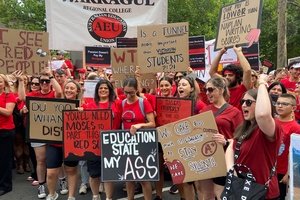

Members of the Queensland Teachers Union (QTU), voted overwhelmingly last Monday (July 28) to take protected industrial action for 24 hours to pressure the Liberal-National government to deliver on its promises to address the teacher shortage crisis.
The strike is the first since 2009, when teachers statewide took action, demanding better pay from the then Beattie Labor Government.
The union, which represents 48,642 members, has been pushing for workload reduction measures, nation-leading wages, along with steps to ease the shortage crisis, which is particularly affecting the Ipswich and central Queensland regions.
Ninety-five per cent of votes in the ballot were in favour of taking strike action and meetings across the state have strongly supported the action.
Estimates suggest more than 50,000 have walked off the job to rally at 34 locations across the state, with QTU earlier asking for the roughly 570,000 students at the state's 1266 primary and secondary public schools to be kept at home where possible.
Hundreds of teachers descended on Queensland parliament demanding “nation leading salaries”.
Opposition Leader Steven Miles was among a handful of Labor MPs joining the march.
“They were promised nation-leading wages,” he said.
“I think we have the best teachers in the country and they should be appreciated for it.”
At Palmview, on Queensland’s Sunshine Coast, where hundreds of teachers have gathered today, Leanne Young, 57, told the Courier Mail she was striking “for the next generation of teachers”.
“I’m reaching the end of my career but over the course of my career as a teacher, which started in 1989, it’s gotten harder,” she said.
“To keep good teachers in the profession, we need to support the young ones coming through.”
The industrial action follows 17 meetings between the Government and the QTU in the last five months.
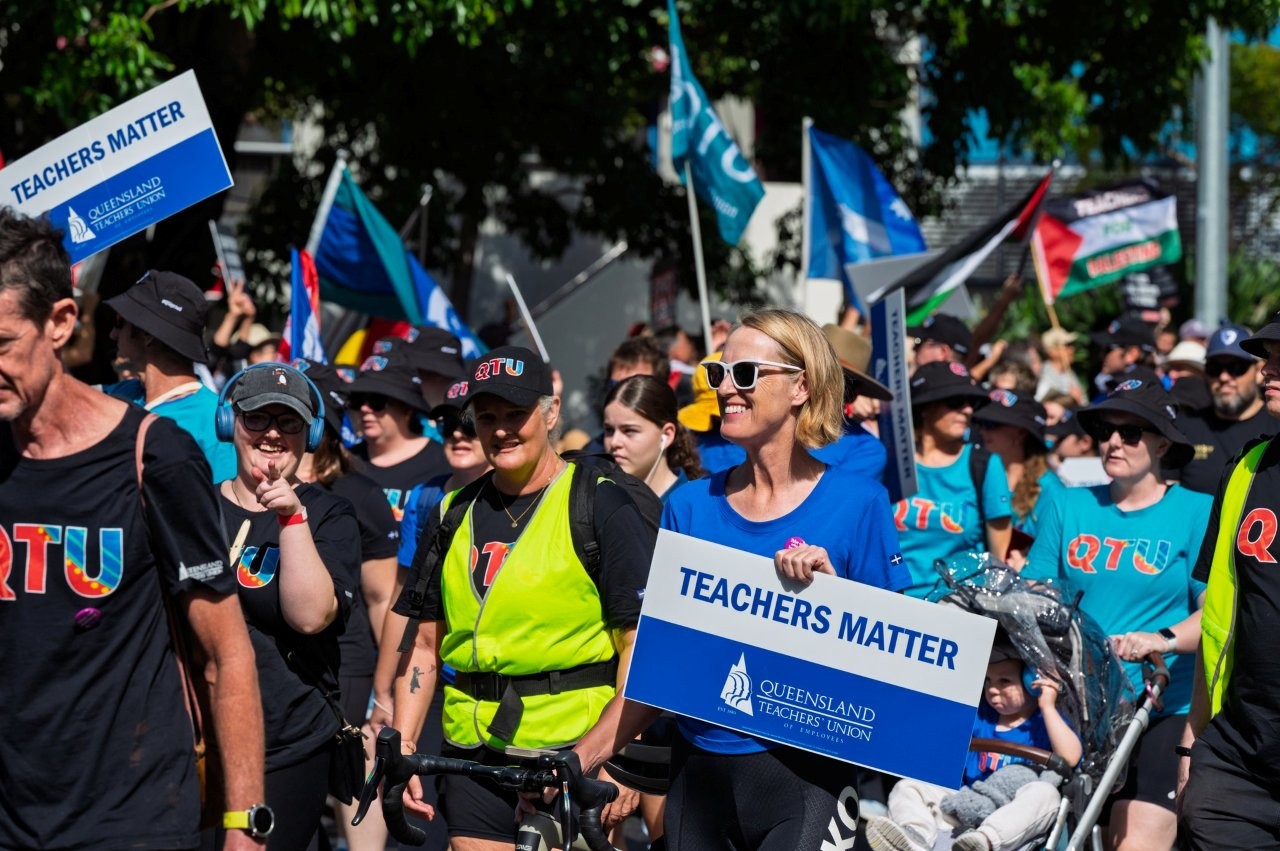
About 50,000 Queensland state school teachers are on strike today, with supervision - but no lessons - handled by non-QTU staff, for any children arriving. PHOTO: Facebook/QTU
The Government’s offer of three per cent, 2.5 per cent and 2.5 per cent salary increases over the next three years was rejected by the teachers union in June, sparking protests.
On Monday, Enterprise Bargaining Agreement negotiations for the teachers were referred to the Industrial Relations Commission for conciliation by the Government after a new deal could not be finalised.
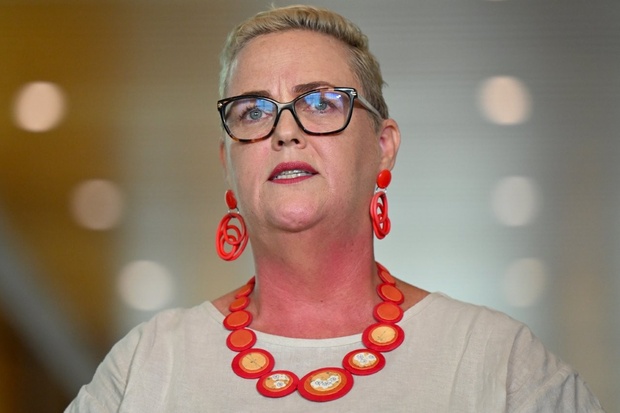
“The QTU looks forward to presenting its claim before the commission and urges all community members to support resourcing and funding state schools appropriately,” QTU president Cresta Richardson said.
At the start of July, QTU members came together for the union’s Biennial Conference, where Richardson said that not enough was being done by the Crisafulli Government.
“We have occupational violence and aggression; we have teacher shortages across the state; we have too much compliance and paperwork, and it seems we have a Government that wants to look the other way,” Richardson said.
“When mining companies want people to work out west, they pay them to come. Teachers often leave family and friends to take up these positions, and it’s time their hard work and sacrifices are recognised.”
On July 16, Richardson said the anger and frustration in the state’s rural and remote communities was growing by the day “as the Government wastes time short-changing” members.
“These members have genuine grievances, and they are not going away.”
“The Government’s offers fall well short across the board, whether its cost of living, conditions, or salaries.
“They just aren’t focussed on fixing the key issues, but we will make sure they understand.”
Queensland Education Minister John-Paul Langbroek said this week that the Government remained committed to finalising an agreement.
“The Government has requested conciliation through the Queensland Industrial Relations Commission to progress an agreement,” he said in a statement.
“Student safety will remain the priority on August 6, with principals set to inform parents about the strike’s impact on their school community.”
Meanwhile, Independent Education Union - Queensland and Northern Territory (IEU-QNT) said yesterday that it stands united with QTU members.
Branch secretary Terry Burke said because IEU members are not party to the state sector negotiations, they cannot participate in the strike action.
“While IEU members cannot strike on Wednesday, our members fully support the QTU member action in pursuit of greater professional recognition and respect,” Burke said in a statement.
“IEU members share the same unwavering commitment to ensuring professional wages and conditions for the teaching profession.
“IEU members understand state sector wage outcomes affect the broader education profession, including in non-government schools.
This week IEU-QNT members at more than 1200 non-government schools and early childhood education centres in Queensland are meeting to pass resolutions of support for QTU members and their strike action.
“When QTU members take action to protect the future of education in Queensland, IEU members will always stand united alongside them,” Burke said.
QTU has not ruled out further strikes, but Langbroek said this morning in a press conference that he wanted to reassure parents, teachers and students he was confident the Government could reach an agreement.