Identifying learning plans and differentiation that needs to happen for every students is vital, and thankfully many schools here in Australia have moved beyond offering one parent information evening or perhaps a taster day for incoming students to experience a day in the life of the secondary school timetable.
Some schools, for example, provide for leadership teams from feeder primary schools and their secondary counterparts to work closely with each other, where the secondary team might conduct interviews with all of the Year 6 teachers and start to spreadsheet the narrative for every single child.
Schools on the front foot offer a range of transition opportunities, where, using a learning management system such as Canvas, 24 hours a day, seven days a week, children, parents and teachers can access a mini-website, which is essentially a community where people can pose questions safely using DOE systems.
One school in Tasmania’s program includes short, three-minute ‘transition videos’ self-filmed by each Year 6 student, where the students confidentially answer eight questions about themselves, including what they’re worried about and how they learn best – and the videos are later viewed by the school’s transition team and their upcoming Year 7 class teacher prior to the start of the school year.
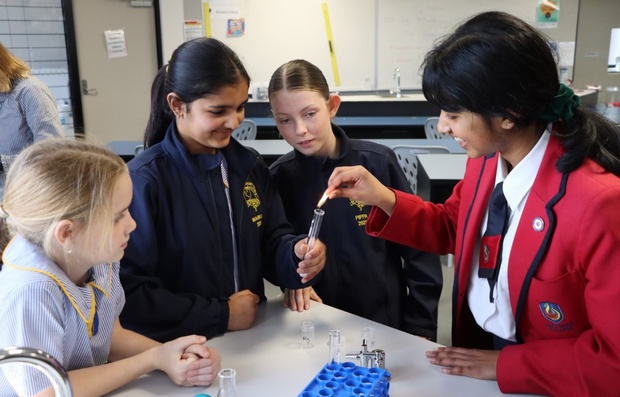
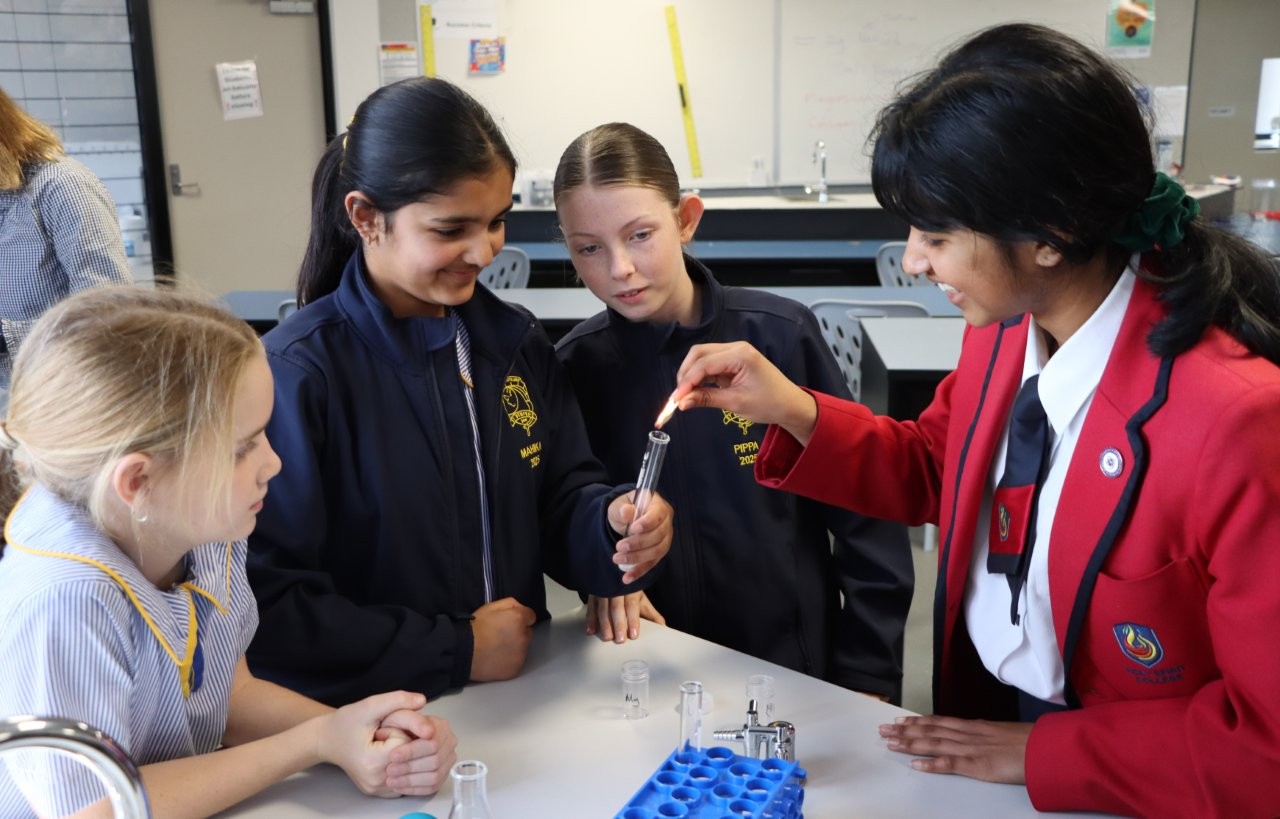
At Holy Spirit College Fitzgibbon on Brisbane’s Northside, the transition from primary to secondary school is taken very seriously with a strong program typified by a cutting-edge initiative that sees students unlocking the secrets of secondary Science, Technology, Engineering, Arts and Maths (STEAM) education before they even start Year 7.
Having opened in 2022, and master-planned to cater for 900 students eventually, the co-educational school’s acting principal Andrew McEwan says a high priority for the college in the last four years has been creating and building connections with surrounding primary schools, while also finding a way to support neighbouring Brisbane Catholic Education (BCE) students as they transition from primary to secondary school.
“It really has been a launchpad to success in secondary school,” McEwan says.
“When developing our college’s Primary School Transition Program for Year 6 students we had to consider, ’what does a graduate of 2027 and beyond look like, what future skills will they need?’
“For us, it was a no-brainer to develop a STEAM transition program.”
“Not only will students need STEAM knowledge and skills for their futures, but it’s also the foundation for many secondary subjects .... especially as students near Year 11 and 12.”
The BCE schools currently participating in the program include St Flannan’s School, Zillmere, St Kevins School, Geebung, St Joseph’s Catholic Primary School, Bracken Ridge, St Dympna’s Parish School, Aspley and Sacred Heart Primary School, Sandgate
McEwan says the benefits of the program are many.
“Through engaging students in STEAM exploration prior to their entry into high school, they learn to not only make sense of the world around them and develop context for what’s ahead in secondary school, but they also have the opportunity to build connections, familiarity, and identity within our college,” he explains.
“The program also allows our educators to see what knowledge students already have in STEAM, so when their first day of secondary school comes around both staff and students feel prepared.”
McEwan adds the program is a reciprocal partnership between schools.
“The program is also an opportunity for BCE’s primary educators to shadow our educators, see our teaching practices in person, and pick up techniques that can build independence in Year 6 learners as they prepare them for secondary school,” he says.
“Primary educators can then take these practices in their own Year 6 classrooms helping learners build the critical thinking skills they will need in secondary school.”
McEwan says, importantly, transitions are not exclusive to any one year group.
“We engage with our parent community from Year 3 onwards, touching base with families throughout the year and engaging students in a variety of activities that get them interested in secondary education,” he says.
“We also have students who start in the later years.
“Every transition is unique and our college will continue to work with families to ensure the transition to Holy Spirit College is as seamless as possible for our students.”
As part of the program, students from the school have also been selected for the University of Queensland Science Ambassador program, which saw them mentor in STEAM.
For example, a science exchange with St Dympna’s Primary School allowed Holy Spirit College students to lead and engage Year 6 students as a part of this transition program.
“Our Year 8 and 9 students also worked with Sacred Heart Primary School Year 2 students to innovate and apply Visual Art techniques to the co-creation of a mural,” McEwan says.
“The mural focuses on environmental sustainability and Pope Francis’ Laudato Si’ encyclical, promoting care for our common home.
“Our senior phase students supported the St Kevin’s Primary School ’Spotlight on STEM’, highlighting knowledge and skills learned from the innovative curriculum offerings at the college, while also developing a passion for STEM in primary school students.”
Ever mindful of improvement, Holy Spirit College will continue to build on and expand its transition programs in 2026.