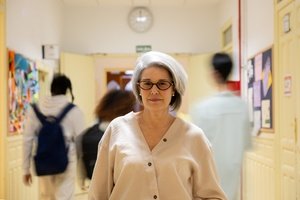
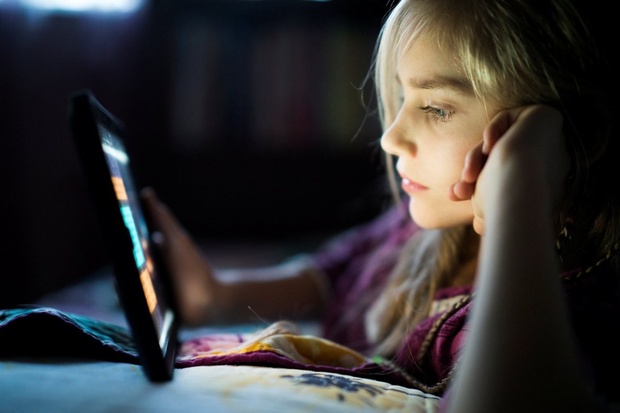

Dr Susan Rook lectures in literacy at RMIT’s School of Education, and says while the social media ban by itself will not “wave a magic wand”, she hopes that without the constant distraction of TikTok, Instagram, Snapchat and more, children’s mind space might be freed up to dive into more reading.
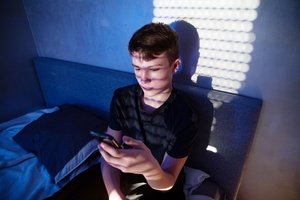
“Social media is quite addictive and as a young person, you are almost fixated with the number of likes that you get or making sure you’re not missing out on something, which makes it therefore, hard to focus on a book, for example, because your mind is elsewhere,” Rook tells EducationHQ.
“Social media is one of the many competing attractions for children, so by removing that barrier, we can hopefully use this opportunity to encourage more children to read.
“This is so important, as when children read for pleasure, it’s shown to address social inequity and helps to develop empathy, better wellbeing and raises employability prospects for those children.”
Rook, who until midway through 2023 was a senior literacy lecturer at Leeds Beckett University in the UK, and before that spent 15 years as a primary teacher, says Australia’s libraries, including school libraries, are ‘amazing’.
“Schools are making sure that we’re keeping up with current titles, with what children want to read, and giving children, particularly I think in schools, the opportunity to talk about what they read so they feel part of the reading community.
“It’s something (literacy socio-cultural researcher) Professor Teresa Cremin really argues for, of building that time in schools where children have a chance to just socially chat about books – so they feel that they’re part of a reading group, that it’s OK to like books and to recommend books to each other.”
Rook says in response to the digital age and the amount of reading kids do online, teaching literacy has morphed and evolved with research and advancements.
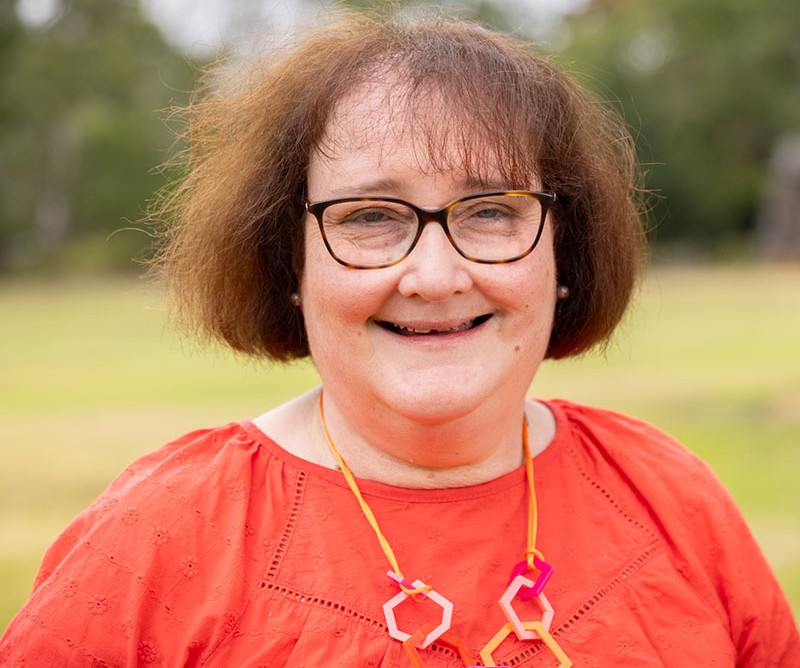
“We should be ensuring school curriculums promote reading for pleasure,” Dr Susan Rook says. “There is a real impetus among policymakers, schools and communities to push this agenda.”
Research from Deakin University last year showed that almost 30 per cent of school students did not engage with reading in their free time.
“At RMIT, we look at the importance of reading for pleasure and how to build a reading for pleasure culture within the teacher’s classroom,” Rook says.
“We look at the importance of knowing what the children in your class enjoy reading and where and who they like to read with.
“So we get all of our pre-service teachers to make what we call a ‘reading river’, their own personal reading journey, where they reflect on the books they liked to read as a child, what they’re reading now, where they like to read, etc – and we talk about how they can use this with their own class to get each child in their class to produce their own reading journey.”
This way, Rook says, the teacher has in-depth knowledge of that child’s reading habits and can assign texts that appeal to that child.
“That’s really important. We also look at the importance of a teacher being able to select a text to use in class that appeals to the children in that class and how to plan around that text as well.”
Despite the stats and technology’s rapid evolution, Rook is optimistic reading will remain an important and ongoing pastime well into the future.
“Reading is one of life’s great pleasures. There’s nothing more pleasurable than curling up on a sofa on a rainy afternoon with a good book,” she says,
“And that good book could be on a Kindle, it could be on an iPad, you know, it could be a hard copy of the book.”
Rook says it’s also important that we recognise the different forms of reading.
“It’s important we just don’t think of reading as a classic chapter book.
“Looking at websites is reading, reading a newspaper online is reading, or graphic novels, comics – that is reading.”
In her own research, Mook says she has used postmodern picture books and the children have “absolutely loved them”.
“They’ve been so engaged in them,” she shares.
“They’ve really actively sought meaning from them. So again, it’s not dismissing picture books for older children as well.”
Rook’s work often involves working closely with partner schools to implement creative pedagogies into the teaching of reading and she has a passion for drawing upon a range of creative pedagogies.
“I use a lot of drama in conjunction with reading a text, so children are quite active in seeking out meaning and they have agency in seeking out meaning.”
She says having taught for many years in the English system, where “reading is taught in a very teacher-directed manner”, she loves that reading is taught more creatively here.
“I really like, particularly with the Victorian curriculum, the emphasis on visual and multimodal literacy, that’s mostly missing in England.
“And I hope we can hold on to that so we can see reading comes in different forms. I think that’s really crucial.”
Renowned Australian child and adolescent psychologist Deidre Brandner says reading that happens in schools should be separate to reading at home, since both serve different, yet equally important, purposes.
“I completely agree. Obviously there is a technical vocabulary related to teaching phonics and that can be quite alienating to parents,” Rook says.
“And I think really it’s really crucial to involve parents in that process.
“When I was an equivalent of a Prep teacher, we would hold reading workshops for parents and we would explain how we were teaching phonics to the children and some of the vocabulary that they might start to say at home [so they had] that understanding [and] they didn’t feel alienated from it.
“So I think reaching out to parents about how reading is important in schools now is crucial, that it is a partnership, very much a partnership between school and parents.”
Rook says parents have a critical role to play, particularly with reading stories at home, because children will only be motivated to want to read, to want to pick up a book and read it, if they’re presented with enjoyable stories.
“And so to do that we need to expose them to really good, exciting stories, real books, so they develop that desire to want to read.
“So it’s just asking parents really, and I appreciate how busy parents are, how difficult this is.”