
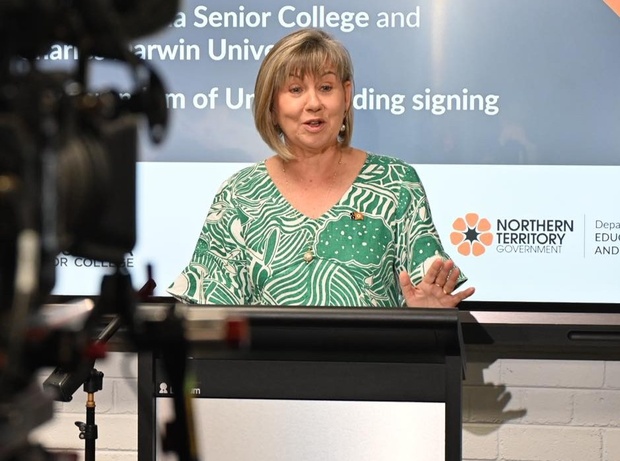
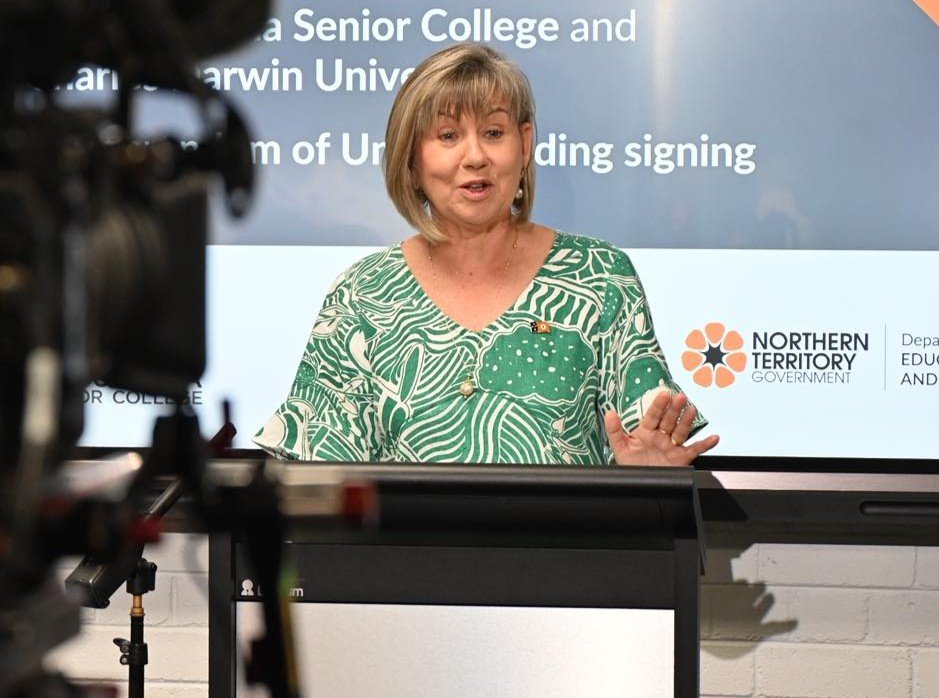
Education Minister Jo Hersey announced the Territory Government’s policy mandating public school anthem singing on Tuesday.
“We are Australian, and in the Northern Territory students will be taught what it means to be an Australian and to be proud of their country,” she said in a statement.
National anthem protocols make no mention of Advance Australia Fair being sung in schools.
Under the NT policy, students will learn about national symbols such as the anthem and what they mean to the Australian identity through the civics and citizenship section of the Australian curriculum, with singing Advance Australia Fair taught through the arts section.
Hersey said singing the anthem is mandatory in public schools while Welcome to Country practices remained at the discretion of individual schools.
Under the policy both verses of the anthem are to be used, sung in English with alternative words not allowed and students expected to stand while singing.
Hersey said she wanted to see a consistent approach used across schools, but that there may not be consequences for schools which failed to comply.
She said that until now different approaches have been taken by different schools.
“Some sing one verse, some just sing two verses, we’re just making sure that everyone is having that consistent approach right across the Territory … that everyone is singing the same song,” she said.
“You don’t just sing half a song and leave the other half behind.”
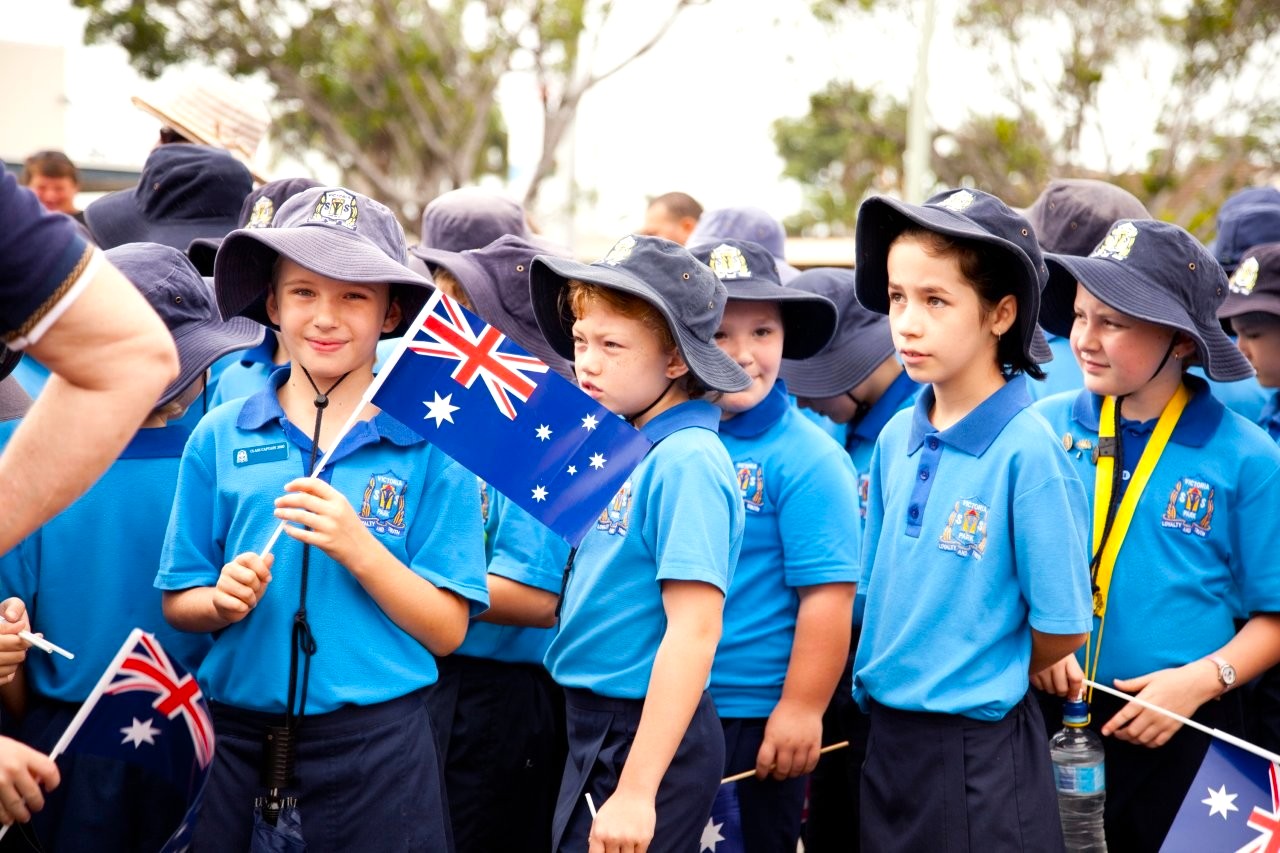
The new NT policy, called ‘Assemblies, special events and the National Anthem’, requires students to sing both verses of ‘Advance Australia Fair’ – in English – at any school assembly.
On breakfast television on Tuesday, Federal Education Minister Jason Clare said the anthem was already often sung in schools.
“I never knew the second verse until I became a pollie, but you go to schools across the country and kids sing the first verse and the second verse,” he told Seven’s Sunrise.
Clare said there’s a line in the second verse of the national anthem that he loves, that says, ‘With courage let us all combine to advance Australia fair’.
“Given the awful things that happened yesterday (Australia Day), I reckon that’s a message for all of us - not the evil, nasty hateful rhetoric in Sydney or the bomb throwing in Perth, or the burning of the flag in Brisbane.
“This is the best country in the world … so if kids are singing that in the NT and other parts of the country, I reckon that’s a good thing.”
NT Country Liberal Party senator Jacinta Nampijinpa Price has also backed the policy.
“As this new policy makes clear, singing both verses of Advance Australia Fair at assemblies and special events isn’t just ceremonial -it’s about building a shared national identity, teaching respect, and helping young Australians understand the values, rights and responsibilities that come with being part of this great country,” Price said.
“Our national symbols matter. They unite us, regardless of background, and remind us that while our stories are different, our future is shared.
“This is a sensible, respectful step that reinforces pride in who we are - and ensures our kids grow up understanding what it truly means to be Australian.”
In Victoria, schools must not compel students to recite a pledge or declaration or take part in a patriotic ceremony if the student or parents or carers object on religious, cultural or other grounds.
A Tasmanian education department spokesperson has said while some schools may not have a rigid daily requirement, the anthem was widely sung at assemblies.
A Queensland education department spokesperson said there was no formal policy dictating when the national anthem was played in public schools.
The national anthem protocols state Advance Australia Fair is an important symbol of the nation and should be treated with respect and dignity, with all Australians encouraged to sing it.
It should be sung in English, the tune or tempo should not be modified, alternative words should not be used and it is customary to stand when singing the anthem, the protocols say.
The second line of the anthem was changed in January 2021 from “For we are young and free” to “For we are one and free”, in recognition of the legacy of Indigenous Australians.
(with AAP)