


“It’s not a surprise at all,” Leanne Elliston says.
Elliston is chair of the Federation of Canteens in Schools (FOCIS) and CEO of Nutrition Australia ACT, and says unfortunately our nation’s food supply is so heavily dominated by ultra-processed foods that we “can’t help but eat them because they’re around us, they taste great, and they’re cheap and convenient”.
The research by Deakin University’s Institute for Physical Activity and Nutrition (IPAN) found that Victorian children aged between 8 and 12 are getting 47 per cent of their daily energy intake from foods such as cakes, biscuits, pastries, lollies, packaged snacks, sugary drinks and fast food.
IPAN’s Dr Carley Grimes says the health impacts were most noticeable in the older children, aged from 10 to 12 years, who were more likely to gain extra weight if their diets were high in UPFs.
“Apart from being high in calories, UPFs are often low in essential nutrients and fibre that children need for healthy growth,” Grimes says.
“Previous research in children has also shown the link between UPFs and other health problems like high blood pressure and unhealthy cholesterol levels.”
The findings were gathered from 682 children from public and private schools across metropolitan and regional areas.
The top five sources of UPFs in the children’s diets were pastries, buns, and cakes (5 per cent of total daily energy), biscuits (5 per cent of total daily energy), confectionary (5 per cent), breakfast cereals (4 per cent) and fast food (4 per cent).
Only about a third (32 per cent) of daily energy came from unprocessed or minimally processed foods, like fresh fruit, vegetables, and plain grains.
Elliston says the one place where children have less access to UPFs is in our school canteens, because they’re able to apply some restraints in relation to what is allowed to be sold.
“Every state and territory has a level of recommendations or guidelines – in the ACT, for example, we have the Public School Food and Drink Policy,” Elliston says.
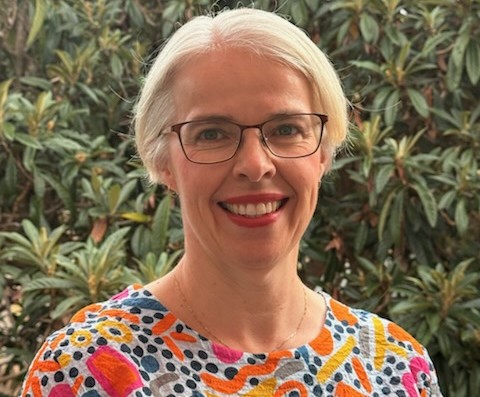
“You look at supermarket shelves and half of them are made up of ultra-processed foods,” senior dietician Leanne Elliston says. “So it’s absolutely no wonder that our children are eating so much of these foods.”
The green, amber and red-based categorisation of food and drinks, based on their nutritional value, makes it quite clear what are the healthier items or nourishing options that should be available to be sold in schools, and what are the less healthy options that should not be available.
There are processes to ensure that all public school canteens adhere to the guidelines, and they are monitored and provided with the support to ensure that they’re providing those healthier options.
The study found that boys and girls with parents who had lower education levels were more likely to eat more UPFs overall.
“All parents want the best for their children,” Elliston says.
“All parents want their children to grow up healthy, and of course all parents want their children to be eating nourishing foods, but sometimes it’s just not available, it’s just not accessible, and it’s just not affordable either.
“I don’t think we can be blaming the parents, we can’t be blaming the children – it’s a societal problem, and I think our Government has a really important role to play in applying, whether it be taxes or some kind of restrictions on the harmful foods.”
FOCIS recently convened a National Roundtable, bringing together more than 90 stakeholders from the education, health, and community sectors to address the urgent issues facing school canteens.
The result was the development of the National Consensus Statement, which highlights the growing threat to school food services and calls for urgent national coordination and funding.
The FOCIS Consensus Statement outlines five key recommendations for sustainable school food systems, including a call to adequately resource school canteens and reduce reliance on volunteers by funding staff positions and removing barriers to participation.
“Scrapping volunteer fees is an immediate and straightforward step governments can take to support the wellbeing of our students,” Elliston says.
“Every child deserves a nutritious meal at school, no matter their postcode. To make that happen, we must support, not penalise, the very people helping to hold these systems together.”
But fixing canteens is only half the battle, given roughly 30 per cent of a child’s food intake is during school time, and only a percentage of that being sourced from the school canteen.
“The majority of the food that’s eaten at school, to be honest, is probably mostly in the lunchbox,” Elliston admits.
“And there’s also studies to show that the food that’s in the lunchbox is mostly ultra-processed food.”
That’s no wonder, the senior dietician laments, because all of the lunchbox-type foods that are marketed are most often highly processed foods.
“They have a long shelf life, they’re convenient, the children will eat them because they’re tasty and they’re inexpensive,” she says.
All of these are logical reasons why parents are putting them in their child’s lunchbox.
“That said, canteens can play a huge role in exposing children to healthier options, particularly if those canteens are adhering to those guidelines and policies, and can make a huge difference in children’s dietary intake by simply the exposure to those healthy options,” Elliston says.
The research, while concerning, has shone an important light on a child nutrition nightmare that new research confirms will result in higher risks of prevalent anxiety outcomes, depression, higher risks of prevalent adverse sleep-related outcomes and an inundation of our future health system with increased rates of obesity, cardiovascular disease and type 2 diabetes, just to name a few.
“By being aware of the high consumption of UPFs and its potential effects, parents, schools and policymakers can take action to promote healthier eating habits,” Grimes says.