The Australian Education Union (AEU) Victoria Branch says the Government has decided to deny public schools billions of dollars by delaying their commitment to fully fund public schools until 2031.
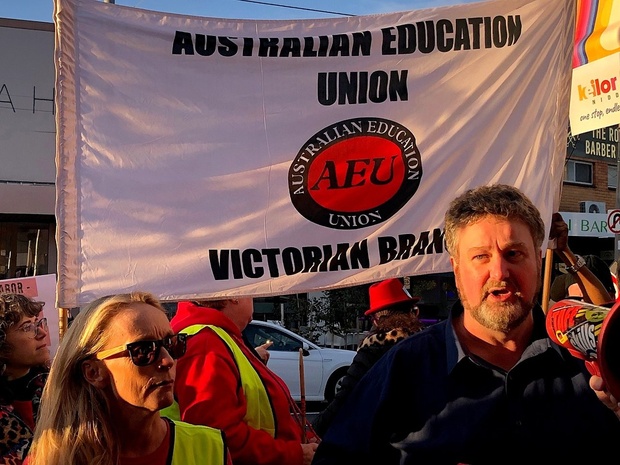
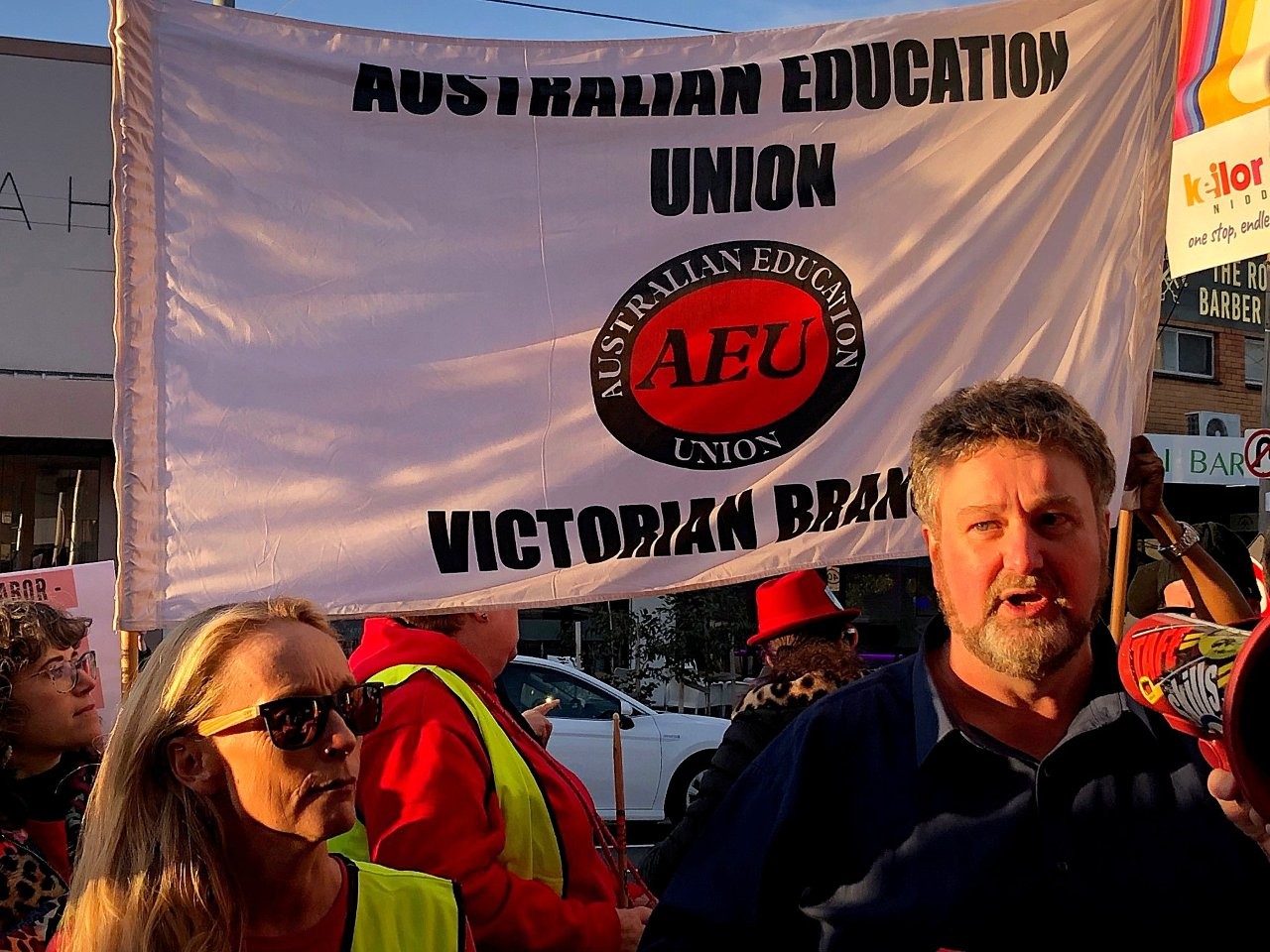
A group of around 70 gathered outside the state western MP’s office in Geelong CBD, where AEU Victorian Branch President Justin Mullaly slammed the funding cut as “working against” the charge to fix chronic teacher shortages.
He said the shortages are leaving students without the support they require, with too many missing out on one-on-one assistance, especially those who need extra support.
Data from the Department of Education, obtained by the State Opposition in July, revealed that there were about 1100 vacancies within Victorian schools, including more than 900 teachers and education support class staff, more than 50 learning specialists, and 44 principals and assistant principals.
“Right now, Victoria’s public schools are the lowest funded in the country, and our teachers are the lowest paid, with education support staff and school leaders undervalued,” Mullaly said.
“To deny public schools full and fair funding during a shortage of teachers shows that the Labor Government’s claims that Victoria is the ‘education state’ is hollow.
“Gayle Tierney, other local Labor MPs, and the Premier need to explain why they do not value Geelong, Bellarine, and Surf Coast public school students and their teachers, principals, and education support staff.”
Mullaly said schools in NSW and other states and territories are already funded to a level which is being denied to Victoria’s public schools because of funding cuts by the Premier and her government.
“The Allan Labor Government must deliver full funding in a fair and meaningful way,” Mullaly said.
“This will ensure Victorian public schools can attract and retain teachers and education support staff, reduce class sizes, and provide more of the individual support every student needs.”
Mullaly said the Government is “showing contempt towards Victorian public school workers, parents and students”.
“It is disgraceful. The Premier and Gayle Tierney must fix this mess,” Mullaly said.
Speaking to the Geelong Advertiser, Matt Crowe, a local teacher at Geelong High School, and the school’s AEU sub-branch representative, said the funding cut means public schools are being left behind.
“It’s not fair that we aren’t getting it whilst private schools are allowed to thrive and we just won’t have those opportunities that they have until this funding arrives,” Crowe said.
The rally follows several that have taken place in Geelong this year, along with others including one outside Education Minister Ben Carroll’s office in Niddrie and another outside Premier Jacinta Allan’s office in Bendigo.
Speaking to media at the Bendigo rally, AEU organiser Carlos Castro described some of the impacts the funding delay will have in real terms on Victoria’s public schools
“There are a lot of programs that schools run, not just the day-to-day teaching and ES stuff, that help to lift up students who are falling behind and those students who are accelerating well with their studies,” Castro said.
“There are many different programs that help students academically, but also really significantly those with a range of social issues as well – so it’s not just the curricular side of things, it’s also the pastoral care these students receive in our public education system.
“Delaying this extra funding until 2031, really means that students in places like Ballarat and Bendigo will be hindered, both from a curricular perspective, but also socially.”
Victorian teachers’ last workplace agreement was signed in 2022, when just under 62 per cent of AEU members agreed to what was considered by many to be a weak agreement of a pay rise of just 2 per cent over four years.
While the AEU at the time was quick to highlight workload concessions gained in the agreement, including a one-hour reduction in face-to-face teaching time per week, increased to 1.5 hours from 2024, teachers were incensed, especially given the pay rise fell significantly short of keeping pace with inflation at the time.
Speaking to EducationHQ then, some teachers called the agreement ‘a monstrous betrayal’ and a membership backlash resulted in thousands jumping ship from the AEU.
Under new leadership, membership has plummeted up to 25 per cent since 2022, from 50,000 members to 43,000, however Mullaly said numbers have bounced back this year by about 4500.
At the start of July, Mullaly raised the prospect of launching industrial action, including strikes, if the Labor Government does not come to the table with an acceptable offer.