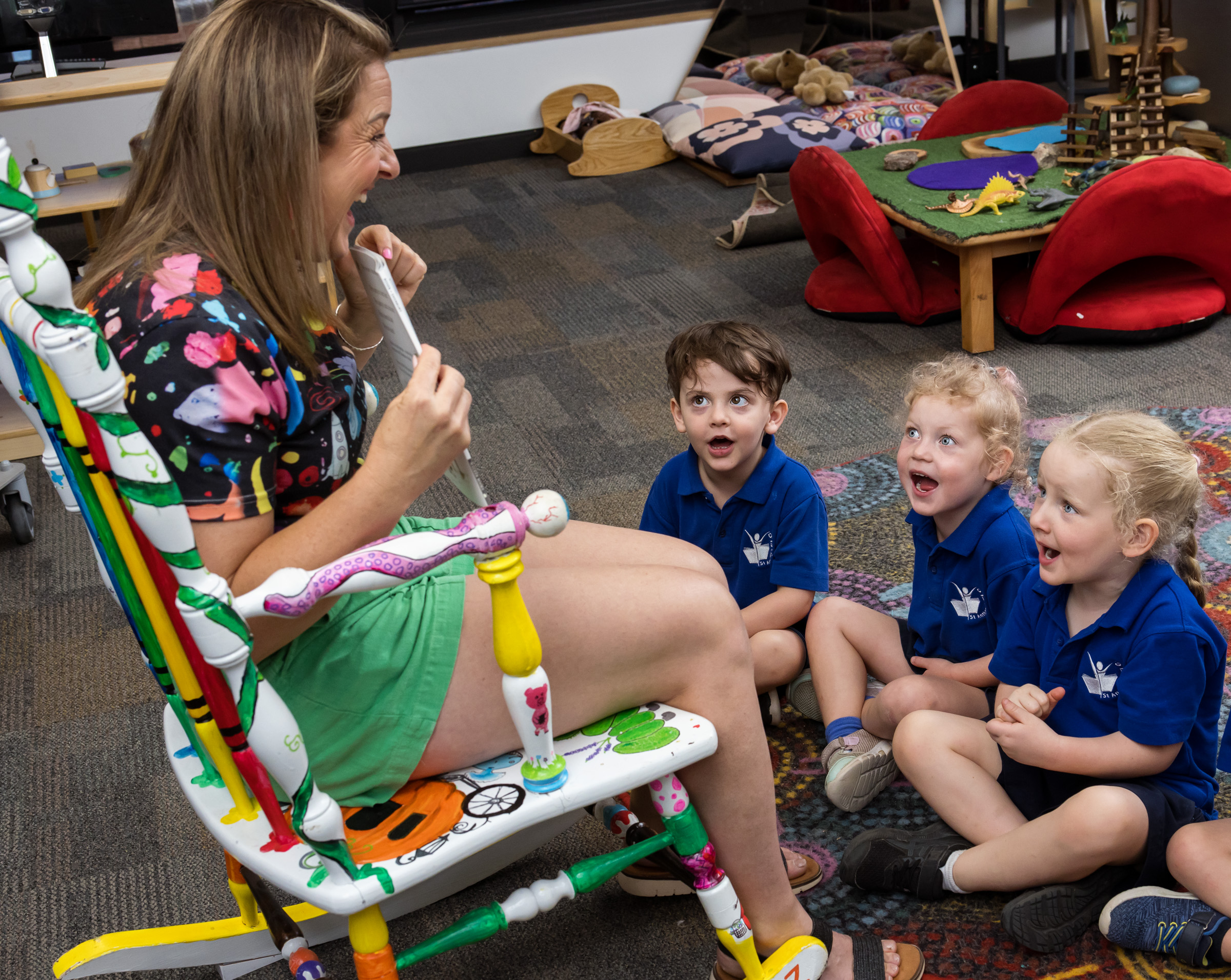
Continuing its system-wide shift to the science of learning, Catholic Education Canberra Goulburn (CECG) has adopted a WA program called School ReadY that hones in on key literacy and language skills shown to impact later academic success.
Developed by The Y, the program reportedly retains a focus on play-based curriculum but combines this with ‘intentional’ teaching practice.
Renee Chakaodza, a Perth literacy specialist at The Y, said the program provides opportunities for children to develop crucial literacy skills including phonological awareness, narrative skills and listening comprehension.
“Developing these critical skills before they start school has a lasting impact because the early years are a period of enormous growth,” she said.
Leah Taylor, general manager of CECG's early learning centres, said she was drawn to the program because it followed an evidence-based approach to teaching early literacy and language skills but retained a focus on play.
“This is an important collaboration because we hope that it will generate data that we can share throughout Australia about what works best for pre-school children,” Taylor added.
Teachers at CECG early learning centres have been trained in the instruction of phonological awareness as a part of their professional development.
Dr Tim McDonald, CEO of The Y in Western Australia, noted the program was already producing positive results in his state in the areas it targets.
“…such as letter name and sound identification, semantic knowledge and comprehension,” he explained.
“We’ve engaged the support of La Trobe University to monitor the program and evaluate its impact on children’s learning, so being able to measure results across the country is promising for the future of our young children.”
School ReadY has been running across 14 ELCs in WA since May last year, and is focused on three developmental domains: Social and Emotional Wellbeing, Numeracy, and the Literacy and Language component.
McDonald said the new partnership with provide comparative data to track the program’s impact and allow early years educators and teachers from across the country to share resources and strategies to further boost early literacy outcomes.
Pam Betts, CECG executive director, said some children entering early learning centres needed extra support to develop the knowledge of vocabulary and phonological awareness needed to thrive in formal schooling.
“Phonological awareness is the foundation for reading and writing English,” Betts asserted.
“It’s a set of skills developed in sequence that is central to learning to decode and spell printed words.
“It’s critical for all students’ literacy development and a predictor of later reading and spelling success.
“However, research suggests that many children do not first enter school skilled in phonological awareness. Research also suggests that if there is no instruction in phonological awareness, many will fail to acquire it.”
Betts said CECG hoped to build on the ‘strong results’ from WA and set more children up for greater success when they enter school.
The new partnership is the antithesis of what is happening in many disadvantaged areas, where around a quarter of pre-school-aged children are missing out on early learning.
Nationwide, about 100,000 – or one in six – children in the four- to five-year-old age group are not in preschool or school.
Vulnerable families who need advocacy and support, particularly when battling competing priorities like housing, food security or health concerns, are the most affected.
Families advocate Georgie Dent said equity in participation in high-quality early learning was the most powerful lever to arrest disadvantage and inequity.
“No child should be denied the life-changing opportunity to participate in high quality early childhood education and care,” the chief executive of The Parenthood said.
Jilly Tyler, an early childhood expert, recently told EducationHQ that children who have all the right conditions in their first 1000 days, including plenty of ‘serve and return’ oral communication, will have healthy, flexible brains that are ready to take on formal instruction at school.
Tyler warned that this is not always the case and that increasingly, modern family life is limiting young children’s access to rich language environments, which has a flow-on effect for the classroom.
“If we could just get the world understanding the importance of early talk, it would significantly help teachers who are receiving children into school,” she said.
“It would also change the way they teach, because currently kids don’t have the language skills that set them up for literacy learning.”