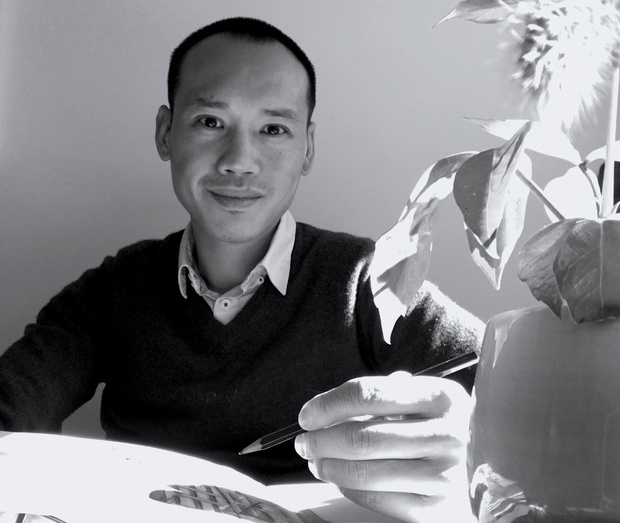
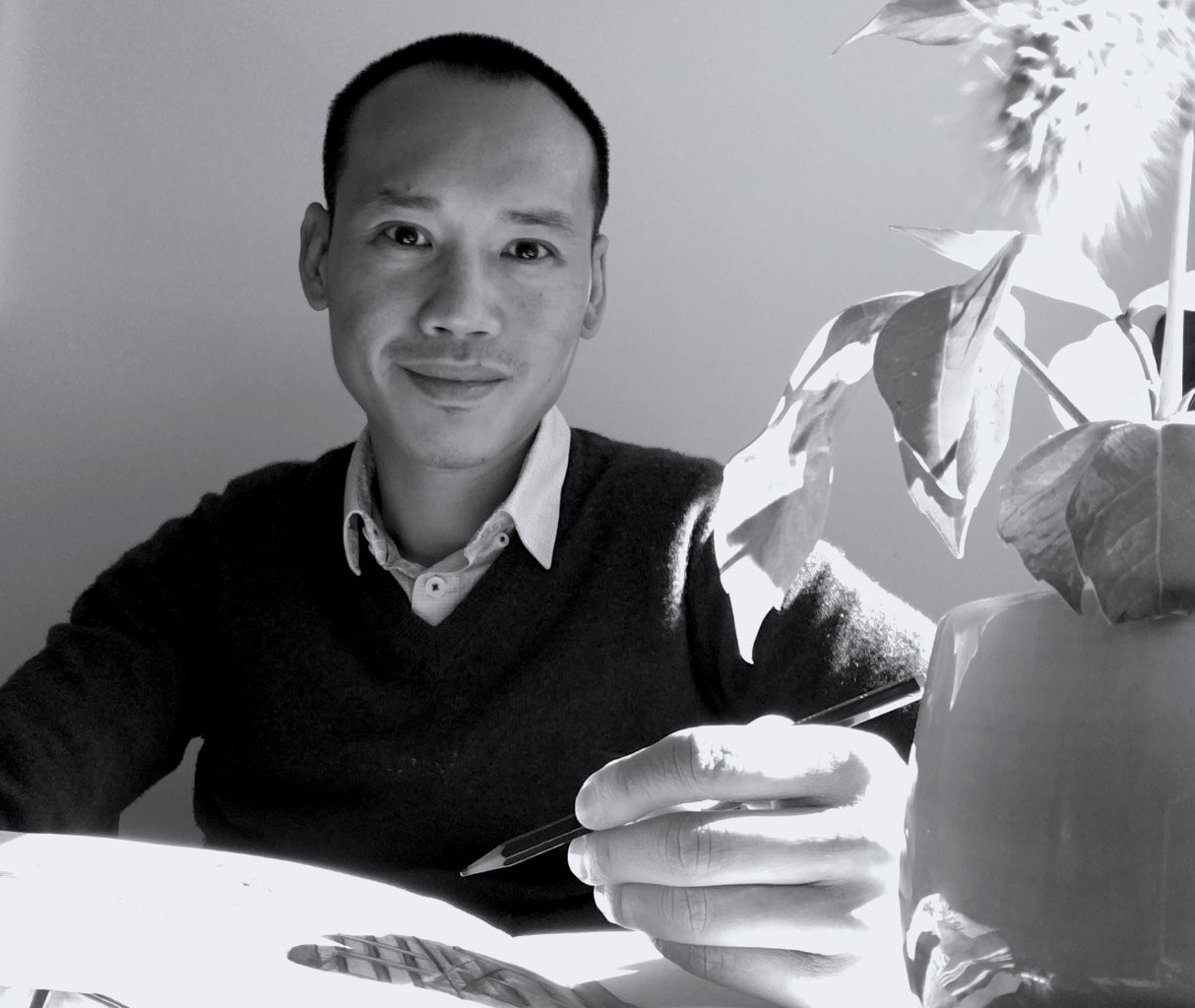
Born in Thailand, educated in a Singapore boarding school and having spent many years in New York as a set designer and sculptor for an independent animation studio, Suwannakit now lives in the Yarra Ranges with his young son.
Having illustrated and written a range of children’s picture books that have been translated into numerous languages throughout the world, he works mostly with watercolour and graphite when not pursuing his other love – teaching.
EducationHQ sat down with the multi-talented man for a chat about the pull of the classroom and putting together his timely latest story about self-sufficiency, the importance of family values and an appreciation of life through nature.
GQ: Hi Tull, congratulations on the book, it clearly took some time to put together?
TS: Hi Grant. The total time from its beginning to the day it was published was around seven years. This is the longest project I have undertaken, maybe mostly because of the fact that the format itself changed significantly over time. From a traditional 32-page picture book, it transformed into more of a graphic novel. Add up the layering of the chapters and all the formats, and that extended out the time quite significantly.
There are so many messages and themes in the book. What were some that you really wanted to include and why?
Well, there are a couple, but one of the things that I find hugely important is family values. I didn’t really get to live with my family in that close-knit set up, but deep down inside, there’s always the importance of family values, of living together.
Asian and Western cultures do tend to be different. For us in typical Asian cultures, we most often live with our families, or close to our family, or live generationally in the same house. The family values that are instilled in us, allow us to be closer to our loved ones and I think that’s important.
Also, sustainability and resourcefulness in times of need, to find everyday things that we tend to forget or overlook with technology. At the click of a button, there’s things for you, but when technology is taken away from you, and it’s back to the nature, that sort of thing can be very hard for readers to grasp.
Kids are fearful about the planet’s future and schools are increasingly catering to this in more informed and nurturing, encouraging ways. Is this book a means of providing hope?
I think at the end of the book itself, aside from having hope and having a positive outlook regarding climate change, hopefully the messages in the book will allow readers to find a more caring way, a more sustainable way in the everydayness in their surroundings, to be more conserving rather than just using up the planet’s resources – and that is that is how it should be in the coming decades.
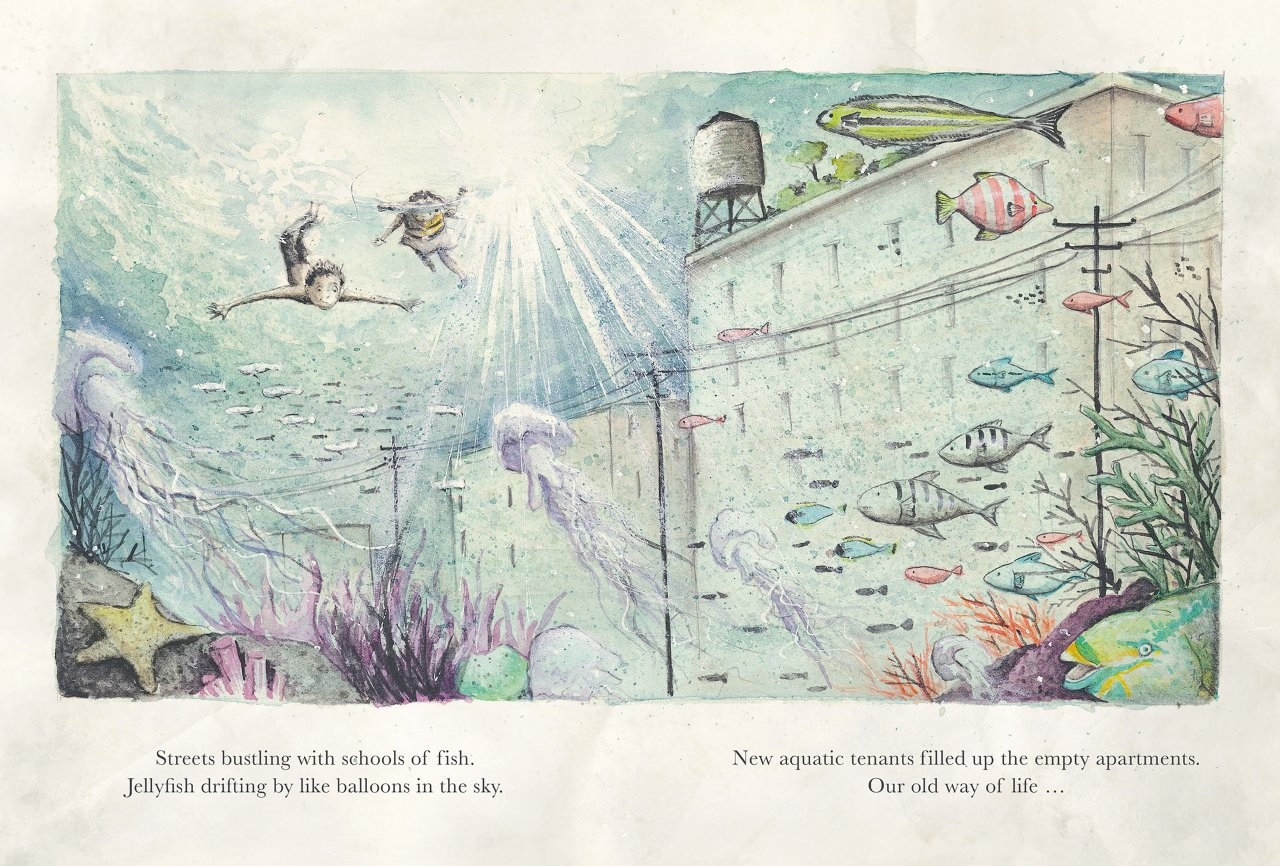
The book is filled with breathtakingly beautiful illustrations that bring to life the captivating and engaging storyline.
You’re drawn to apocalyptic and dystopian settings. What’s their appeal?
I think the backdrop tends to be really heavy. No matter how they try to sugarcoat it, the dystopian is something that I think is timely in a sense that no matter what generation it is, there’s always a certain point in time that we experience close to apocalyptic events, whether it’s wars, unrest, pandemic, or natural disasters.
And I think within this inevitability, it’s bound to happen, it’s human nature, it’s mother nature, what I find really interesting is we humans tend to be able to overcome those obstacles, whether it’s working together or learning to forgive and learning to move on, etc.
And those things can be a really strong backbone for the younger readers to be able to find a silver lining, a positive outlook, and also build up that resilience as they mature in life.
Do you write with your son in mind?
I don’t specifically write for him, but while I’m doing it, because being a single parent, you’re always afraid for the future and trying to find that positive thing, it’s always in the back of my head when I’m writing stories, especially with the apocalypse.
I tend to borrow bits and pieces of our daily life experiences, and how little bits and pieces could manifest into the story. And I think at the end of the day, the result of the book feels like a little that I could pass on to him and prepare him for something, I don’t know, God forbid, but like something inevitable.
It underwent numerous rewrites, I believe. Why was that?
With the starting point of the book being dystopian and apocalyptic, but with a positive outlook, I knew that it might not be as linear as it might usually be. The rewrite and all the changes also came from the fact that, because it’s so experimental, not all the publishers saw it as a project that could potentially work. It seemed to them to be very abstract.
But at the same time, I didn’t want to change solely for the publisher. I just wanted to have a project that I could really say at the end when it comes out that, ‘well, I’ve ventured into something that I’ve never done before and this is the end product of how much it could change and evolve over time’.
Other events came into play, like the pandemic and lockdown and I thought, ‘maybe I should add something that is more timely into this as well’…
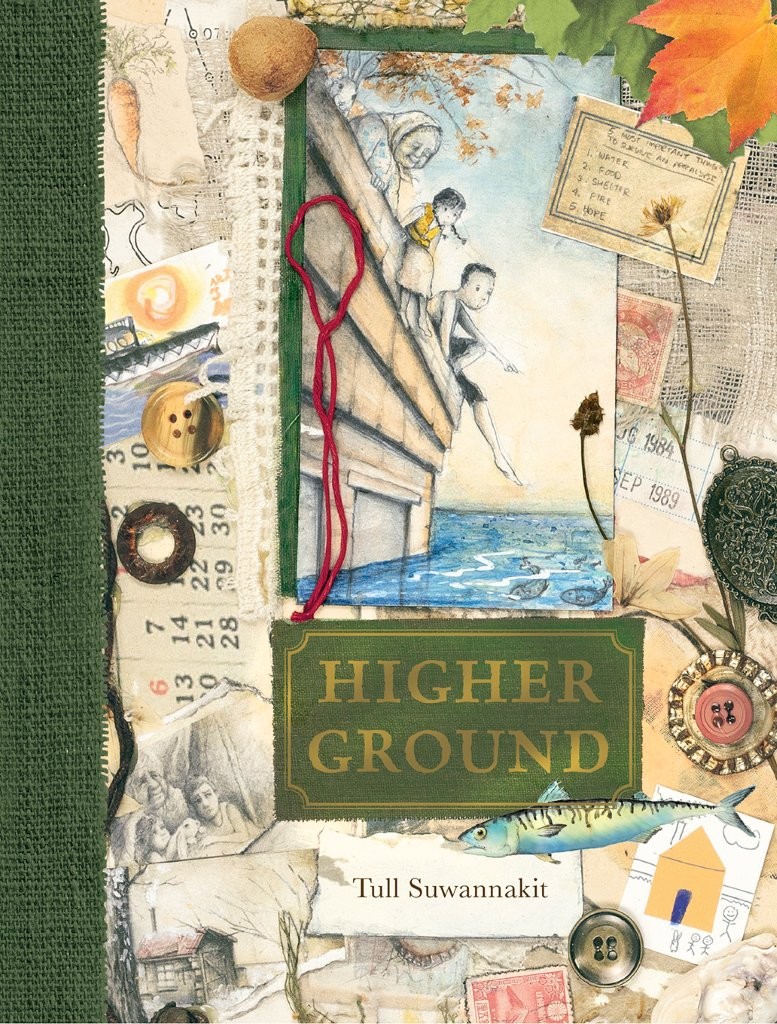
With concerns about the inclusion of age appropriate information in school curriculums regarding climate change and the planet’s future, the book’s message of hope and never giving up make it a timely and powerful one.
It feels like a book for everyone, but maybe even for children as young as 5-8 years old?
At the end of the day, it’s a picture book, which means (it's suitable for) 5-8-year-olds, but it’s also a graphic novel, so it will appeal to middle grade readers from 7-11 years as well.
At the same time, with its timely and more mature themes, it’s for young adults and adults as well. So, the book is currently used in primary schools in school libraries to teach about sustainability, but they’re also using it in high schools as a visual guide on how to find narrative and also around the apocalyptic theme. So, yes, it will appeal to all ages.
You’ve many talents, and you’re an art teacher as well. Why did you decide to go down that career path?
I’ve always liked drawing since I was young and I think that’s always what I envisioned myself doing when I grew up, but not necessarily the teaching side.
I’ve been working in art-related fields, whether it’s animation, visual art, children’s books etc, but I think over time, as much as I like the visual aspect of it, there’s also the teaching side that I thought might be an interesting way of passing on the knowledge that I have to the younger generation.
What do you most enjoy about teaching?
I think it’s probably showing younger learners what they are capable of and being able to pass that on to them and then seeing how they’re able to pick that up and manifest it into their own style. Seeing that transforming into something creative and imaginative really is a major drawcard for me.
Do you teach digital art or more traditional forms?
It has always been the traditional form, even though I know that there’s a current trend with digital and technological advancement. I feel that the traditional hands-on method is the way of building up a strong foundation.
If students want to venture into the digital aspect of it, they can do so in a much more natural and progressive way rather than the other way around.
Students who have learned or picked up tablets or digital tools to do the drawing digitally might not necessarily be as fluid or as analytical than if they’d come at it from a more traditional approach.
Tull Suwannakit’s book ‘Higher Ground’ is available at all good bookshops, including here.