The Reimagining Teacher Education (RiTE) project, in collaboration with the Diocese of Lismore Catholic Schools, is designed to transform how teachers are prepared for the classroom in both primary and secondary schools.
Southern Cross University’s Associate Professor David Turner, who’s leading the project, says the new approach, aimed specifically at students undertaking a Master of Teaching qualification, offers immersive, hands-on learning for teaching students who will ultimately be better prepared for the demands of a teaching career.
“We want to nurture resilient, capable teachers who are not only classroom-ready but school-ready, equipped for a satisfying, long-term career in the profession,” Turner says.
The lead-up to the project was really a conversation that started between several executives at the diocese and Turner’s education team, which at the time included Professor David Lynch, who was research director for the university’s TeachLab.
“The conversation had gone on quite a while,” Turner tells EducationHQ.
“It was really the profession coming to the university saying, ‘there are some issues with teacher shortages and some commentary around quality of graduates; we think if we work together, we can improve the work that we’re doing. If we’re in partnership, we can get better outcomes’.”
The early part of the project involved a large international literature review to look at what was considered best practice, and from an Australian perspective, diving into the teacher shortage and the number of ITE graduates who were leaving the profession early.
“We actually did two short international study tours – to Canada and New Zealand – to see what was happening, what was considered best practice that emerged from the literature.
“From the ITE student point of view, they often report in the literature, that the best part of their preparation was the practicum piece when they were actually in a real school doing the real work and addressing that theory/practice divide.
“So there were a whole lot of factors that were coming together to say, ‘we think we can do something better if we work in partnership’.”
As part of the project, which kicks off from March next year, student teachers will be supported by experienced school educators and Fellows of the University, called ‘resident teaching consultants’ (or RTCs), to help close the gap between theory and practice.
Participants will work alongside the RTCs and be mentored as they build skills and professional networks.
“We have established RTCs in each of the five teaching schools (in Tweed Heads, Pottsville and Coffs Harbour),” Turner explains.
“These people work in the school, and have been heavily involved in putting the program together.
“So they know the content that would be being taught on the campus, they know what the students would be being expected to do in the units that they’re undertaking, and they will be playing an active role in the school about helping the students cross that traditional theory/practice boundary.”
Turner says there are many benefits for student teachers being immersed in schools two days a week during their preparation for a career in education.
“First of all, we want them to be able to, on a regular basis, be connecting the theory on campus with practice in schools, and if the RTCs are facilitating that, that’s a good outcome.
“We also want them to have a better understanding of the complexity of the profession and the complexity of schools.
“There’s lots of commentary about being classroom ready, but we feel that one of the reasons so many people are leaving the profession early, for example, is that they don’t have a broader picture of the complexity of the work. So being immersed in a school will make them school ready or profession ready as well as classroom ready.”

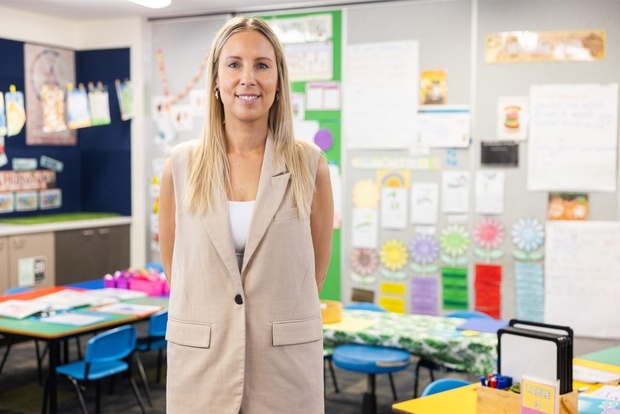
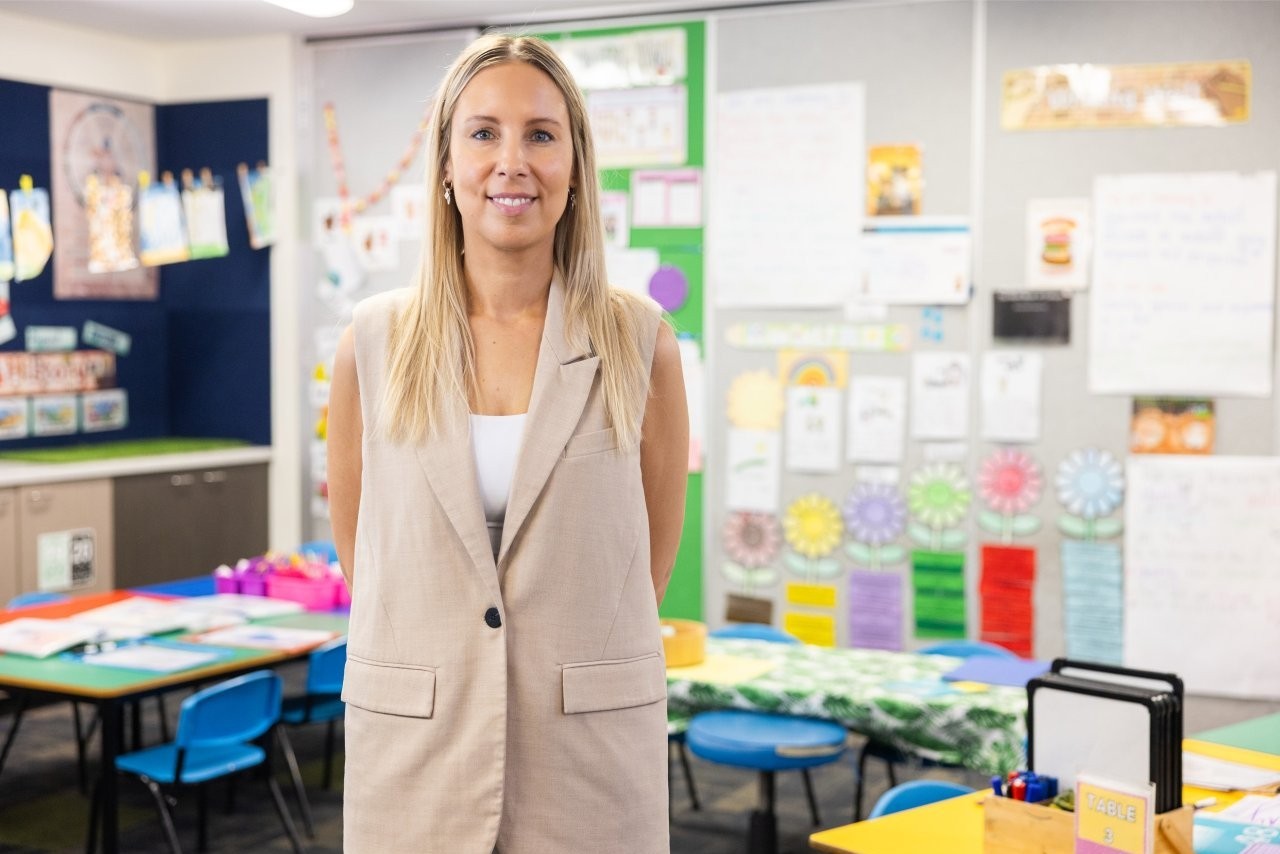
“We want to nurture resilient, capable teachers who are not only classroom-ready but school-ready, equipped for a satisfying, long-term career in the profession,” Associate Professor David Turner, pictured above, says. PHOTO: Southern Cross University
A recent study investigating how nine Australian principals from hard to staff schools view teacher quality (and how they assess the readiness of uni graduates to teach in their context) found that school leaders view the common regulations and standards around being ‘classroom ready’ as too narrow and too focused on technical capacity.
They advocated that aspiring teachers’ ethical competence should also be developed in ITE.
Turner says that’s a fair point.
“That’s probably how I’m describing being ‘school ready’,” he says.
“The role of the teacher being in a classroom and being able to do the pedagogical work, is, of course, essential, but possibly insufficient because the difficulties come with dealing with perhaps a difficult, low socioeconomic community, or how do you handle parent complaints or interact with parents in a positive way? How do you work with your colleagues? How do you work as a team and get outcomes for the school as a whole?
“I think that notion of it’s more than just what you’re doing in the classroom that gives you resilience and capacity to thrive in the profession, and this project’s partly trying to address that.”
The Master of Teaching course at SCU is primarily made up of career changers, many of whom are motivated by making a real difference in their work.
“If people are going to change careers, often there’s altruistic elements of that,” Turner says.
“… but what we want to make sure in this idea of immersion and being in the school a couple of days a week, is that understanding of the complexity of the work.
“We don’t want people to start a Masters program and think, ‘actually this is not what I thought it was going to be’, one year into their career or two years into their career.
“We want to skill them so that they are school ready and are ready to contribute to the profession in the way they hope to, not be worn down by the criticisms about bureaucracy and the compliance and the time constraints that are put on teachers these days.”
Australia continues to face a national shortage of teachers and the most current Australia Teacher Workforce Data (ATWD) from AITSL, found in the 2025 edition of National Trends: Teacher Workforce, showed that around 14 per cent of teachers were considering leaving the profession within five years, with workload, stress, and the amount of administration among the top reasons.
Turner says teaching can be a fantastic, life-long career and with regards to professional placements, the RiTE project is taking that critical part of teacher preparation one step further.
“Immersing student teachers in cohorts in the real world of teaching when they are still students, not only develops better teachers, it builds lasting support networks,” he shares.
“These graduates will have a much greater chance of success over the course of their working lives.”