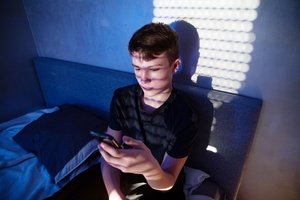


The change will see non-government schools subject to the same phone ban as public schools, which was introduced in 2020, and will prohibit students from bringing connected devices like smartwatches and wireless earbuds to class.
The new laws will come into effect from the start of the 2027 school year.
One secondary teacher told EducationHQ they could not understand why the Government would wait seven years to roll out the phone ban to all schools across the state.
“We know it works as a measure to reduce student distraction and disruption in class, why wouldn’t you take a stand on it and make the call once the evidence is in?” they said.
The teacher said the ban had greatly improved the learning environment at her public school, but that that were still issues with students bringing their phones and other devices to class despite the clear rules.
“They all have them in their pockets, it’s quite obvious. But there’s nothing you can really do about that. They are not turned off, either.
“They know that if they bring their phones out in class they will be confiscated, and if this happens three times then they have to hand it in at the front office every morning. It’s still a bit of a battle – they are addicted to the things.”
At the end of 2023, NSW followed Victoria’s lead and brought in a mobile phone ban in all public schools.
A department survey of almost 1000 principals one year later found almost universal support for the ban, at 95 per cent, with the overwhelming majority reporting improved student learning and concentration as a result , as well as more socialisation underway at recess and lunch times.
In South Australia, a similar 12-month review of a mobile phone ban in the state’s public schools revealed significant improvements in student behaviour.
Some 93 per cent of school leaders reported a drop in staff time spent following up on phone-related issues, and the vast majority of staff and parents reported increased focus and engagement in class.
Tellingly, 75 per cent of school leaders and 64 per cent of teachers reported fewer critical incidents involving devices.
Research by Flinders University that honed in on SA students’ feedback before and after mobile phone ban was introduced found phone-free schools provided students with a valuable ‘digital break’ that supported both their mental health and learning.
“Ever since we have had the phone ban, we have no fights. People are making more friends and are socialising and playing more sports during break,” one student said.
“Although improvements were modest, research is supporting the idea that even small reductions in psychological distress could have important public health implications if implemented at a large scale,” senior author of the study, Professor Dan King, noted.
The Victorian Government said expanding the new ban to include wearable and personal audio devices that capture photos, video or audio was done to reduce the risks these devices pose to students and staff.
Victoria is the first state to legislate these restrictions on wearable technology in schools, with students required to have their device notifications, cellular connection and recording functions switched off during school hours.
The announcement has been welcomed by Independent Schools Victoria and the Victorian Catholic Education Authority.
Rachel Holthouse, ISV chief executive, suggested many independent schools had already made moves to ban phones and other devices.
“We welcome today’s announcement and acknowledge the Government’s efforts to balance access to electronic devices with the need to support positive learning environments and student wellbeing,” Holthouse said.
“The announcement reinforces the work many independent schools are already doing, with independent school leaders regularly reviewing the role of technology in their classrooms and broader school environments.”
Minister for Education Ben Carroll declared the evidence shows that the ban works.
“…and now we're going further, so every Victorian student, in every Victorian school, can put their phone away and focus on learning,” he added.
The move comes amid escalating concerns about the rise of ‘digital dementia’ in young people.
Recently 60 Minutes Australia highlighted new medical evidence that reveals how too much screen time is effectively shrinking the brains of young Australians.
“Instead of providing entertainment or simply passing the time, there now seems to be proof screen time is making people less intelligent. The evidence is terrifying, especially for teenagers.
“Medical scans show significant shrinking of their brains. It's similar to what doctors see in elderly people with Alzheimer's disease. And so concerning is this condition, it's been given a name, digital dementia,” investigative journalist Nick McKenzie explains on the program.
Indeed research from 2022 warns evidence suggests chronic sensory stimulation via excessive screen exposure affects brain development, increasing the risk of cognitive, emotional, and behavioural disorders in teens and young adults.
“Emerging evidence suggests that some of these effects are similar to those seen in adults with symptoms of mild cognitive impairment in the early stages of dementia, including impaired concentration, orientation, acquisition of recent memories (anterograde amnesia), recall of past memories (retrograde amnesia), social functioning, and self-care,” researchers flagged.