Tom Bennett, founder of ResearchED and the UK’s foremost expert on school behaviour, has slammed a recent report which argues increasing numbers of suspensions and expulsions in NSW schools are contributing to a ‘school-prison nexus’ and establishing a vicious cycle of repeat offence for students from marginalised backgrounds.
According to Bennett, the report advocates for misguided approaches that are both absurd and cruel for those actually in schools.
“My initial response was, ‘are we back in the year 2013?’
“Because these are the types of lazy counter arguments that people have been making against suspensions since I’ve been working in the field of behaviour,” Bennett told EducationHQ.
“Unfortunately, there are an extraordinary number of people in academia who are ideologically set against any form of behaviour management in schools whatsoever.”
This is a particularly ironic situation, given many academics who rail against suspensions have never worked in challenging classroom environments and “wouldn’t know how to advise somebody who was”, Bennett said.
“Only in education do we get this really perverse culture where people who can’t do the job advise people who do.”
The fact of the matter is that suspensions and exclusions are a ‘perfectly normal’ part of a healthy school system in which children can learn – and teachers can teach – in calm and safe classrooms, Bennett argued.
“[This] doesn’t mean that we only use them as the principal levers of behaviour management, but that they must be kept in reserve as a possibility in the repertoire of good behaviour management at an institutional level.
“There are very few alternatives (for) a student who punches a teacher in the face, other than to suspend them – at least alongside other responses.”
In such incidents, failing to suspend the student pays no regard to the rights of the victim or indeed to those of the rest of the class, Bennett said.
“What you’re doing is, you’re committing to that student being back in school with the person that they’ve assaulted.
“Now this is perverse and cruel, and also teaches children that they can behave as they please, and teaches teachers that their rights don’t matter.
“It also teaches other children that they’re learning, their safety, their dignity, and their rights to a calm classroom doesn’t matter either.
“And only in education would we even imagine that this was something that we could bear.”
Education faculties the world over are obsessed with ideologically-driven perspectives on school discipline and behaviour management, the expert claimed.
“…anyone that doesn’t share those views tends not to get or elected or recruited into these departments.
“So you have a real echo chamber in many educational faculties of self-congratulatory mutual agreement about these types of issues.
“So unfortunately, this is not surprising to hear that this [report has been released].”
The paper notes that school exclusion across Australia disproportionately impacts students from marginalised backgrounds.
“In 2024, 1 in 4 suspensions were of Aboriginal students and 1 in 4 of disabled students, making them approximately 2.5 times more likely to be suspended,” the researchers flag.
But applying an ethnicity lens in particular to the data could be unhelpful, Bennett flagged.
“For example, similar research is taking place in the UK. Ironically, we find in the UK that the highest rate of suspension, not just absolute numbers, but the highest rate, is amongst white British (students).
“So we’ve got slightly different data to work with – but what we often find is that people who are determined to see racism will find it if their lens involves the assumption that racism is inherent in everything.”
This is clearly problematic when it comes to analysing data, he said.
“What we typically find, is that when we control the data for factors like poverty, and people who are exposed to risk factors [like] chaos and neglect and abuse in their lives, we tend to find that poverty is by far the biggest factor in the background of children who get suspended, which also doesn’t mean that children are being suspended because they’re poor.”
Children are being suspended for their behaviour, not for their ethnicity, Bennett said.
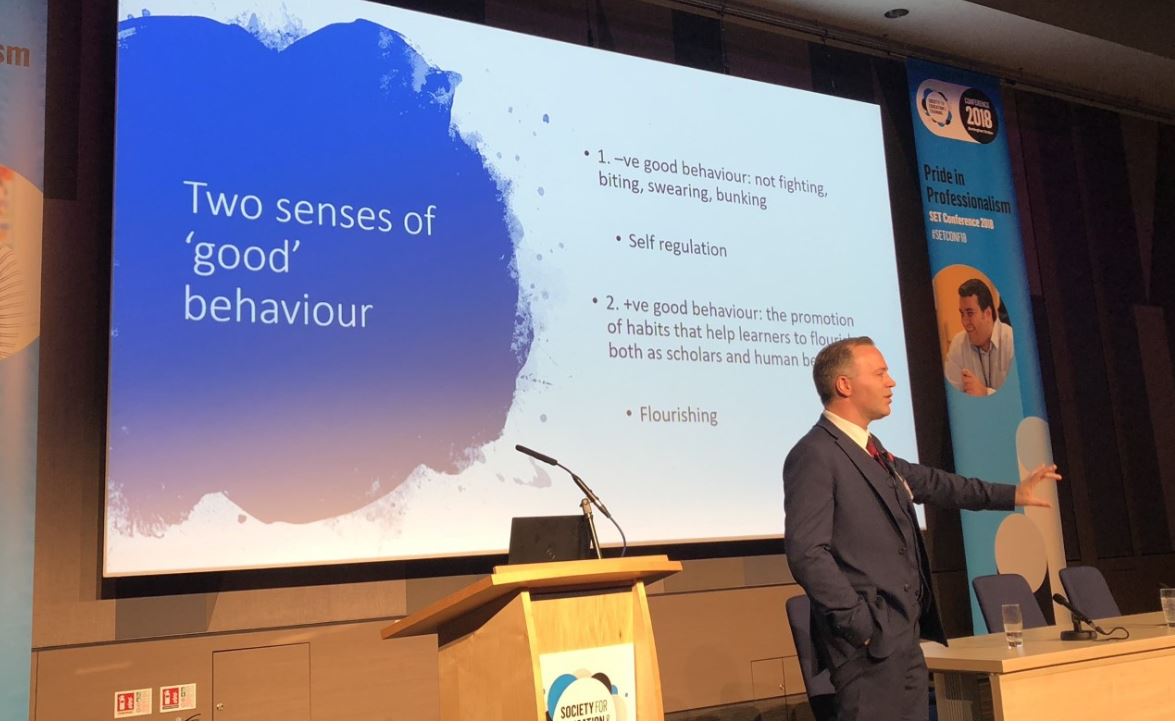
Scotland's shift to a model of behaviour management that's rooted in restorative practices and trauma-informed care has proven a disaster for the school system, Bennett said.
The idea that suspensions are fuelling a ‘school-to-prison pipeline’ is a tired concept based on flawed logic, and one that was originally spread by education faculties in the US, Bennett asserted.
“Again, this is confusing correlation for causation,” he says of the argument.
“The suspensions don’t cause criminality. The behaviours that lead to suspension are the same behaviours that typically lead to criminality … [such as] violence towards others and damage to public property and other criminal behaviours.”
The research recommends that restorative approaches be implemented in education legislation, policy, and practice, including “models drawn from international best practice” that are centred on restorative justice, trauma-informed care and mutual accountability.
It contends that Scotland provides a “compelling example of how a systemic, collaborative approach can provide alternatives to school exclusion” that leads to better outcomes.
Scotland has reduced permanent exclusions to almost zero, with just one case recorded in 2022/2023, the paper notes.
Yet Bennett said the country was currently experiencing one of the worst national crises of student behaviour in schools that he’d ever seen play out.
This is the direct result of it’s decision to switch to a behaviour model that is firmly based in restorative processes and trauma-informed education, he argued.
In the decade or so since the change, the wheels have fallen off entirely, Bennett warned.
“[There’s been] an enormous explosion in violence, anti-social behavior, disruption, verbal abuse, violent injuries to staff, and so on.
“Teachers are leaving the profession in droves. Teachers are striking in multiple schools throughout Scotland because of their poor behaviour, because they’re not allowed to set boundaries.
“And they’re forced to use these quasi-therapeutic methods like restorative practice and trauma-informed methods, which are the types of practices recommended by the people writing this paper.”
These practices are simply not practical for use at the whole-school level, the expert said.
“They are tools which can be used for some children, particularly children who have been through particularly traumatic experiences, sometimes it helps them.
“But as whole-school behaviour methods, there is very little to replace what children actually need, which is well-taught expectations, lots of regard, boundaries, and consequences.”
It’s a simple recipe that teachers have been using for centuries, Bennett added.
“But only in the 20th century have we decided to abandon this for ideological and poorly evidenced methods such as trauma-informed education.”
Many Australian schools are doing fantastic work on the behaviour front, Bennett said.
“They’re focusing on what I call the ‘behaviour curriculum’, which is the idea that children learn their behaviours from their environment, and teachers are pretty good at teaching stuff, so we can teach them the behaviours that help them to succeed at school.
“In addition to that, kids need to know exactly what they should be doing, so we have to have high expectations of them and believe that children are capable of more than they believe themselves.”
This is where establishing strong routines and habits of good behaviour come in, he said.
“This isn’t about just getting them to slavishly conform to rules, this is about teaching them how to be successful in schools.”
Those following best practice are also leaning heavily on using clear boundaries and simple, predictable consequences for when these are crossed, Bennett said.
“This could include penalties, it could also include things like chats and discussions with home and so on.
“Those are the types of approaches that teachers in Australia are using which really work, and are a million miles away from the nonsense promoted by this paper.”
The views outlined in this article do not necessarily reflect those of the author or those of EducationHQ. We welcome all perspectives on school behaviour policy and encourage readers to reach out to the news team at news@educationhq.com to share their take.