


After analysing approximately 3.4 million words from more than 46,700 children’s (prompt-free) stories collected each term last year via the online Writing Legends program, it was ‘vitamin’ that stood out as the clear winner of the title. ‘Friend’ was Word of the Year for 2024.
Lee Walker, Director of Publishing at Oxford University Press, says the team never saw this finding coming.
“The word we choose is always what rises to the top from a thematic perspective, but we never expected it to be vitamin, so, it was quite striking.
“The word actually appeared more than 1000 per cent on last year. So out of any word in all the millions of words that were written, vitamin just stood out.”
Across the thousands of children’s stories submitted there was a consistent focus on health and wellbeing, Walker adds.
“And they weren't just talking about health in passing, they were writing about how they manage their health, what they eat, their skincare, what they do daily to make sure that they're healthy and strong.”
According to Walker, this is a really good news story that hints at a deeper cultural shift and a change in our collective understanding about health.
“What was really great was [the writing samples were] less framed around their appearance. Because … we grow up in this body conscious world, or image conscious world, but [the children wrote] more about feeling strong and energised and capable.”
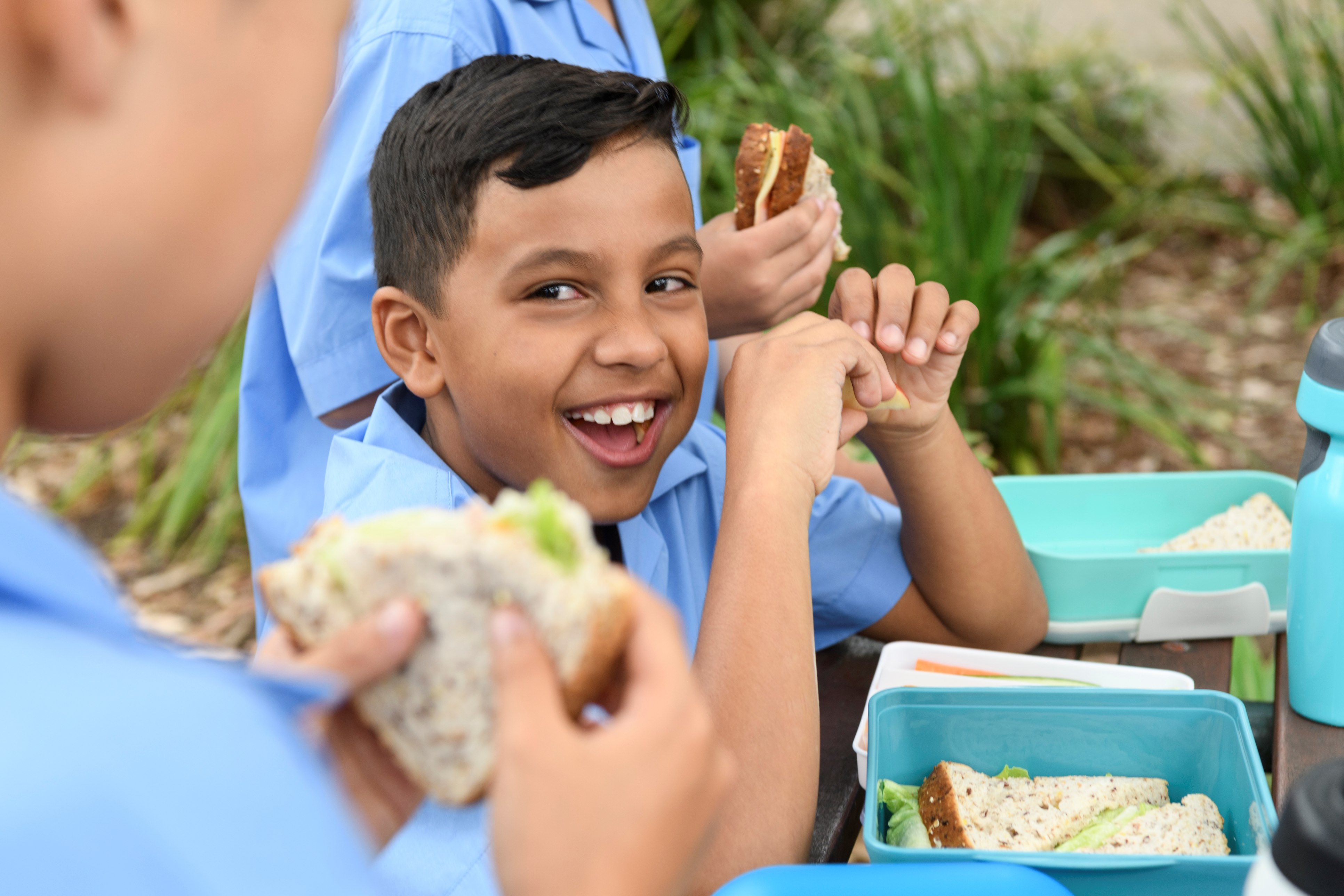
Students framed vitamins from fruit and vegetables as being essential and often in relation to them being healthy, energising and good for the body.
As one Year 3 student wrote:
“Did you ever think that the best food in the world is junk food like lollies and chocolate? Well you are wrong. Fruit is actually quite heathy for you, fruit is sweet and gives you vitamins, which means fruit is the best!”
Another Year 5 student proposed:
“Have you ever felt weak? Well, I think you must eat the refreshing crisp and crunchy fruits. You can build a healthy body by eating fruits, because they build your immune system as well as having nutrious[sic] fruits with good vitamins and minerals … A healthy body makes you energetic and free. The vitamins and minerals in the fruit help strengthen your teeth and bones. They also build up your immune system quickly.”
The shortlisted words included: ‘exercise’, vitamin’, ‘diet’, ‘skin’, ‘muscle’ and ‘energy’, with five out of the six being used at least 127 per cent more frequently than in 2024.
“Children’s writing is where big cultural conversations show up early..." Dr Amanda Laugesen says.
Positive health and wellness messaging is clearly landing with mid-to-late primary students and those in lower secondary years, Walker says.
“It shows how closely children are absorbing and reflecting the conversations around them, at home, at school, in the media …. they are weaving [health themes] naturally into their storytelling and creating persuasive pieces…”
For teachers, Walker says, the Oxford’s Australian Children’s Word of the Year offers an opportunity to capitalise on students’ interest and engage with the dominant themes identified – health, wellbeing and self-care.
“Educators can build on that interest in critical literacy discussions about media messaging or class discussions about health and wellbeing…” she suggests.
Dr Amanda Laugesen, director of ANU’s Australian National Dictionary Centre, says children’s writing often reflects cultural shifts before adults pick up on them.
“Children’s writing is where big cultural conversations show up early, which is probably why we are seeing them echo familiar conversations about what practices to adopt to optimise health…”
Every year lexicographers at Oxford University Press analyse data and trends in the English language to summarise words and expression that have reflected the world over the last 12 months.
The team also take on board suggestions from the public, and look back at the most influential moments of the year to inform their shortlist, which culminates in a word or expression of cultural significance.
‘Rage bait’ was named as the official Oxford Word of the Year for 2025.
“Although a close parallel to the etymologically related clickbait, rage bait has a more specific focus on evoking anger, discord, and polarisation,” the publisher states.
Casper Grathwohl, president of Oxford Languages, suggested the finding reveals how digital platforms are actually reshaping our thinking and behaviour.
“The fact that the word rage-bait exists and has seen such a dramatic surge in usage means we’re increasingly aware of the manipulation tactics we can be drawn into online.
“Before, the internet was focused on grabbing our attention by sparking curiosity in exchange for clicks, but now we’ve seen a dramatic shift to it hijacking and influencing our emotions, and how we respond…”
While ‘brain rot’ was named Word of the Year for 2024, which “captured the mental drain of endless scrolling”, rage bait “shines a light on the content purposefully engineered to spark outrage and drive clicks”, Grathwohl said.
“And together, they form a powerful cycle where outrage sparks engagement, algorithms amplify it, and constant exposure leaves us mentally exhausted…”
One Australian student at least seems well aware of the health impacts the online world can inflict.
“Playing outside is really fun the CO2 the vitamins and a bunch more healthy things for your body. Would you rather be playing outside or sitting in a dark sad room?” they wrote in their submission.
“Imagine it’s a sunny day and you’re just sitting inside on your device what a waste of the day. I’m sure you’re agreeing with me by now. I think everyone should start playing soccer by now.”