The Australian Science Teachers Association (ASTA), the Australian Geography Teachers Association (AGTA) and the Australian Association of Environmental Education (AAEE) have put forward a shared professional consensus that maps out a way forward on what high-quality climate change education looks like.
According to the paper, many science educators feel there’s a broad misunderstanding about sustainability, and that many schools engaged in pursuits such as raising chickens, collecting bottle tops and recycling projects, for example, are missing the point.
It contends that sustainability education has morphed into menial, tokenistic acts that are largely unrelated to sustainability, and which don’t address climate change at all, or at best are very much on the periphery.
The associations put forward an alternative – where climate change education supersedes sustainability in the curriculum.
“It’s a new paper and it stemmed from the need that we saw for our teachers coming out of one of our national conferences last year,” ASTA vice president Margaret Shepherd explains.
“We found teachers wanting to attend workshops, teachers needing to learn more, how to teach it, what to teach – and so that raised the issue for us.
“It started with an idea to get a group together of science teachers, and once we did that, we realised that geography and environmental people should be with us as well, so that’s what we did and it’s been a delightful experience.”
For all three associations to be on the same page was quite extraordinary.
“There was no hesitation, we all had the same thinking – and it speaks volumes,” Shepherd shares.
It’s clear that for a vast majority of Australians climate change is seen as one of the most significant scientific and societal challenges facing young people.

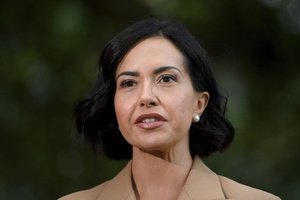
ASTA president Paula Taylor, left, and vice president Marg Shepherd, right, joined fellow members last week at the Shine Dome in Canberra for the assocation's Diamond Jubilee (75-year) celebrations.
Students are encountering its impacts in their communities and through public discourse, and Shepherd says that schools are playing an essential role in helping them develop the scientific understanding, critical thinking skills, and sense of agency required to engage thoughtfully and constructively with these issues.
The position paper emphasises the need for any effective climate change education to be evidence-based, age-appropriate, curriculum-aligned, and pedagogically sound.
Importantly, it also highlights the need for clear system-level guidance and professional support for teachers, so they can teach this content with confidence and balance.
“Our position is that climate change education is fundamentally about scientific literacy, futures thinking, and informed citizenship.
“It is not advocacy, but a core responsibility of education systems preparing students for a complex and changing world,” Shepherd says.
The commitment of the ASTA, AGTA and the AAEE is to build comprehensive, unified, research-informed action on this front.
They claim it is imperative that climate change education is explicit and mandatory across the F–12 curriculum, and that a conceptual progression of learning is developed throughout that builds deep engagement with human-induced climate change.
“We’d like policymakers to see that we need to have climate change education explicitly in the curriculum,” Shepherd insists.
“It isn’t at the moment. While it’s sort of there in Year 10, it’s not included much in geography and it’s not clear enough for teachers to know what to teach, when.”

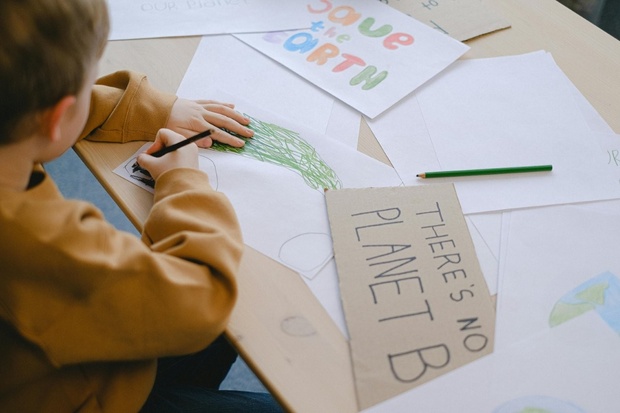
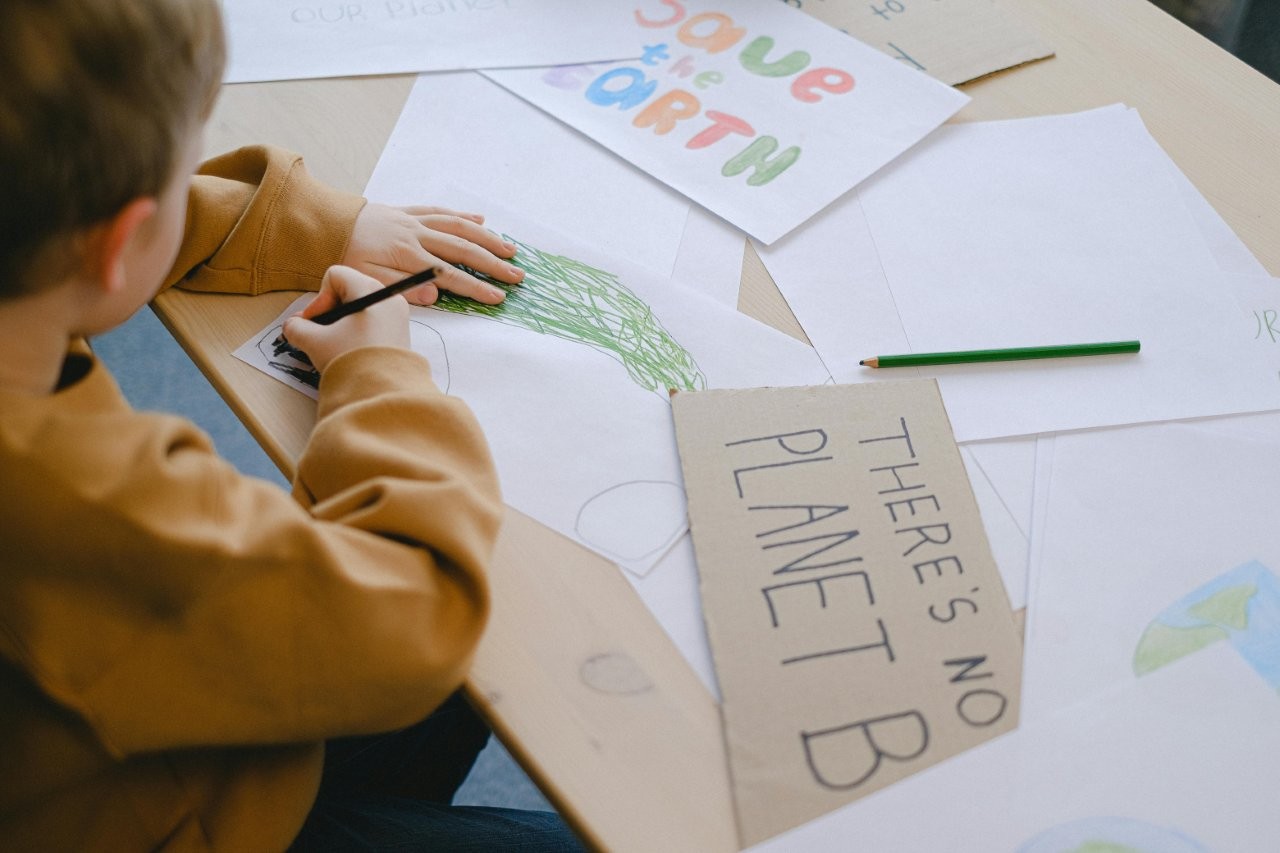
The position paper shares that building age and stage appropriate knowledge regarding climate change is important, and that tokenistic approaches to sustainability aren’t going to cut it moving forward. PHOTO: Anna Shvets
A recent report from the Institute of Public Affairs (IPA) claimed that the National Curriculum “is skewed towards ideological environmental instruction through the mandated cross-curriculum priority of sustainability”.
It found that “emotionally charged lessons are being forced upon students as young as five years old, well before they possess the cognitive or emotional maturity to understand and process those issues”.
“The sustainability cross-curriculum priority in the National Curriculum be abolished. The introduction of emotionally charged topics be delayed until (at least) secondary school and that Climate-related instruction be confined to science classes at the appropriate year level to ensure subject integrity.”
Shepherd believes that mandating climate change education in the curriculum will help to address climate anxiety at an appropriate time.
“Currently, primary teachers, it’s not in their syllabus at all, but it’s often used as a socio-scientific issue, so they talk about global warming and they talk about pretty catastrophic things for primary children, when in reality, they’re not ready for it yet.”
At present, climate education is explicit and mandatory across the foundation to Year 12 curriculum in countries including Italy, England, France, Thailand, Taiwan and Vietnam.
“We’d like to see a curriculum mapping to show teachers when you bring in particular topics and not to bring it in until they are a), scientifically ready, so they have the basic knowledge to understand what’s going on, but also, b), the emotional security to be able to consider that from a range of perspectives, which is high secondary, not primary.
“It’s not the curriculum’s fault. I think the lack of explicit information for teachers to know what to teach and when is contributing to that. And all of us agreed that we need to see that mapping, to see how and when it’s taught.”
The paper also outlines that professional learning for pre-service and in-service teachers and school leaders needs to be provided to build knowledge, values, and skills related to climate change education across disciplines.
It warns that a national education action plan that prioritises climate action is required, as well as funding for a coordinated program that enables multiple cross-institutional research initiatives to inform effective climate change education in schools.
“ACARA is doing a review of the curriculum next year, so this is very timely,” Shepherd shares.
“We’ve been discussing this with ACARA, so we will hopefully have input into the development of this...
“In the meantime, this paper is for our state professional associations, so it's guidance for them to provide professional development for their teachers, which then will impact on schools and student action to give students the ability to have agency in this area.
“Because I worry sometimes that they feel they don’t, that it’s all happening around them, and everything is catastrophic, and they have no choice, and that they have nothing they can do about it. We need to change that conversation.”