Recent ABC News analysis found that last year, just two per cent of students in most of NSW’s 21 fully selective schools came from the lowest educationally advantaged group.
The state has an additional 27 partially-selective schools, together tallying far more than any other jurisdiction.
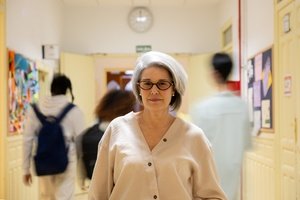
“These are public schools, but they’re so inaccessible,” UTS’s associate professor Christina Ho says, who has undertaken years of research into the selective system.
“…they’re very much dominated by students from very advantaged backgrounds, which does not fit with their design as public schools.
“They’re supposed to be available to really anyone, regardless of your family background.”
Ho says the scene has increasingly “gone awry” over the past few decades, with NSW now an outlier on the national stage when it comes to segregation within public schooling.
And yet relatively little attention – at least from an academic standpoint – has interrogated what’s unfolded and how selective schools might be driving inequity across the state, she suggests.
A kind of obsession has taken hold, Ho says, where many parents’ desire to ensure their child gets admitted to a selective school sees them throw everything at securing a spot.
“I think it’s just a culture that has evolved, probably not intentionally, but because these selective schools have got such a reputation for being high achievers and … at the end of every year [there’s the] league tables and comparing of rankings.
“And it’s so obvious that these selective schools are really very dominant and outperforming (some) really top elite private schools. So, the competition to get into them now is so extreme that people have to invest a lot of resources into preparing their children for the test,” Ho says.
Many don’t have the means to play this game, the expert adds.
“It’s really locked out a lot of families that can’t afford the sometimes tens of thousands of dollars that people are spending on private tutoring.
“And just the time and the energy and the planning – only certain kinds of families can afford that.”
Having been through the selective system herself, and as the child of Asian migrants, Ho knows well the level of competition and the often all-consuming investment that families make to ensure their child has the best chance of making the cut.
She’s opted to not send her own children to a special school.
“I know that among Asian migrant communities, selective schools are really at the centrepiece of so many families’ dreams for their children’s future,” she shares.
“These are [people] who have generally come here as skilled migrants. So, they’re very highly educated themselves. They really value education. They know that education is what allowed them to migrate to this country.
“So, they see education as the pathway for their children’s future success, and therefore, the family’s future success.”

Christina Ho would like to see the current selective school exams replaced by a universal, in-school testing system for all Year 6s.
Many Asian migrants also come with an expectation that in order to get ahead, education has to be navigated much like a fierce competition, Ho says.
“You’ve got to sort of be strategic, you’ve got to plan ahead, you’ve got to work really hard. [Whereas] in Australia, probably a lot of people have not [experienced] such a cut-throat competitive, attitude towards education.”
Many of these families might not have the financial resources to consider private education, Ho adds.
“And at the same time, they have a lot of anxiety about their place in this society and their children’s future, whether they’ll experience discrimination. So really for them, education is the be-all and end-all.
“And [selective schools are] the best education that they can afford.”
In 2022, the NSW Government brought in a fair access model designed to allocate 20 per cent of selective school enrolments to children from disadvantaged backgrounds.
Ho says it remains to be seen if this will have enough impact at the system level.
“I also think about whether there are better ways to organise education for providing opportunities for gifted and high potential students, besides having these selective schools where the students have to go out of their local area, often traveling across town, and potentially removing those high achievers from local public schools.”
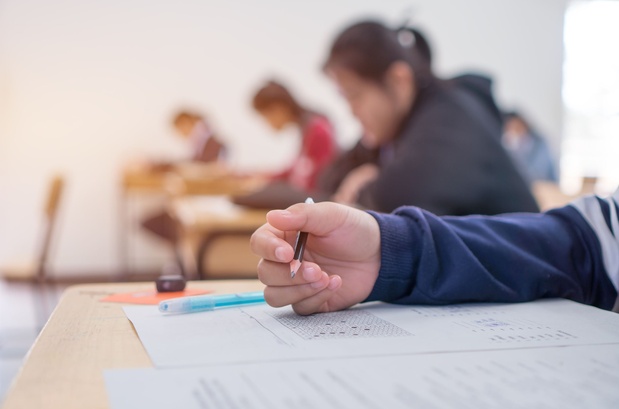
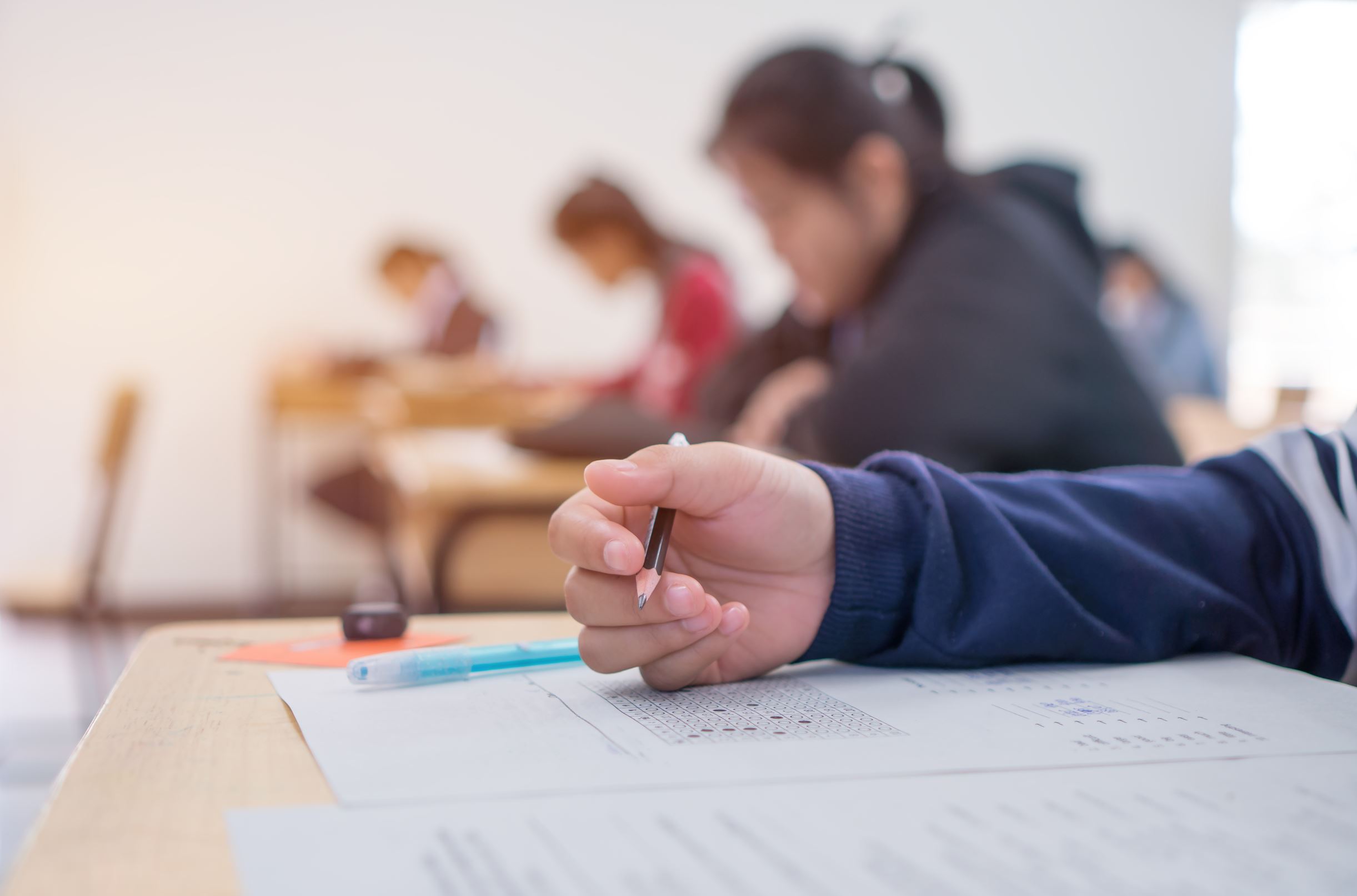
Selective school exams in NSW were marred by disruption this May, with the riot squad called to help control crowds outside one testing hall at Canterbury Racecourse.
Some exams were cancelled while many parents waited for hours to collect their children as crowds converged at the ‘mega-testing’ sites. Ho describes it as ‘a debacle’.
The exams will take place at local public schools next year, The Age reports.
But Ho would like to see selective school entrance exams transformed entirely, well beyond the logistical fixes the Government has outlined.
“Especially this year, it was just such a fiasco that a lot of people are questioning [the exams]…
“I really think that we need to think a bit more radically. So, for example, why not just have every Year 6 kid, at the beginning of Year 6, do a test?
“It’s very easy to identify which kids would really benefit from going into a selective school.
“You don’t have to have spent months and months preparing in a tutoring college, having spent thousands of dollars.”
A universal testing system for selective schools would go a long way toward removing much of the stress and inequality created by the current system, Ho argues.
“It used to be like this, a few decades back.
“It was a universal testing system, and you didn’t have to sign up for it. Sometimes you didn’t even know you were doing it – you just rock up to school one day, and you do run-of-the-mill test, and that was essentially an admissions test…
“It really then just [removes] all the kind of stress and anxiety around it. It’d be great to think about whether we could go back to something like that.”
A 2024 study found the post-graduation benefits offered by Australia’s selective schools were not solid enough to justify their expansion, with the lead researcher calling for a full and overdue review of their operation.
Led by Dr Melissa Tham from Victoria University, the study drew on life satisfaction, employment and education measures to explore whether children at academically selective schools fare better than their counterparts in the long run.
No major benefits for selective school alumni were identified.
“The only significant result that we got ... was around general life satisfaction – and that result was small…” Tham told EducationHQ at the time.
The issue of selective schooling in NSW has remained a highly polarising issue.
Some commentators have previously described being approached by ‘enraged’ principals of comprehensive public schools who had seen a ‘significant extraction’ of their student body, with one leader describing the system as ’intellectual apartheid’.
But the NSW Government maintain selective high schools “are specifically designed to provide optimal learning conditions to support talent development of high potential and gifted students”.
“When learning alongside other high potential and gifted classmates, students benefit both academically and socially,” an information page for parents notes.
“Students tell us that they love learning with other students who also enjoy asking questions, delving deep into topics and being challenged academically.”
Ho, for one, is concerned about where selective schooling is heading in this country and says other education systems around the world are no way near as segregated.
“New South Wales has really gone down that path to an extreme extent. It doesn’t have to be that way.”
The views outlined in this article do not necessarily reflect those of the author or those of EducationHQ. We welcome all perspectives on selective schooling and encourage readers to reach out to the news team at news@educationhq.com to share their take.