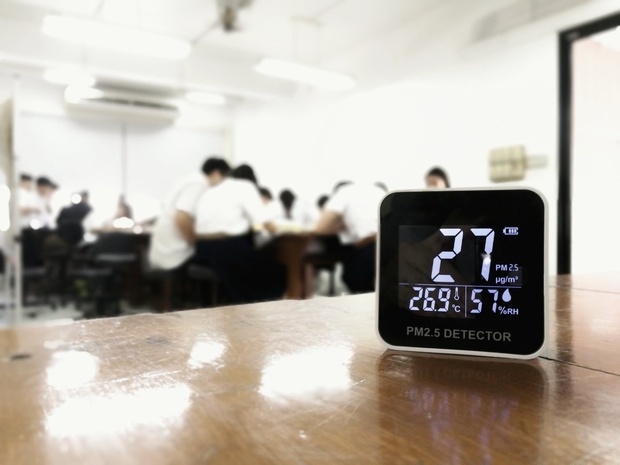
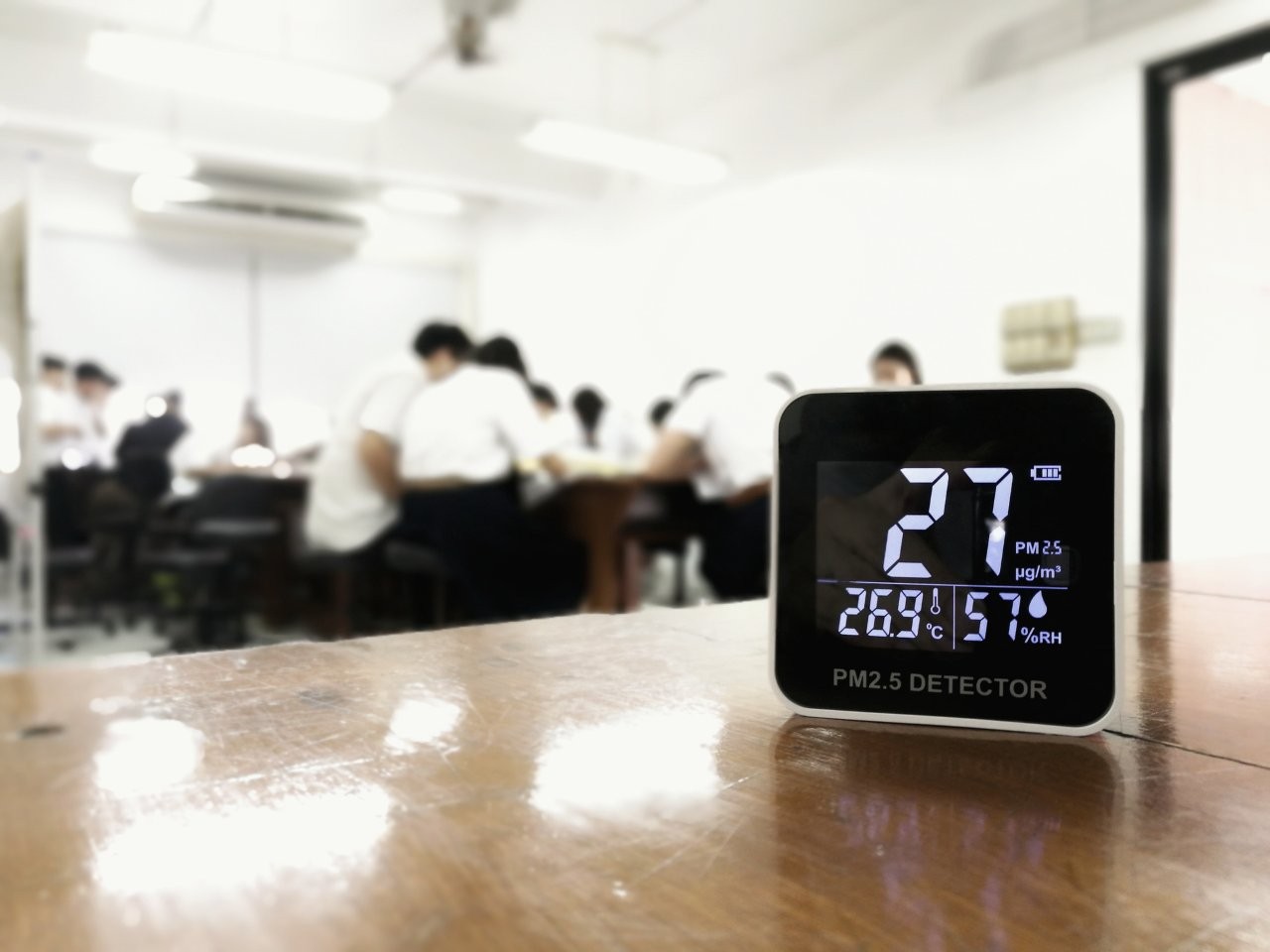
Last year scientists, architects and experts in aerosol science called for government action to mandate indoor air quality standards and improve “terrible” ventilation in Australian schools that can hamper learning.
Yet despite teachers and students spending 90 per cent of their time indoors, little appears to have been done to address inadequacies.
While high-filtration air conditioning is now standard in many hotels, hospitals, on public transport, and in shopping centres post-COVID, our educational institutions remain seemingly ignored.
The State of Indoor Air in Australia 2025 report, led by QUT’s ARC Training Centre for Advanced Building Systems Against Airborne Infection Transmission (THRIVE) has highlighted the health, wellbeing and economic risks posed by poor indoor air quality across homes, workplaces, schools, hospitals and public buildings.
Written by Associate Professor Wendy Miller and THRIVE director Distinguished Professor Lidia Morawska, both from QUT’s School of Earth and Atmospheric Sciences, the report analysed 106 peer-reviewed studies involving data from more than 2500 buildings.
There have been 30 published studies measuring indoor air quality in Australia’s educational facilities, most of them since 2016, with the majority aiming to quantify and compare the indoor and outdoor levels of various air pollutants and analyse the impact of room characteristics and behavioural factors on indoor air pollutant levels.
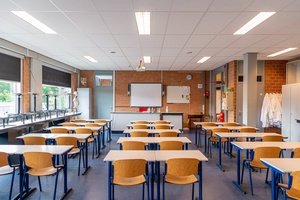
Despite studies showing high levels of CO2 and pollutants in many classrooms, often due to a heavy reliance on natural ventilation via windows that are closed in cold weather, and clear links between poor air quality and cognitive impairment and increased likelihood of pathogen transmission, there remains no government-mandated indoor air quality standards.

“The report acts as a baseline for indoor air quality and as a catalyst for multi-jurisdictional and transdisciplinary discussion that leads to a national strategy,” Associate Professor Wendy Miller says.
Miller says while movement has been made to some extent on improving air temperature in schools, little if any has been made in terms of ensuring its quality.
“Generally, schools in Australia have tended to be naturally ventilated. Most of my experience is with Queensland schools, but New South Wales is much the same,” Miller explains.
“Most are poorly insulated, or poorly designed from an overheating point of view. “
Miller says parents have been quite successful in the last decade in getting state governments to commit to air-conditioning classrooms, but all those systems do, she says, is encourage teachers to shut windows and turn on the air-con.
“Split systems are just cooling the air – they’re not stopping any outside air from leaking in and they’re not bringing in any fresh air,” Miller says.
“All they’re doing is recirculating all of the air that’s being breathed around – and that issue hasn’t made it into the minds of those in state government departments.”
Given many schools, and particularly pre-schools and early childhood centres, are located near main roads and are in close proximity to CO2 and carbon monoxide, it’s a considerable concern.
“Yes, the location of schools is important, but an argument could be, ‘well, regardless of where schools are, if we made sure that they were well-sealed and they had a good centralised or mechanical ventilation system, it wouldn’t matter’,” Miller argues.
All classrooms should be mechanically ventilated, but not just via the split system.
“If you put in a split air-con system for temperature, you also have to put in a ventilation system that brings in outside air that has been filtered so that it doesn’t have the contaminants in it,” Miller shares.
“That means when we have bushfires we can also ensure that there’s good air quality during those events.”
Future solutions, Miller contends, are going to be different in different places, in different climates and across various urban and regional settings.
Last year, Professor Geoff Hanmer told EducationHQ improving air quality inside schools nationwide is simply a matter of installing proper heating, ventilation, and air conditioning (HVAC) systems, which might cost around $2 billion a year over five years – $10 billion in total – but that cost would be more than offset by how much the government and the economy would save.
That suggestion is overkill, Miller suggests, if, for example, you have small country schools where traffic emissions aren’t an issue and you have a fairly good climate most of the time.
“We have to have a much better understanding of what locations have the highest source of poor outdoor air and target those places for having a solution, which might be full sealing and HVAC, but in other places it might be something different.
“So in other places where most of the time the outdoor air is fine, we only need to have a protection during bushfire events. For example, the solution might be having a couple of spaces within a school that is like the bushfire retreat or a heatwave retreat or something like that – so rather than (in) every classroom all the time.”
Miller says to minimise the risk of volatile organic compounds (VOC) pollutants in classrooms, schools need to be buying cleaning products, air fresheners and art and craft supplies that don’t have VOCs in them.
If you’ve got teenage boys, don’t allow spray deodorants in classrooms, for example, she says.
“Sometimes teachers use air fresheners if you’ve got a classroom of pre-pubescent kids or after lunchtime sports; it’s understanding that air pollutants can be in all of those products and to try and identify alternative products to use.”
In 2024, the Australian Academy of Science, the Burnett Institute and CSIRO brought together industry leaders from 30 organisations to demonstrate the science underpinning the need to prioritise clean indoor air, with international leaders providing examples of research and advances in other countries, including the adoption of regulations and standards in schools and public spaces.
How are we tracking on this in 2025?
Miller says while those organisations are still working actively in those areas, she’s not sure it’s resulted in any changes in any of the state’s education departments yet.
“Most policies require an impact assessment done, and generally a benefit-cost analysis. And to date, a lot of the health costs or the avoided ill-health costs are not included in those processes yet, but there is quite a bit of work going on to try to get that change.”
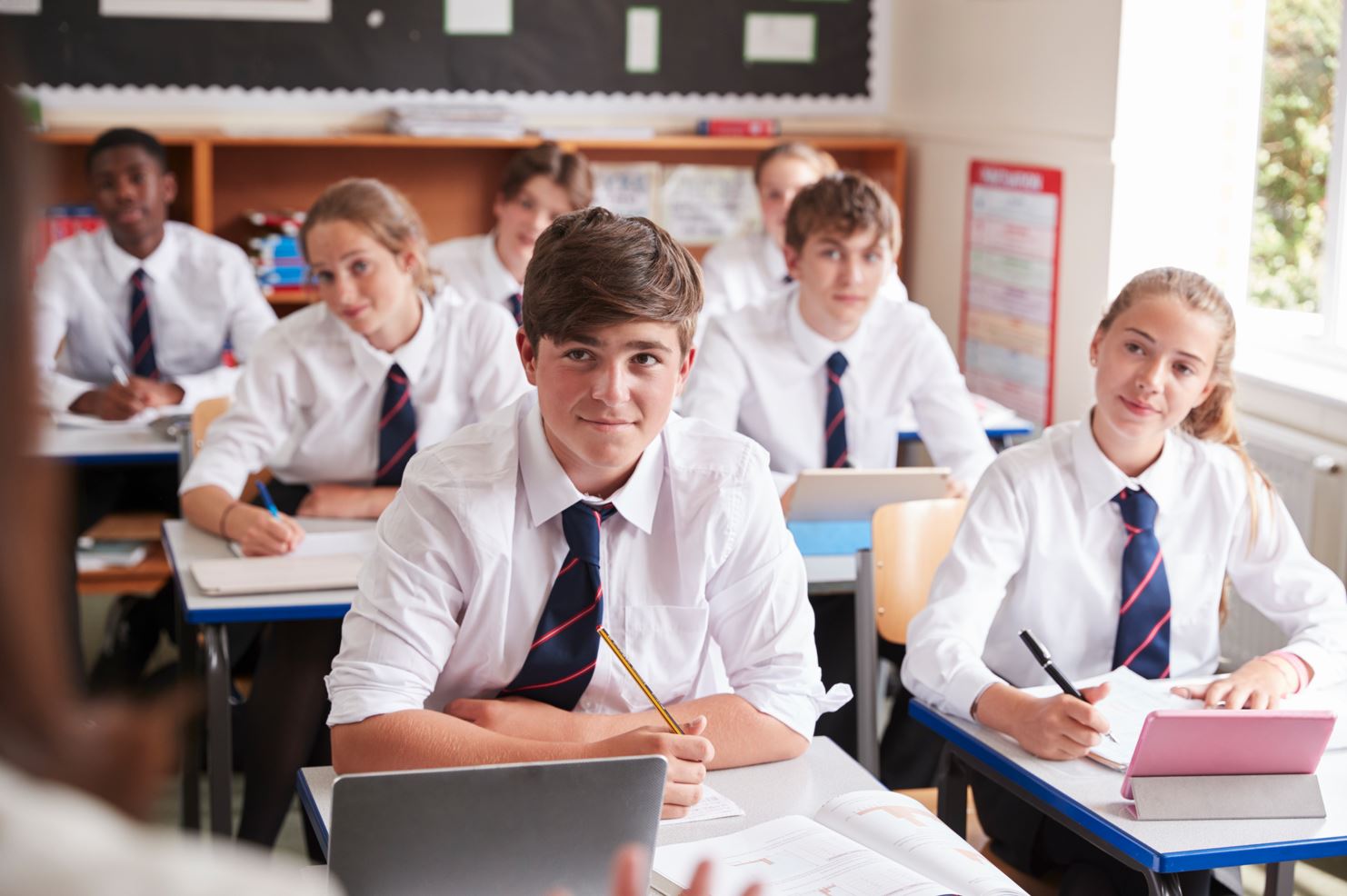
A study last year of 60 New South Wales public schools found if windows were shut, classroom carbon dioxide (CO2) levels easily exceeded 2500 parts per million (ppm) – which experts says equals ‘really bad ventilation’.
So what would Miller say to a school principal, teacher or staff member heading into a WA, Queensland, Northern Territory, New South Wales summer, facing the prospect of 30 degree-plus classrooms?
“Invest a few dollars in getting some CO sensors in classrooms to at least start looking at, what is it that we’re looking at? We need a lot more evidence,” she says.
If teachers, parents or students are complaining about it being too hot, researchers want to know when is it too hot? How hot is 'too hot'? Is it 26, 28 or 38 degrees? And at what time of day?
“We need that sort of evidence to then help define it,” Miller says.
Is poor air quality an issue in every classroom in a particular school or just some classrooms? Is it a problem in the morning session, the mid-session or the afternoon session? Is it a problem in winter compared to summer?
“Because we need to know that.”
“And what pollutants are the problem would be the next stage to then know what’s the most effective solution to that.
“I also think part of moving things forward more quickly would be to get families who are being directly impacted now, and their health professionals, their GPs, to start demanding some evidence to show that the classroom is not badly impacting on my child’s health.”
Clean indoor air should be a basic expectation, not a luxury, Morawska says.
“We need coordinated action across government, industry and the community to ensure safe, healthy and resilient indoor environments.”
The report, titled ‘State of Indoor Air in Australia 2025’, is available here.