For the second year in a row University of Wollongong’s (UOW) initial teacher education (ITE) program has outshone all others in the Federal Government’s National Student Experience Survey (QILT).
The annual survey measures student satisfaction across key areas such as teaching quality, learning resources, skills development, and student support.
The university has more than 2000 students enrolled in its ITE program, spread across five courses, making it a substantial teacher provider for the state.
Dr Ken Cliff, Head of Teaching and Learning, says the survey success demonstrates UOW’s consistency across every aspect of the student experience.
“Our strength isn’t in one area, it’s across the board. It’s a story of consistency and shared team effort,” Cliff tells EducationHQ.
Cliff says to be rated No.1 once was thrilling, but to back it up with a second win really shows the university is onto a recipe for success.
“There’s been three areas that we’ve really looked at,” he explains.
“The first is staffing and staffing expertise – and that is really right from our school engagement and student recruitment, professional staff who go out to schools, all the way through obviously to our teaching staff who work day in and day out with our learners.
“The staffing expertise and the way that those staff interact with their students is incredibly important.”
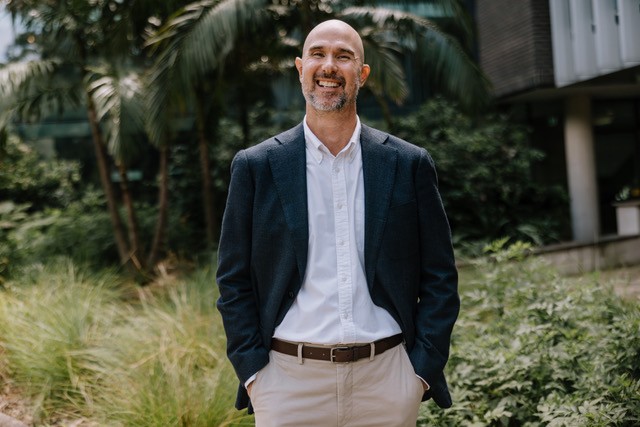
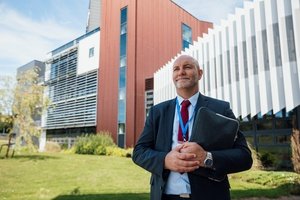
“We consistently hear that professional experience placements are a highlight of our teaching degrees, and it’s our relationships with schools and teachers that makes that possible," Dr Ken Cliff, pictured above, says. PHOTO: supplied UOW
Secondly, there's a huge focus on pedagogy and how the university delivers its courses.
“One of the things that we’ve done is to adjust to the reality of students’ lives these days, and they are complex,” he says.
“We’ve separated additional flexibility in terms of how we deliver courses, but what we’ve really stayed true to at the School of Education is that sense that the face-to-face and or synchronous online learning, those human touch points are so important.
“So with managing all of our degrees, regardless of their primary delivery mechanism, there’s always that face-to-face or synchronous, online live touch points with our staff, which I think has really helped our students understand teaching because it’s such a relational profession.”
The third big element, Cliff explains, is professional experience.
“We have a great focus across our early years degrees, our primary degrees, our secondary degrees, in terms of professional experience as being really the backbone of everything that we do,” he says.
“And that is based on expert staff teaching in schools and early years learning centres and preschools who provide that feedback, that excellent engagement in classrooms and communities.”
In terms of pedagogical approaches and instructional methods, Cliff says the university has a strong commitment to its pre-service teachers developing a broad toolbox.
“It should always be an evidence-informed toolbox,” he shares.
“Explicit teaching, I think, is incredibly important, and here in New South Wales, when we look at, for example, how the Department of Education has captured aspects in explicit teaching for their teachers, those are things that really we have always done in higher education.
“Those key elements remain true to everything we do, including obviously feedback, gradual release of responsibility, those sort of elements.”
Cliff says the university wants its students to have a deep education, which he says is far more than practical training.
“It’s really important that they’re leaving higher education with that broad toolbox so that they can go into any classroom situation, any set of learning needs, and they can choose the tools that are going to optimise learning for their students,” he says.
“A rigorous evidence base, obviously, is incredibly important, but also learning to interpret that evidence base is part of that – so hopefully we’re giving them a full skill-set.”
Cliff says an important distinction is that UOW teacher graduates are career-ready.

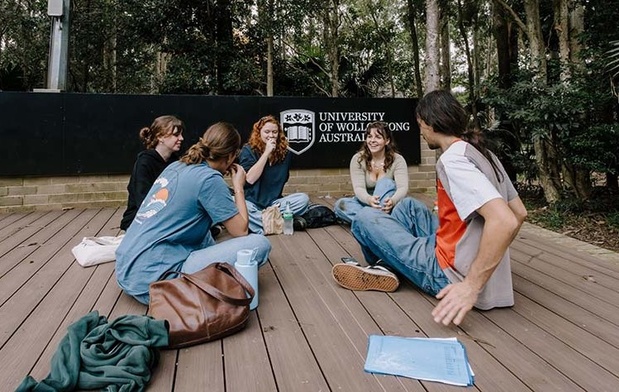
The 2024 National Student Experience Survey also ranked UOW first for Communications, equal second for Nursing and equal third for Humanities, Culture and Social Sciences. PHOTO: UOW supplied
“And that, I think, is a little bit different to being just classroom-ready – because being career-ready recognises how you learn across your entire teaching lifespan.
“The tools we give at the start, when you’re a beginning teacher, you’re going to continue to add to those across your career...”
Cliff acknowledges the essential contribution local educators and schools that host teaching placements make and says the university has prioritised over many years forging, fostering and developing those relationships.
“We have a really long-standing relationship with schools across the broader Wollongong catchment, which over the years has spread to the South Coast, to southern Sydney, and now to southwestern Sydney,” he says.
“Those relationships are based on the high level of trust and confidence that we have in the teaching workforce – we really invest in them and their decision-making, their support of our students, and so we try to provide the framework in which they can lend their expertise to the development of our students.
“We need to deliver more than 1500 placements each year, and so we’re always looking at how do we bring new schools aboard, how do we work with principals and school leadership teams to work out scaffolding and support for supervising teachers that are just coming into supervision of pre-service teachers.”
Cliff says expectations on pre-service teachers have gradually become more complex, with expectations, rightly, greater than they have been in the past.
“Schools want them to be able to make it onto the job quickly with a foundational set of skills, but they then want them to be able to adjust to that setting, that school, that community very quickly, and to take on the practices that the school has ingrained in the way they do things.
“The other thing that they really want them to be able to do is to develop great working relationships with the parents, carers, and obviously with the learners,” he says.
National ITE recognition adds to UOW’s broader success, with the university also achieving the highest Overall Educational Experience rating of any public university in Australia – 80.9 per cent, compared to the national undergraduate average of 76.4 per cent.