On Friday, QTU said its members “are exhausted, frustrated, and determined to keep doing the work we love”, however “astoundingly, since this month’s mass strike action, the Government has made no meaningful contact”.
The union said the ball remains in the Government’s court and that 24-hour work stoppages can be avoided – but only if it acts.
In a letter to members, Ruttiman confirmed the ultimatum had been communicated to the education department and the government.
Conciliation between the Government and the QTU is ongoing at the Industrial Relations Commission.
In a statement, Education Minister John-Paul Langbroek said the Government remains in “good faith” negotiations with the union.
“... we remain at the table to finalise an agreement that ensures our teachers are well remunerated and respected,” he said.
More than 50,000 teachers walked off the job a fortnight ago after negotiations with the Government broke down.
Striking for the first time in 15 years, QTU had been pushing for workload reduction measures, nation-leading wages, along with steps to ease the shortage crisis.
The industrial action followed 17 meetings between the Government and the QTU in the last five months.
The Government’s offer of three per cent, 2.5 per cent and 2.5 per cent salary increases over the next three years was rejected by the teachers' union in June.
On July 16, QTU president Cresta Richardson said the anger and frustration in the state’s rural and remote communities was “growing by the day as the Government wastes time short-changing” members.
“These members have genuine grievances, and they are not going away.
“The Government’s offers fall well short across the board, whether its cost of living, conditions, or salaries.
“They just aren’t focussed on fixing the key issues, but we will make sure they understand,” she said.
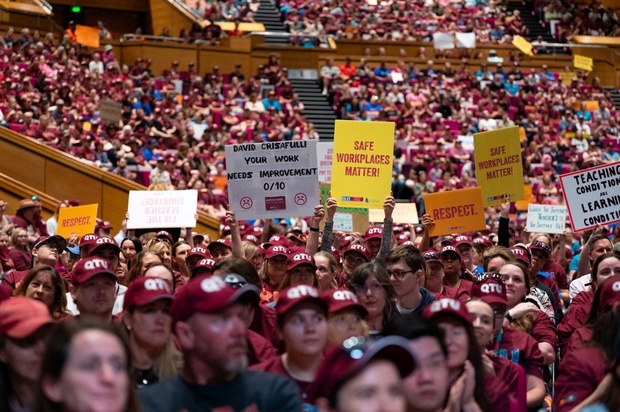
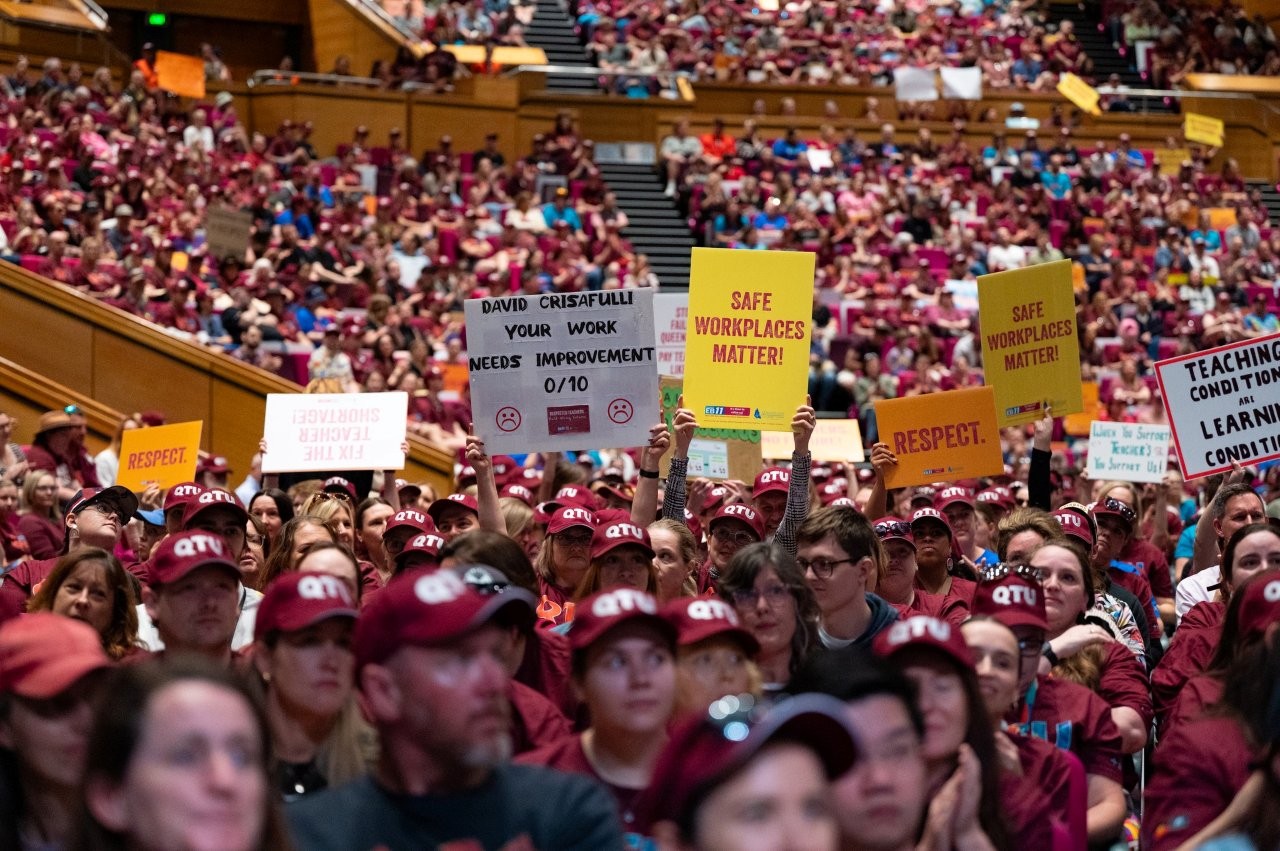
On Friday, QTU members gathered in Gladstone in support of an enterprise bargaining agreement that addresses a range of issues compounding the teacher shortage crisis in the region, including workplace violence.
“Some of your family members work in high-risk activities in the is community,” one speaker told the crowd gathered.
“They are actually safer when they go to work, because their employer understands the risk when they go to work and they put in place strategies to mitigate it.”
Another said all workers have a right to a safe and healthy work environment.
“It’s really that simple. We need a department to put us first and for the government to recognise that protecting their educators is not optional. It is essential.
“... we cannot accept a workplace where harm is brushed off as ‘just part of the job’.”
On Facebook this morning, the union noted “a government and department that gaslights staff through empty and contradictory policies is not OK.
“Every worker deserves to feel safe and respected, and teachers and school leaders are no exception.
“It is the employer’s duty to ensure safe workplaces. It’s time for the Government and department to step up and back teachers and leaders”.
QTU said its members are “united, determined, and won’t back down until respect and safety are at the heart of every school”.
Vice president Leah Olsen said the union wants salaries that are among the highest in the country and better work conditions, and that it was treating strike action as a “last resort”.
The QTU state council will meet on August 30 and discuss the potential for further 24-hour work stoppages.
“We need to make sure we’ve got attraction and retention so people are coming into our schools and staying in our schools, and we also need to make sure that we have safe and healthy workplaces,” Olsen said.
“Further strike action during school hours can be avoided if the Government delivers a package members see value in.”