Produced by APM Reports, the latest offering sees senior reporter Emily Hanford air the concerns of researchers and historians who warn the US federal government is seemingly turning its back on “decades-long support of scientific inquiry and knowledge production”.
One interviewee, historian Roger Geiger, deems the cuts “a frightening departure from US science policy since World War II”.
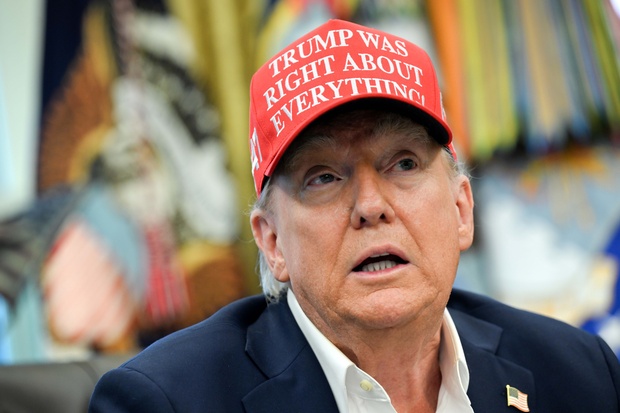
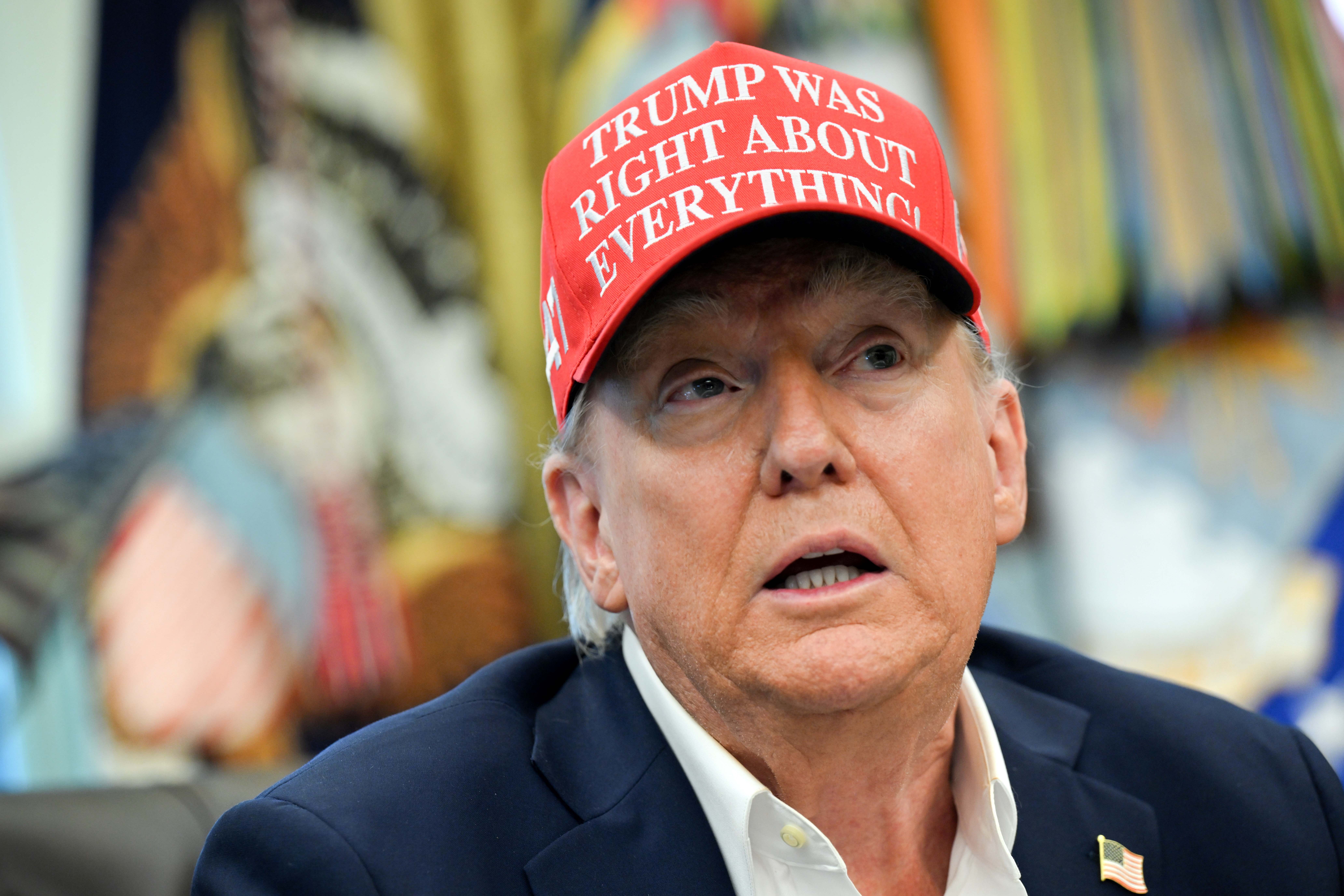
In March, President Donald Trump signed an executive order to dismantle the Department of Education, fulfilling a campaign pledge and accusing the agency of “breath-taking failures”.
“We’re going to shut it down as quickly as possible,” he said, despite the White House acknowledging that closing the agency outright would require an act of Congress.
A special branch of the department, The Institute of Education Sciences, is “all but gone”, Hanford says.
“[The Institute] set a new standard for how education research should be done. To get funding, you had to use valid and reliable ways of collecting data … and the priority was on research methods that could determine whether a program or an approach actually caused students to do better,” Hanford narrates in the episode.
This is a huge development, Geiger suggests.
“This very large, federal investment has created one spectacular breakthrough after another for decades and now is being just practically shut down,” he says of the Institute’s closure.
In February, the Department of Education terminated a total of 89 contracts worth $881 million.
“Elon Musk’s DOGE team cancelled almost all of the department’s research contracts,” Hanford adds.
“We talked to 18 people who worked at the Institute of Education Sciences. Most of them didn’t want us to use their names because they feared retaliation.”
Chaos, confusion and distress over the cuts emerged from their accounts of that time.
“I have decades of hard-copy documents sitting in my office that I need to transfer. And I am being told I have 15 minutes to go in and get my belongings: you know, my couple pairs of shoes and my photos of my kids and my coffee mugs that are at my cube,” one woman reflects.
Hanford says a spokesperson for the Department of Education characterised the cut contracts as examples of “waste, fraud and abuse.”
Yet Wes Hoover, a long-time researcher in the science of reading, found this justification hard to swallow. He told Hanford the move was “very shortsighted”.
“I understand the idea of waste, fraud and abuse. You want to combat that whenever you can. But when you’re cutting entire agencies, and you’re doing it so quickly, I just don’t see that the focus really is on waste, fraud, and abuse – unless you think all of it is wasteful.”
You might think the Trump administration’s cuts to the Department of Education are a good thing. You might think they’re a bad thing. But most people seem to agree that something big is happening here.
— Emily Hanford (@ehanford) August 23, 2025
Episode 14 of Sold a Story is available now. https://t.co/fqS8u7lWtq
But others, like political scientist Mark Schneider, former director for the Institute of Education Sciences for six years under the Bush administration, suggests the cuts might not be a bad thing.
During Trump’s first term he looked at the operations of the Institute and was seemingly less than impressed.
“There was no cohesive strategy for how to spend well over a hundred million dollars a year on research.
“It was like: Oh, we need some work in social emotional learning. We need some work in this. We need some work in that...
“And I spent six years trying to change it. And changing it was so hard. I mean, really and truly hard,” he says in the podcast.
Hanford questions if the Institute of Education Sciences did indeed “fall down on the job”.
“Did it fail in some fundamental way at getting research into schools?” she asks APM Reports investigative education reporter Christopher Peak.
“I talked to a lot of people about this,” Peak replies.
“None of them were as harsh as Mark Schneider, but they acknowledged that the institute had work to do in this area. Mission definitely not accomplished, at least not yet, but they say it was something that the institute was working on. And they pointed to things they think the Institute of Education Sciences was doing that was getting the research out there.
“For example, they have been putting out these things called ‘practice guides’. They summarise the most important research and provide tips for teachers based on that research.”
What this means for the future of education research and the science of reading shift in schools remains to be seen, Hanford indicates.
“Here’s my take: This podcast has helped create a sense of urgency, a sense of ‘enough already, we’ve waited too long for kids to get evidence-based reading instruction’. But evidence-based instruction is still kind of new in education,” she says.
“The Institute of Education Sciences has existed for just over 20 years. That’s barely a generation. Maybe 20 years isn’t that long when it comes to the complex work of getting research into schools.
“So yes, there should be urgency about all of this. But maybe things are – or were – just getting started.”
Meanwhile, Dr Kenneth Shores, an associate professor and education policy expert at the University of Delaware, warns that “a lot of talent” will leave the sector.
“…You know, the really, really bright ed policy person was like somebody who could have got a job as an analyst at Amazon and made twice as much money, but they cared about education. They cared about learning. And this is something they were drawn to. And so they did it for 5, 15 years, whatever the number is. And now I think a lot of them are not going to do it anymore.
“…I just don’t think we really know what that’s going to be like. We’ve had really, really talented people trying to figure out schooling.
“And what the world looks like when they’re not doing that anymore, I think we don’t really know,” he tells listeners.
Since Hanford’s widely-devoured podcast uncovered how the debunked ‘whole language’ movement spread throughout the US school system, despite it being discredited by cognitive science, a growing list of states have passed ‘science of reading bills’ forcing schools to bring their reading instruction in line with the evidence.
Some legislators have banned the three-cueing method, and whole school systems have been required to buy entirely new curriculum and classroom materials.
But Hanford has previously told EducationHQ that the movement is something of a scramble and a shift that is being led chiefly by the acquisition of new resources, which could be deeply problematic.
“I’m not sure that’s the right way to go,” she said.
“Because right now a lot of schools are trashing what they’re doing and buying something new.
“And from what I’ve learned in my reporting, having good materials is important – it’s something that teachers in schools need, but you can’t lead with that. It’s just going to be a waste of money.”