
A UN forum not long before had found that 40 per cent of the roughly 6700 languages around the world were in danger of disappearing – most of them Indigenous.
As a nation we can’t say we weren’t warned. A 2019 survey by AIATSIS (the Australian Institute of Aboriginal and Torres Strait Islander Studies), found that out of 250 Indigenous Australian languages active prior to colonisation, only 12 were still being actively acquired by children.
A forum last month on protecting languages saw more than 50 Indigenous leaders from over 30 languages groups attend. It was agreed there that in order to keep clan languages alive, they needed to be spoken at work, in the community and in schools.
One of the speakers at the event, Renfred Manmurulu, talked about his South Goulburn Island language, Mawng.
He said in many traditional practices, such as Mawng songlines, culture was inseparable from language.
“It’s a window of who you are and where you’re from,” he said.
With time running out for some languages, particularly with the passing of more Aboriginal clan elders in recent years, the University of Queensland has responded with its Graduate Certificate in Indigenous Language Revitalisation, the first course of its kind in Australia.
The qualification is part of a larger national effort to support the resurgence of First Nations languages and empower the leaders behind that change, and has been designed by Indigenous language experts, including Des Crump, to empower First Nations people to reclaim and share their languages by learning how to develop resources and apply research.
Crump is industry fellow for Indigenous languages at University of Queensland and co-director of Indigenous Engagement.
For 20 years he’s been heavily involved in First Nations languages and language learning in schools and recently completed a Masters in Indigenous Language Education through the University of Sydney.
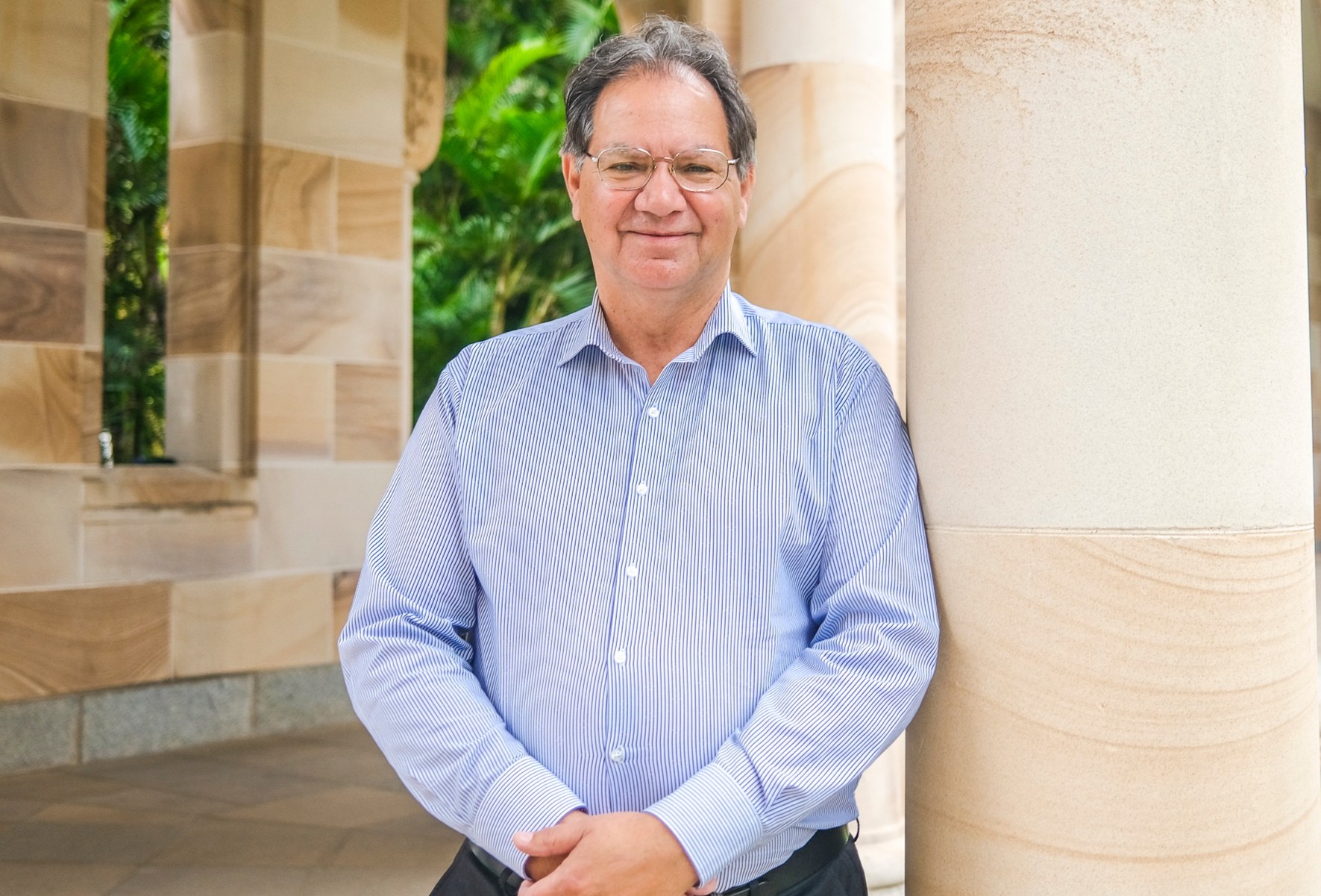
Course lecturer Des Crump says the qualification is not about teaching a single language - it’s about giving people the skills to protect and grow their own.
Crump says it’s critical that we preserve as many First Nations languages as we can.
“… there’s such a diverse range of languages, and unfortunately regarding the 800 or so languages and dialects in Australia, the majority of them are considered endangered or no longer spoken in the community.
“So it’s not only that loss of cultural heritage, but also identity for community and particularly young people coming through wanting to reconnect with that language and culture.”
The Graduate Certificate in Indigenous Language Revitalisation is geared mainly towards people who are interested in language teaching or language revival, whether it be in a school or community settings.
“They’re bringing their own language knowledge into the program,” Crump says, proudly.
“And we’re topping up those skills with specific, language-related, linguistic-type skills where they’re understanding the language they’re working with better.
“We’re also better equipping them with the skills and the knowledge to continue their language revival and often their language journey, because a lot of them are going through that same revival program themselves.”
Uniquely, students are taught to analyse research and learn their language intricately before they learn how to teach it.
The course was co-designed with community and plenty of trial and error.
“Because we wanted to make sure that the course that we ended up with, was going to meet not only their needs, but also be presented and delivered in a way that they found appropriate and something that was meaningful and useful for them.”
An important inclusion has been building in students a critical awareness of the social, cultural and political issues important to languages and to advocates and professionals.
“… it’s very important to understand the community, the language community that you’re working with and what are the historical context, the cultural context,” Crump shares.
“There’s going to be different reactions or responses to the way language has been revived, there’s going to be issues around the community politics and the ownership, the intellectual property of language - so it’s very important for students or anyone working with languages and language communities to be aware of that, to have that critical insight into it and work out what are some strategies to help negotiate that pathway through that.
“Sometimes it’s a precarious depending on the language history of a particular community.”
One of the inaugural graduates of the course, Auntie Jacqueline Kina, works as a community education counsellor in Caboolture and is teaching Kabi Kabi language in school classrooms.
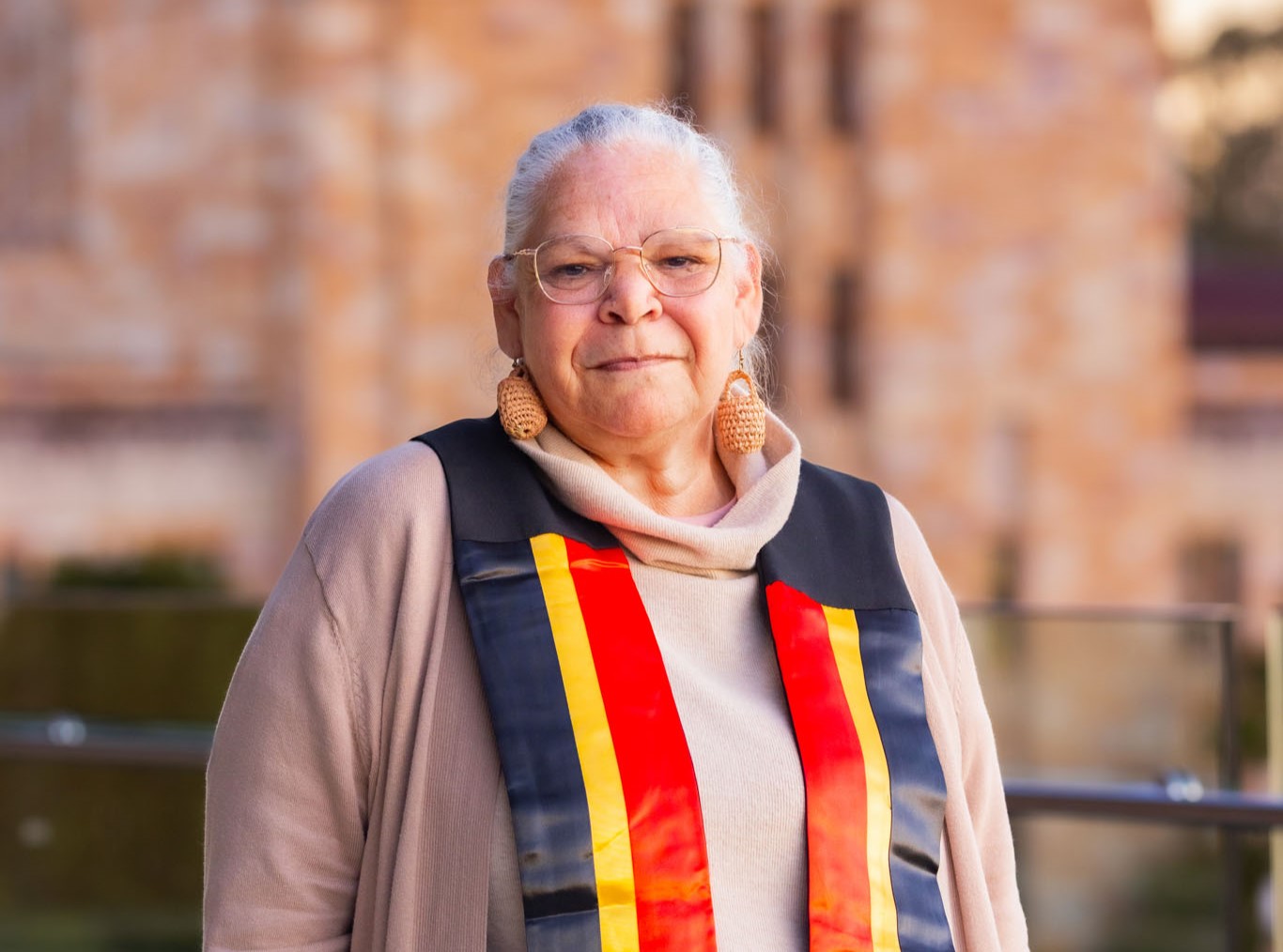
“I’m the only Elder out here in my area that teaches Kabi Kabi language in the schools,” Auntie Jacqueline Kina says. “But I’m not alone anymore. I’ve got my little language family now.” PHOTO: University of Queensland
Previously she’s used bush methods and taught language through stories, but was keen on learning some newer pedagogical approaches.
The Traditional Owner and Elder of Gungulu, Kabi Kabi, Jinabura and Wakka Wakka and K’gari Nations says she didn’t hesitate to put her hand up for the program.
“It’s my first time at university and UQ is a dream school,” Aunty Jacqueline says.
“This qualification opens doors for me, for my students and for my community.
“Since the course, I’ve learnt how to meet my students halfway with technology and how to work with them in a new way, which helps me help them.
“It is something I can pass on. It’s all part of the legacy that I am leaving.”
Crump says an important component has been bringing in speakers with a background or an understanding of language policy or education policy and how this fits into the Australian and Queensland school curriculum, and how it can be delivered.
“We’ve also looked at other methods from across the world, what are some ways that people are learning, particularly in schools, but also adult community learning as well, because a lot of them, as well as teaching in schools, are also wanting to deliver similar programs in the broader community.”
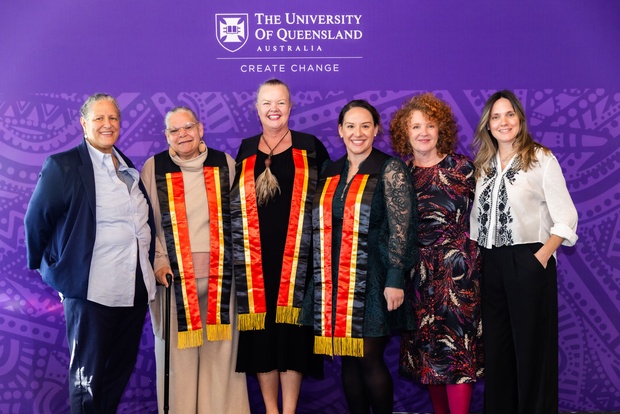
The inaugural class has recently had it’s mid-year graduation with the cohort made up of 13 Aboriginal and Torres Strait Islander students from 11 language groups, stretching from the Torres Strait to northern New South Wales.
Among them was a lawyer, language professionals and Elders – each bringing deep cultural and linguistic knowledge into the classroom and being given the skills to protect and grow their own.
Crump says there was a shared sense of pride in being part of a very innovative program, but also being in that first cohort.
“You could see that personal growth, but also that professional growth, where they had a better understanding of not only themselves in the school and the community, but also a better understanding of how they can deliver that program, how they can negotiate with other people, and more importantly, bring others along that journey as well, so that your program and yourself are supported in that language community.”
The format of the course has been well received, with four one-week blocks where students come into the University of Queensland at St Lucia in Brisbane, and three online sessions before each block.
With a mountain of applications to get through, the second group will be starting in August.
“It’s just going to grow, I think, because we’ve had so much interest and response, particularly across Australia, but also a couple of queries from international (people) wanting to see how we’re delivering it.”