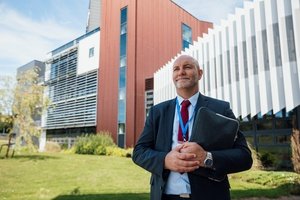


Dr Ben Jensen, CEO of education research consultancy firm Learning First, says compared to those curriculums of best-performing countries and school systems around the world, ours is marred by ‘significant’ problems – and Australian teachers have been left to deal with the implications.
“There is still not enough acknowledgement of the amount of heavy lifting that is required of Australian schools, in terms of ensuring quality curriculum is taught to students,” Jensen tells EducationHQ.
“It’s just left so much more for Australian teachers to do – other systems around the world provide (so much more) in terms of both (quality) system-level curriculum and the implementation support.”
Jensen is preparing to speak at the Australian School Improvement Summit in October, where he will be highlighting how high performing systems across the world do curriculum and what we can learn from them.
In 2023, Learning First benchmarked the content of the national science curriculum against that of seven comparable systems internationally, finding Australian students were comparatively set a low standard for achievement.
“Before starting the work, I knew there were problems with the Australian Curriculum but my colleagues and I have been shocked by the size of the holes in the Australian science curriculum revealed in this report,” Jensen noted in the research.
He reveals his team are now doing similar analysis for other subjects.
Jensen says the case of our science curriculum offers an “incredible example” of the challenges teachers face with “the content, the lack of breadth, and the lack of depth of learning”.
“One of the problems with curriculum is that people very rarely go into detail of the actual documentation and what we’re actually asking teachers to teach and what we want students to learn.
“And it’s only in the detail that you actually find out what the reality is.
“There’s so much talk, so people would often say ‘we have a curriculum that’s a mile wide and an inch deep’, and in actual fact, we don’t.
“We have one that’s an inch deep and an inch wide”.

“Across the curriculum as a whole, I think there is an incredible lack of content on Australia's Indigenous history," Dr Ben Jensen says.
Every scrap of data collected from schools tells us that the curriculum in its current form makes it too difficult to teach well, Jensen contends.
“[It’s] so difficult to sequence properly, (there’s) a lack of clarity around what to teach and how to sequence that teaching, what’s the level and breadth required.
“And that gets both into the specificity about what we’re leaving to different schools, but also gets into the quality of the curriculum documents themselves,” he says.
If granted free reign to overhaul the national document, Jensen says he would be making far more than cosmetic changes.
“I would be making the structure much, much simpler to focus on the learning areas and how we develop critical thinking and those sorts of things within the learning areas.
“I would be creating clarity around what is to be taught and assessed at each year level [and ensuring] there’s an adequate breadth and depth within each discipline and across disciplines.”
At a structural level, the curriculum’s sequencing of learning also needs attention.
At present, some content is being taught in the wrong order, Jensen says.
“… we’ve also got significant problems where the jump accepted by students is either too small or way too large. This hasn’t been thought through in enough detail.”
Bigger questions about what we want Australian students to learn within individual subjects or disciplines needs to be probed, the expert adds.
“Across the curriculum as a whole, I think there is an incredible lack of content on Australia’s Indigenous history. I think there is a lack of content around different parts of the world.
“I think students need to come out of schooling, particularly in this day and age – but I think it’s been true for a long time – with a knowledge and understanding of the world in which they’re living, and a special knowledge of how Australian society was formed.
“I think there are aspects of the curriculum that are good, but I think it can be strengthened so much more.”
Broader discussion about curriculum implementation also needs to shift, Jensen suggests. There’s too much of a focus now on ways to save teachers’ time here, he says.
What gets missed as a result is calling out the problematic curriculum itself, and the issue of how it can be interpreted and effectively enacted in classrooms, Jensen notes.
The expert remains convinced that we won’t significantly improve student learning outcomes or reduce the increasing inequality within the system without a fundamental overhaul of the Australian Curriculum.
The next curriculum review is expected in 2027-2028.
EducationHQ is a media partner of the Australian School Improvement Summit. View the program agenda and purchase tickets here.