

The sustainability cross-curriculum priority is futures-oriented and encourages students to reflect on how they interpret and engage with the world. It is designed to raise student awareness about informed action to create a more environmentally and socially just world.
Produced by right-wing, corporate funded think tank the Institute of Public Affairs (IPA), the report, however, found the sustainability cross-curriculum priority enables third-party providers, such as Cool.org, the World Wildlife Fund, and the ABC’s Behind the News program, to “disseminate a range of alarmist teaching materials”.
Titled Climate of Fear: How the National Curriculum Drives Climate Anxiety Among Children it has found that emotionally charged lessons are being forced upon students as young as five years old, well before they possess the cognitive or emotional maturity to understand and process those issues.
“It is irrefutable that the National Curriculum has been designed to sow fear into the minds of children,” Colleen Harkin, director of the Institute of Public Affairs’ Schools Program, said.
“We are creating a generation of Australians who are both academically underprepared and psychologically burdened by climate activism.”
From the moment children enter the education system, they are taught to be anxious about the future of the planet and the climate, Harkin suggested.
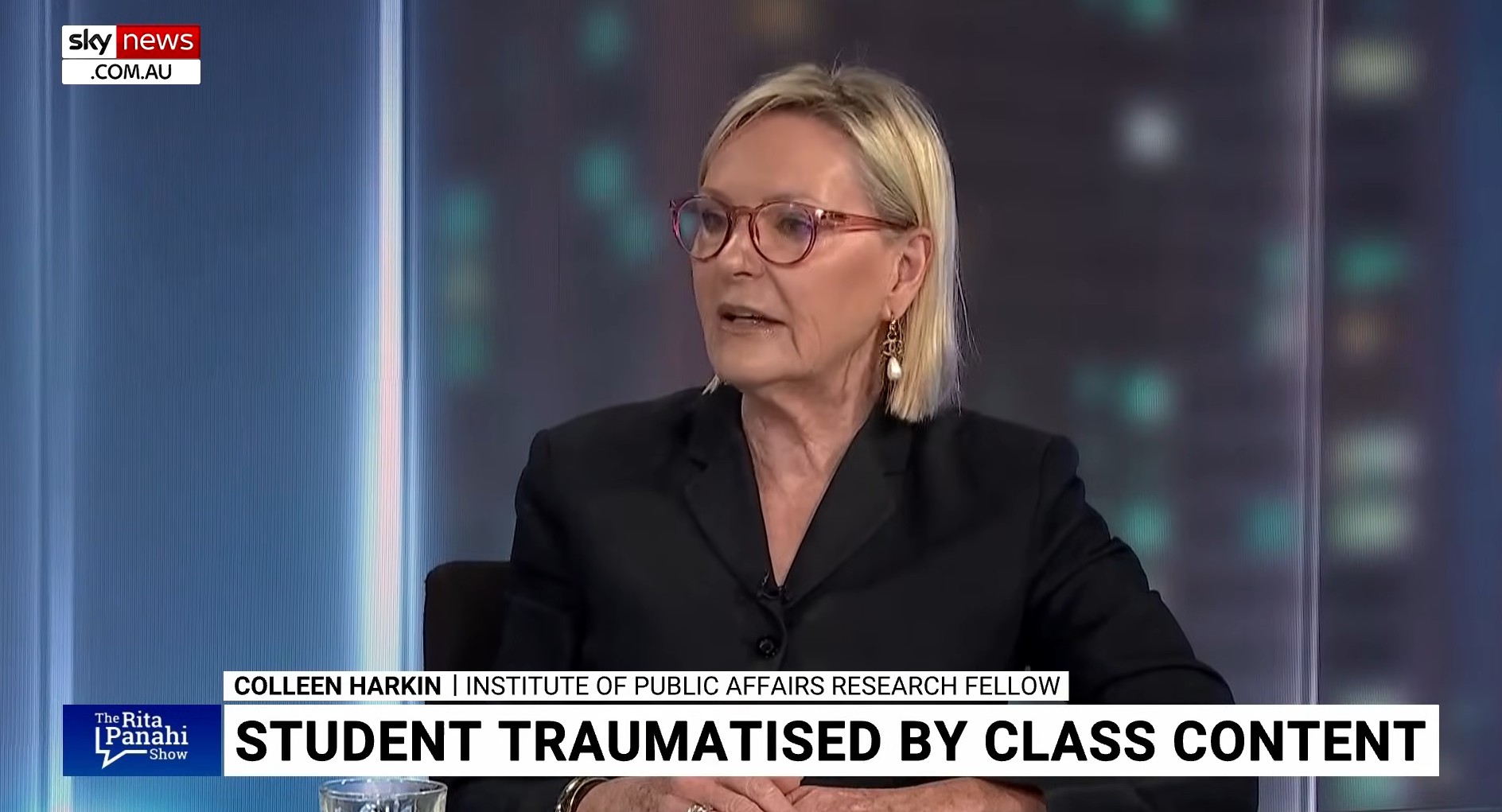
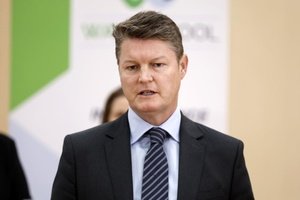
“We are creating a generation of Australians who are both academically underprepared and psychologically burdened by climate activism,” the IPA’s Colleen Harkin says. PHOTO: YouTube
However, in defence of the sustainability cross-curriculum priority, Professor Sara Tolbert, from Monash University’s School of Curriculum Teaching & Inclusive Education, says Australia’s climate education approach meets global standards and that the curriculum was developed by qualified educators to uphold children’s right to knowledge and participation.
“The IPA attack on climate education reveals more about their ideological agenda than about Australian classrooms,” Tolbert said.
“As a think tank that refuses to disclose its current donors and with a documented history of climate science denial, it has no credible standing to dictate what children learn about the defining environmental challenges of their generation.
“Australia’s approach to climate education aligns with our commitments under the Paris Agreement and UNESCO’s Education for Sustainable Development initiatives, which recognise that education is ‘the most powerful element in preparing societies for the global challenges that climate change brings’.
In contrast, educational psychologist and adjunct fellow at the IPA, Clare Rowe, said she was “deeply concerned” by how early and how frequently children are being exposed to alarmist and emotionally charged climate messaging in primary schools.
Rowe, who has long campaigned that the way climate change is taught is schools is leading directly to childhood climate anxiety, said what the report clearly shows is that climate content is not being taught in small doses, nor in an age-appropriate way.
“It is embedded across the curriculum – in art, humanities, English, even into early literacy tasks – and much of the third-party material used by teachers is explicitly alarmist,” Rowe said.
“We delay teaching children about war, terrorism, cancer, or adult political issues for a reason.
“We have guidelines for everything else – screen time, online safety, playground equipment, explicit content – yet we have no guardrails around the emotional impact of climate education on young minds.”
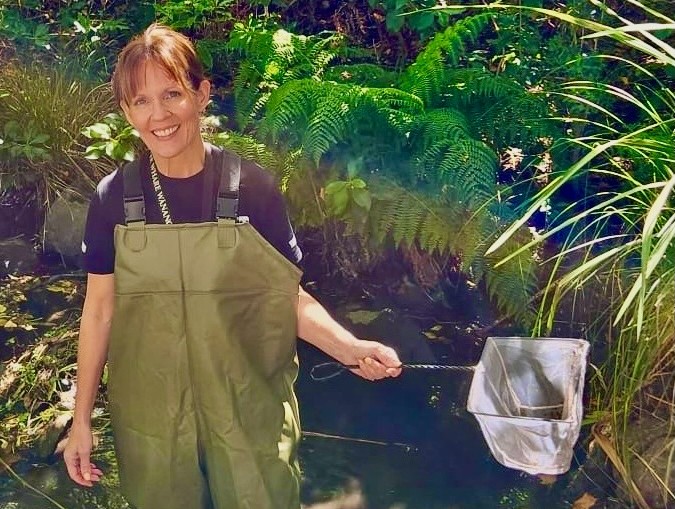
Professor Sara Tolbert, pictured above, says Australia’s climate education approach meets global standards and the curriculum was developed by qualified educators to uphold children’s right to knowledge and participation. PHOTO: @monashuniversity
Tolbert said climate and sustainability education is embedded not only in the school curriculum but also in the Early Years Learning Framework, developed by experienced early childhood educators and pedagogical experts who understand that children have a right to be informed and to participate meaningfully in matters affecting their lives.
“Teachers absolutely deserve better resources and support to teach climate change in age-appropriate, evidence-based ways – and yes, we should be vigilant about which organisations produce curriculum materials, which is precisely why qualified educators and researchers should develop these resources rather than fossil-fuel-aligned lobby groups.”
The expert in transdisciplinary science and environmental education said research shows that students experience more anxiety when these issues are not taught, as awareness without mechanisms for action exacerbates distress.
“The IPA weaponises the concept of ‘eco-anxiety’ for political purposes, while ignoring that industry-produced materials from polluters deflect responsibility from corporations onto individual children.
“The imminent threats to children’s wellbeing and academic achievement are chronic underfunding, teacher shortages, and unsustainable workloads – issues the IPA conveniently ignores while demanding we abandon sustainability education precisely when rural and Aboriginal communities face increasing climate impacts.”
The National Curriculum states that “the Sustainability cross-curriculum priority explores the knowledge, skills, values and world views necessary for people to act in ways that contribute to a sustainable future”.
“Designing solutions and actions for a sustainable future requires an understanding of the ways environmental, social and economic systems interact, and an ability to make balanced judgements based on present and future impacts,” it reads.
“The Sustainability cross-curriculum priority is futures-oriented and encourages students to reflect on how they interpret and engage with the world. It is designed to raise student awareness about informed action to create a more environmentally and socially just world.”
The IPA said while "precious classroom time" is dedicated to climate activism, NAPLAN results reveal a third of children in Grades 3 and 5 are failing to meet minimum expected benchmarks in literacy and numeracy.
“Urgent reforms are needed to safeguard both student wellbeing and academic integrity,” Harkin claimed.
“This requires removing the Curriculum’s politically motivated cross-curriculum priorities, prioritising essential literacy and numeracy skills, and restoring subject integrity,” Harkin said.
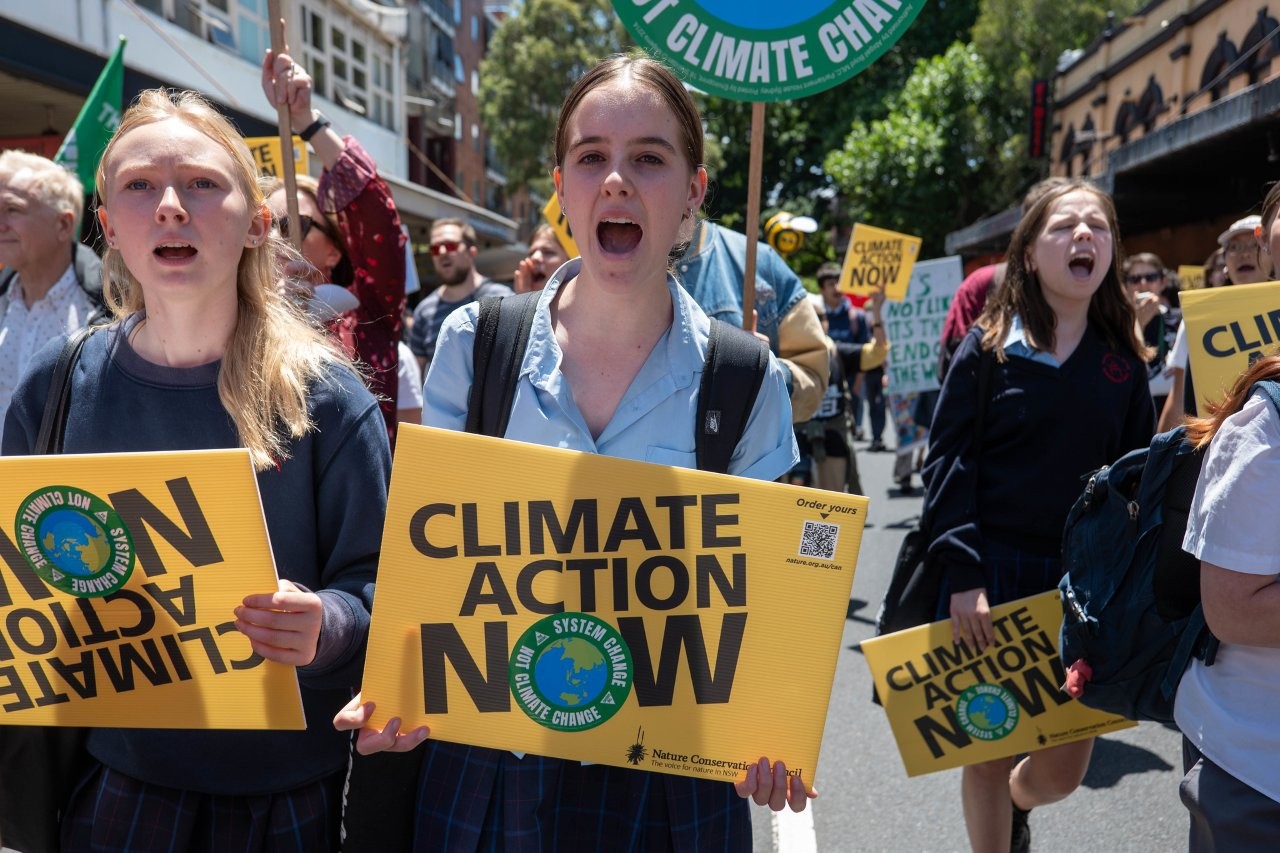
“It is no wonder children are coming out of the school system as climate activists; our school system teaches them it is the only way to save not only their own lives but future generations,” Colleen Harkin says. PHOTO: @Zebedeeparkes
The IPA’s report highlighted what it called "the serious public policy failure our education system has become”.
The report recommends:
- The sustainability cross-curriculum priority in the National Curriculum be abolished.
- The introduction of emotionally charged topics be delayed until (at least) secondary school.
- Climate-related instruction be confined to science classes at the appropriate year level to ensure subject integrity.
- The introduction of national guidelines on age-appropriate environmental education.
- Prioritising literacy and numeracy in class, as well as auditing non-core subject areas for ideological content.
“Exposing children to complex global problems and catastrophic scenarios before they have the emotional maturity or cognitive capacity to understand them risks long-term emotional harm,” Harkin said.
“It is no wonder children are coming out of the school system as climate activists; our school system teaches them it is the only way to save not only their own lives but future generations.”
A report published in June looked at pre-service and practicing teachers’ views on sustainability education, and found that while teachers have a positive attitude towards sustainability, they lacked key knowledge and confidence to teach appropriate sustainability ideas within the Australian Curriculum.
Researchers from the University of Southern Queensland found that the implementation of the sustainability cross-curriculum priority area “seems inconsistent” and there is a need to support teachers through curriculum resources, professional development, and ongoing mentoring.
“Respondents almost universally agreed that education for sustainability was of great value and perceived their schools as concerned about sustainability and willing to act,” researchers concluded.
The report recommended that further attention be given to sustainability in preservice teacher education.
“Given the limited responses to the question about professional development, an alternative approach is to provide teachers (and preservice teachers) with access to mentoring – both formal programs and informal networks, including professional learning communities,” the report read.
“Mentoring and professional learning communities could provide valuable guidance and foster a collaborative network.”