
That’s according to human rights advocate and UniSA senior law lecturer, Associate Professor Sarah Moulds, whose new paper argues that young people must be recognised as citizens now – not citizens in waiting – if Australia is to build a more resilient, equitable and future-focused democracy.
“Outdated assumptions about younger people are preventing Australia’s democratic institutions from keeping pace with social change,” Moulds, who is editor of the Australasian Parliamentary Review and co-founder of the Rights Resource Network SA, argues.
“At a time marked by a global decline in democracy, intergenerational inequality, and declining trust in political institutions, Australia’s parliaments cannot afford to sideline the voices and views of younger generations.”
Moulds’ article highlights a long-standing pattern in Australia, where young people are framed either as vulnerable “figures of hope” who need protection and instruction, or as “figures of risk” who must be shielded from harmful content, including political discussions.
She argues that both narratives limit young people who want to get involved in democracy.
“Young Australians are not apathetic or disengaged. They are expressing their democratic views in ways that are meaningful to them and not aligned to conventional party politics.
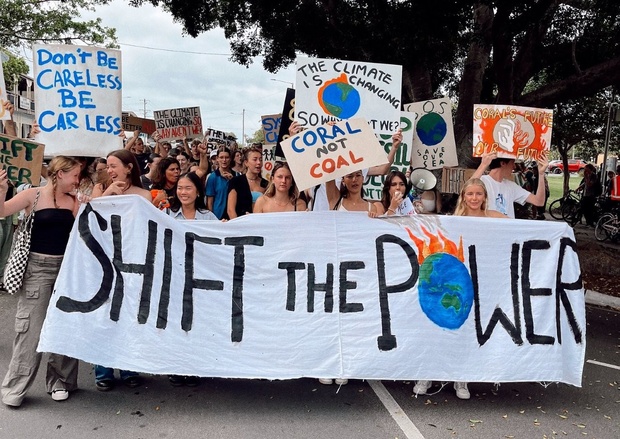
“This can include online activism, protests, and issue-driven campaigns. However, these forms of engagement are rarely acknowledged or valued within parliamentary settings.”
In January this year, a parliamentary inquiry found that civics education in Australian schools is fragmented, inequitable and largely ‘not working’, leaving young people disengaged and unable to fully participate in our democracy.

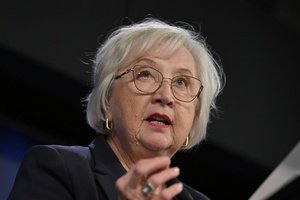
“Creating the conditions for genuine intergenerational fairness means reshaping our parliamentary culture to value and listen to young people’s views,” Assoc Prof Sarah Moulds, pictured above, says.
Committee Chair, Senator Carol Brown, said as democracies around the world – including Australia – face “rising disengagement, distrust, and misinformation and disinformation” encountered online, it was now critical that school leavers were equipped to participate in elections and democratic life.
In February, an ACARA report revealed that secondary students’ grasp of Australia’s democracy, our political system and civic processes is in freefall.
In the worst result on record since ACARA began testing in 2004, 2024 test results revealed just 28 per cent of Year 10 students (compared to 38 per cent in 2019) and 43 per cent of Year 6 students (compared to 53 per cent in 2019) are proficient in civics.
Despite this, the report found students continue to value the importance of learning about the nation’s history and civic institutions.
Conventionally framed programs such as Youth Parliaments and school-based civics education are critically important, Moulds says, but often position young people as learners rather than political actors or policy makers, limiting their overall impact.
The Department of the House Of Representatives’ My First Speech competition (https://mfs.houseofrepresentatives.gov.au/about/) is probably a good example.
It asks secondary school students to imagine themselves as a newly elected Member of the House of Representatives and to write a 90 second or 300-word speech about an issue they are passionate about.
This year’s winning speeches were about better access to physical and mental health care in regional areas, organ donation and holistic education.
“While these initiatives can inspire interest in democracy, they do not typically give young people any real influence,” Moulds suggests.
“This is a missed opportunity. If parliaments want to strengthen democratic engagement and rebuild trust, they need to move beyond tokenism and that means sharing power.”
Moulds’ article draws on practical examples from New Zealand, Wales and Scotland – jurisdictions where parliaments have actively worked to give young people greater authority and visibility in politics.
In New Zealand, the Rito o te Pãremata youth reference group has helped transform parliamentary engagement by flipping the traditional teacher-learner model. Young people co-design engagement strategies, develop resources, and advise on parliamentary practice.
“Their contributions are valued as expert knowledge rather than supplementary input,” Moulds says.
Wales provides another example through its directly-elected Welsh Youth Parliament, where 16-and 17-year-olds vote for representatives who actively contribute to parliamentary processes and policy making.
Both Wales and Scotland have lowered the voting age to 16, further strengthening democratic participation, with research showing that early voting can help embed lifelong democratic habits.
Moulds argues that these international examples illustrate what is possible when parliaments view young people as political agents who are invested in democracy. She notes that the South Australian Parliament is also punching well above its weight when it comes to innovative education programs.
It offers several education programs, including the Civics in the City program which is a joint initiative with the Electoral Commission and Department for Education.
Civics in the City provides financial assistance for regional schools to visit Parliament House in Adelaide and delivers an authentic civics and citizenship learning experience for their students.
“In Australia, momentum for reform is slowing building. The Federal Parliament’s 2024 Inquiry into Civics Education and Political Participation acknowledged the need for more diverse and meaningful youth input. However, systemic change requires more than modest tweaks.
“Creating the conditions for genuine intergenerational fairness means reshaping our parliamentary culture to value and listen to young people’s views.”
To read the paper, titled ‘Young People are citizens now! Reconceptualising youth engagement with Australian parliaments’, click here.