Commissioned by the Australian Education Union, the Housing Affordability and the Teacher Shortage Victorian report paints a grim scene for the state’s teaching workforce.
It found that some 43 per cent of teaching positions are in Local Government Areas (LGAs) where a graduate teacher would be unable to rent even a one-bedroom property.
Meanwhile, more than 4,900 jobs are in areas where a graduate teacher with a partner on a median salary could not afford to rent a three-bedroom property.
Even for teachers at the top of the pay scale, who are the breadwinner in a single income family, three quarters of Victorian LGAs have a median house price that is ‘seriously, severely or impossibly’ out of reach for this cohort, the report flagged.
For Jen Hughes*, a full-time public secondary teacher from Melbourne’s south-east, the situation has meant living at home with her parents is the only viable option.
Hughes has been teaching for around six years, and says as a single person on her current pay it’s incredibly hard to get ahead.
“My salary really isn’t enough to be able to rent a property nearby and live comfortably, or to live in my own property, if I was able to buy one, because the mortgage repayments are too large – unless I was with another person who had an exponentially greater salary.
“I’m 30 and don’t feel I have the financial independence to be able to make the life choices I would like to. The system relies on you having a partner – it’s wrong.”
Working with current median house prices in the many LGAs where rent is unaffordable for teachers, researchers found it would take a graduate teacher and their median-salaried partner a total of 12 years to save a 20 per cent property deposit.
For an education support staff member in the same context, it would take 18.
Lead researcher Professor Scott Eacott from UNSW told ABC News that Melbourne was arguably the least affordable place for teachers in Victoria.
“It's very difficult, if not impossible, without some type of intergenerational wealth or a well-off housemate, for a graduate teacher to be able to get that entry-level property," Eacott said.
“The inner city is the most difficult to afford to be able to live close to and in many cases there's also the difficulties of commuting in a lot of these spaces," he added.
Many of Hughes’ colleagues commute huge distances to work, some travelling across the city from the western suburbs to make it to school by 7.30am in a daily mission to avoid peak hour.
“They commute over the West Gate Bridge because they can't afford the rental prices around here. And they also pay other toll costs, they pay petrol costs. Teachers are making all these sacrifices to stay in a job that they want.
“But we still don't earn the money to be able to prop up the rest of our life. I think it's problematic.”
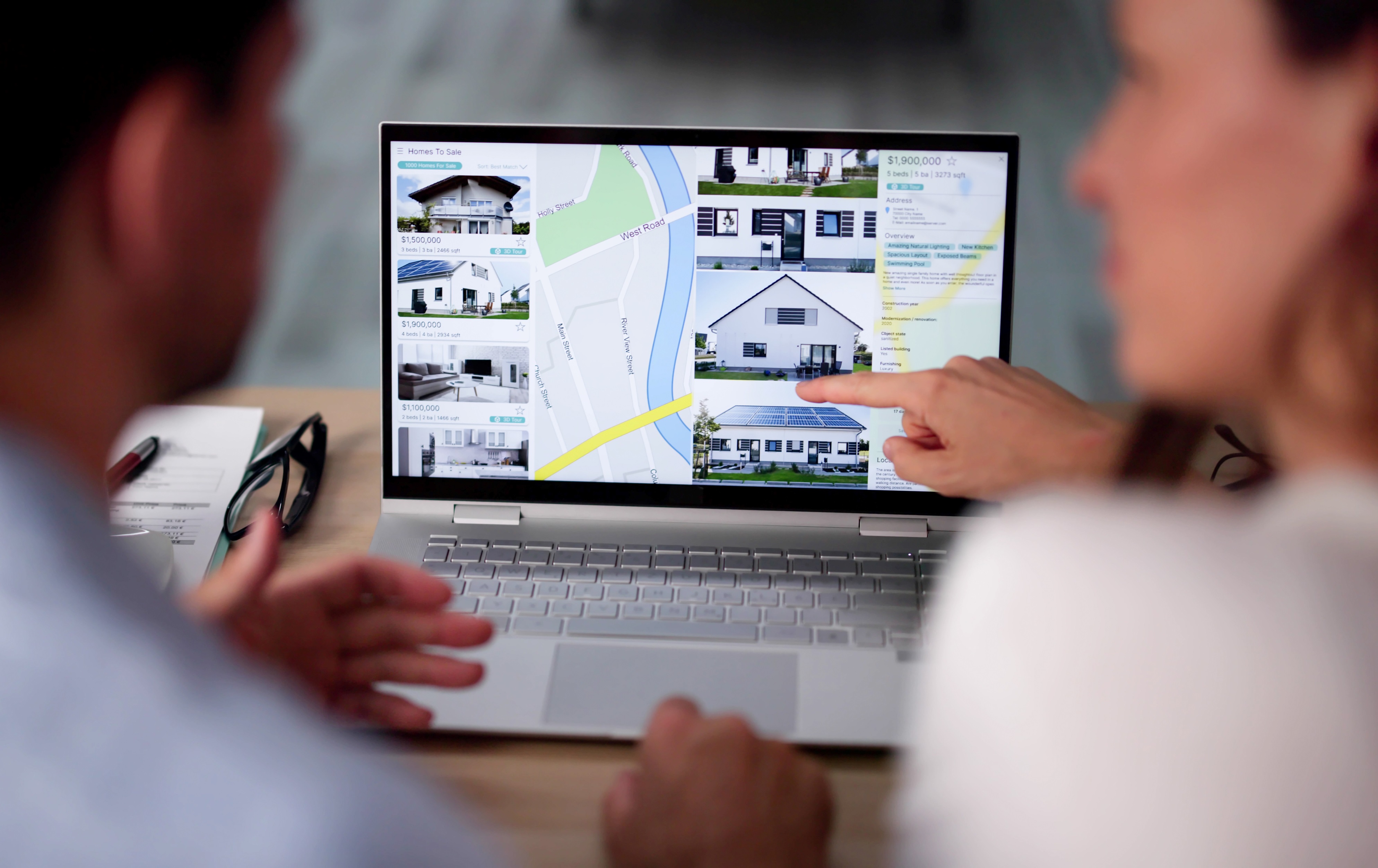
This year, teachers in NSW will earn $15,000 more than their Victorian counterparts, with one Melbourne teaching saying unless you have a partner with a high income it's incredibly hard to get into the property market.
The AEU Victorian Branch is now calling on the Allan Labor Government to significantly increase public school salaries to address the widening gap between pay and housing costs, among other measures the union says would make housing more affordable for teachers.
Branch President Justin Mullaly said teachers are being forced to choose between their profession and their ability to secure housing.
“That's not a choice any essential worker should have to make,” he argued.
“That even teachers at the highest pay level can't reasonably afford to buy a home in Melbourne speaks volumes.
“Young people considering teaching as a career can see that they may be locked out of home ownership, pushed to the fringes of the communities where they work, and paid less than their counterparts in every other state…”
This year, teachers in NSW will earn $15,000 more than their Victorian counterparts, Mullaly noted.
“In a housing market this tough, that difference isn't just unfair, it's the difference between affording a home or not,” he said.
In 2026, a graduate Victorian teacher will be paid $79,589, while in NSW the same teacher will be paid $92,882.
An experienced Victorian teacher will be paid $118,063 compared to $133,422 for their counterpart in NSW – over $15,000 less.
Hughes has considered moving interstate to better her financial circumstances and her prospects of home ownership.
“I think New South Wales is a really attractive option for teachers here who feel they are not living a good life or are financially constrained just by living in Victoria.
“With the state of the teaching system in Victoria, I think even more people are going to consider moving north, and let’s not forget there hasn't been any promise of an increase of pay over the next four years.”
Hughes says she knows of teachers in their 50s and 60s who are yet to buy their first home because their salary has proven an issue with the banks when trying to secure a home loan.
“Our salary does not give us any financial independence at all to be able to make decisions to better our own lives. Yet, our life is solely dependent upon the job.
“I could work full-time for years in this ‘professional’ job and I still wouldn't earn a wage that would allow me to buy my own house in Melbourne.”
The AEU are calling for the Victorian Government to:
- Establish a Victorian Public School Staff Housing division with the Department of Education to expand housing stock for employees and implement measures to make housing more affordable;
- Make significant investments over the decade to 2035 to create pathways to home ownership for public school employees;
- Introduce rental subsidies in targeted locations where there is high workforce demand and housing availability and affordability are limited to attract and retain employees, and;
- Introduce a stamp duty exemption for eligible school employees.
Visit this research dashboard to explore the intersection of housing affordability and staff shortages across Australia.
*name has been changed.