
An article published on July 30 in the open-access journal PLOS Climate by researchers Konstantina Vasilakopoulou, from RMIT, and Matthaios Santamouris, from the University of NSW, has aimed to shine a light on the social and economic inequalities caused by overheating, the potential adaptive measures to counterbalance its impact, and forecasts about the cognitive risks associated with future overheating.
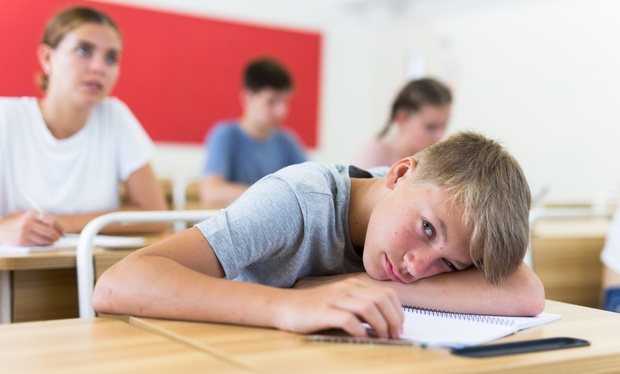
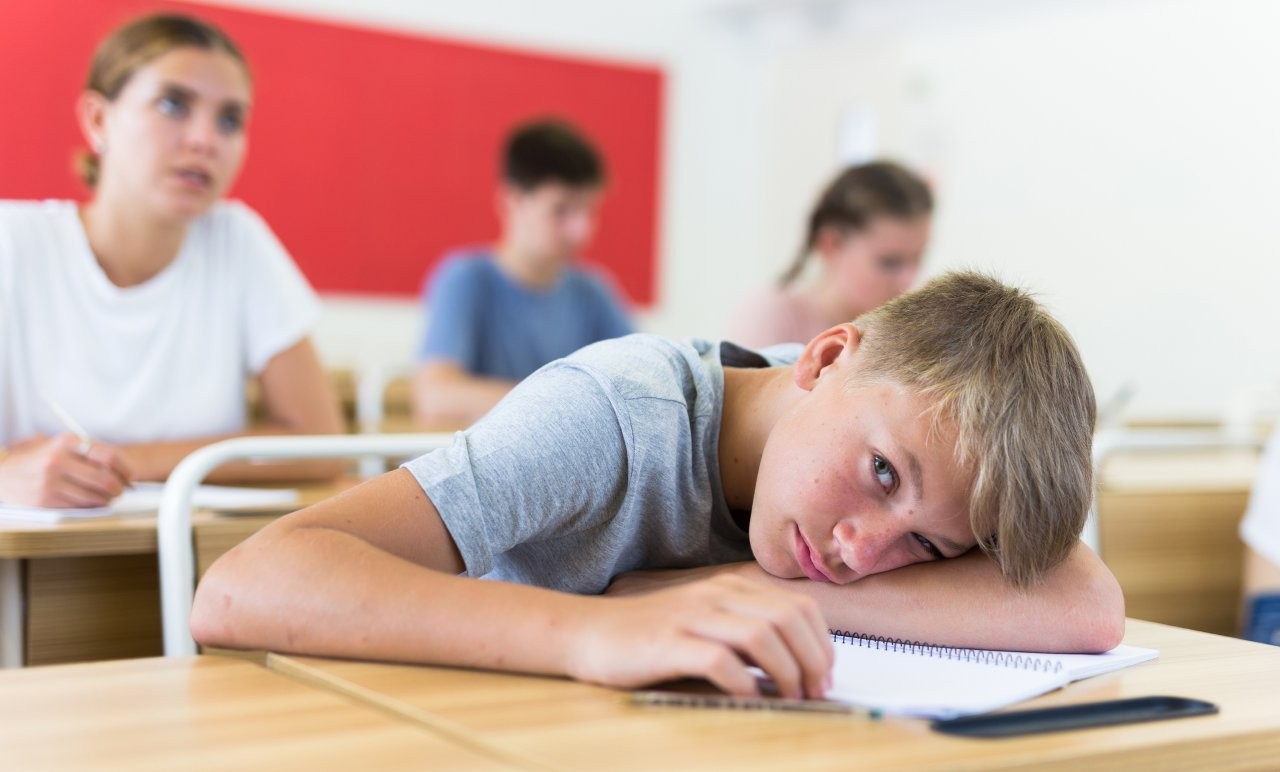
There are numerous investigations on the momentary and short-term exposure of students to heat and its effects, and most indicate that exposure to excessive heat detrimentally affects working memory, information processing, and knowledge retention, thereby impairing overall cognitive performance.
The impact of high temperatures on students’ academic performance is profound, influencing their educational, intellectual, and professional achievements.
“But what happens when we are exposed to warmer days, more warmer days every year?” Vasilakopoulou asks.
“Do our bodies and our brains have the capacity to recover from this cumulative, let’s say, heat stress and gain the learning that was lost?”
The researchers went looking for international studies on cumulative exposure and found seven that tested cumulative knowledge, and how much students learned in their school years.
Collectively, the studies covered an extensive dataset comprising nearly 14.5 million students from 61 countries, linking individual learning outcomes to heat exposure.
“The studies show that in the same countries, children that are schooled in cooler years have much better performance than students that go to school in warmer years, in the same conditions,” Vasilakopoulou tells EducationHQ.
“However, with these large-scale studies you have to wonder what other parameters are going in there that affect the learning of these students. So, could the food, or could agricultural issues, or could other climatic incidences affect the learning and the cognitive performance of the students?
“And what we see is that for the developed countries, most of these parameters, do not affect the cognitive performance much – so, we see that heat is clearly one of the major contributors to this loss of cognitive performance.”
Six of the seven studies identified a significant negative relationship between extended heat exposure and cognitive performance, while one study found the impact to be minimal.
Prolonged exposure to elevated temperatures was consistently linked to reduced learning outcomes, particularly in tasks that require complex cognitive processing, such as mathematics.
Adaptation via acclimatisation and increased air conditioning use showed some protective effects, however, lower socioeconomic groups faced disproportionately greater impacts, underlining critical inequalities.

RMIT researcher Konstantina Vasilakopoulou, pictured above, started in January at the university as a Vice Chancellor’s Research Fellow. Her work is mainly on the effects of the built environment and climate change on people’s wellbeing. PHOTO: Anna Kucera
Factors contributing to this disparity include higher localised temperatures in low-income communities, limited access to air conditioning at school and at home, and fewer opportunities for academic support services.
Projected climate scenarios indicate that these disparities will only deepen over time, further disadvantaging already vulnerable student populations.
Vasilakopoulou says the report shows there is clearly a need for Australia as a nation to adopt a new perspective on the cognitive implications of climate change by advancing technologies and implementing robust, targeted policies to safeguard both current and future human capital.
She says the literature highlights several adaptive strategies to enhance learning conditions, including implementing indoor and outdoor cooling systems. For starters, there should be air conditioning in every school, in every classroom.
“The most important thing is to have air conditioning with ventilation,” she explains.
“If we don’t change the air inside of the classrooms, it’s a recipe for disaster, because the CO2 will rise, resulting in bigger problems.
“So, we have to have cool indoor environments where our children can learn, but then, to have cool buildings, you have to have very well-designed neighbourhoods, very well-designed cities where you have the appropriate materials, the appropriate greenery and water elements where they cool the city and create better conditions for the buildings to perform better.”
Aside from design decisions, Vasilakopoulou suggests policymakers should be seeking ways to support teachers to compensate for any lost learning.
“So, if a student cannot learn because they have been put in a very warm environment…, can help be provided to them to learn more with other ways, for example, services like private tutoring to offset learning losses?”
And what about teachers? They’re in these hot classrooms, too, they’re under duress and uncomfortable – there’s clearly an impact on their mental and physical health, but also on their ability to teach at their best.
“Absolutely,” Vasilakopoulou says.
“The studies show that the teacher-student system does not work as well in warmer conditions.
“So, it’s not only the students that are learning less, it’s also the teachers that are not able to teach as well, because their brains are also affected.
She says so far there is no research to tell us how much teachers are affected – and in what ways and to what degree – because research tends to focus on the vulnerable person in this system.
“So, it focuses on the students, but the results show that it’s the system that doesn’t work, the system that has the teacher and the student together, not only the student.”
The evidence, the study finds, underscores how global warming can produce far-reaching and often overlooked social consequences.
“Most critically, it reiterates that those bearing the brunt of climate change’s impacts are often those least responsible for it – and least equipped to combat its effects,” it reads.

Exposure to elevated temperatures, both indoors and outdoors, is strongly associated with adverse health outcomes and the impact on students’ academic performance is profound, influencing their educational, intellectual, and professional achievements.
Early last year, Federal Minister for Education Jason Clare said he heard the concerns from unions, schools and parents regarding the frequency of extreme weather events and hot classrooms.
“The Albanese Government is investing in public schools through the Schools Upgrade Fund,” he said in March on the ABC News website.
“From upgrading art rooms and tech rooms to new outdoor equipment and installing air conditioning, this funding will deliver upgrades to public schools that need it the most.”
In South Australia, more than 120 schools have accessed the fund for new air conditioning and better ventilation, while Queensland’s Education Department has been working to replace aging infrastructure to better cool classrooms, and in WA, Department of Education director-general Lisa Rodgers said schools had appropriate measures in place to deal with the impact of hot weather.
A NSW education department spokesperson told The Guardian Australia in February this year that since July 2024, the State Government had “delivered millions in funding to repair and replace air conditioning units statewide ahead of summer”.
In Victoria, the same article stated, air conditioning is provided “based on the location of the school and the type of buildings classes are taught in”, a departmental spokesperson said.
With extreme temperatures expected to become the new norm, there is no sign yet of a pre-emptive, coordinated and systemic approach to preparing for temperature increases – nor any appetite for it – for now, anyway.