

While much of the debate around AI in education is about academic integrity, privacy and children using it to cheat on essays or assignments, they are surface level, secondary concerns according to one school leader – the real issue is the mental health crisis that is sitting around the corner that no one is even looking at yet.
Recognised as one of South Australia’s leading educators this year after being named Leader of the Year at the EdTechSA Awards and receiving the State Award for Innovative Educator of the Year at the Educators SA World Teachers’ Day celebrations, Emma Fowler is a passionate techy and innovator and says the speed at which AI is moving and evolving and the lack of education (and legislation) for our young people around it, keep her awake at night.
“Essentially our children are already engaging in synthetic relationships and they’re accessing synthetic information, but they don’t have the brain development to understand that who they’re talking to is actually a robot, it’s a large language model,” the principal of St Raphael’s School in Parkside tells EducationHQ.
“So when they start, because these chatbots are designed to build up their self-esteem, build connection, ‘yes, I agree with you’, ‘yes, that sounds great, I’m here to support you’ – these children are increasingly going to turn to artificial intelligence as one of their support networks.
“And this is what I’m most terrified of. Adults that are in the child’s support network understand how vulnerable that little person is and understand that it’s so important to safeguard them – artificial intelligence doesn’t have that moral compass.”
Fowler says we need to start educating students from a very early age about what is a synthetic relationship and what can that be used for, and what are real relationships and why we need real connections.
“We’re at the start of AI, and at the moment it’s something that just talks back to you via a chat,” the educator explains.
“In the next year or two they will look like humans through video conferencing and children talking to a real human that looks like a real human, sounds like a real human, won’t realise that it’s actually a synthetic relationship they’re engaged in.
“That’s my biggest concern moving forward. We’re not moving quickly enough in education to develop the curriculum that’s needed to safeguard these little people. I really feel that we’re not talking enough about this.”
Early aptitude for leadership recognised
Fowler became a teacher in 2008 and very purposely set off straight out of uni here to teach in the UK in a low SES school with a high population of children with additional learning needs and children that spoke English as a second language.
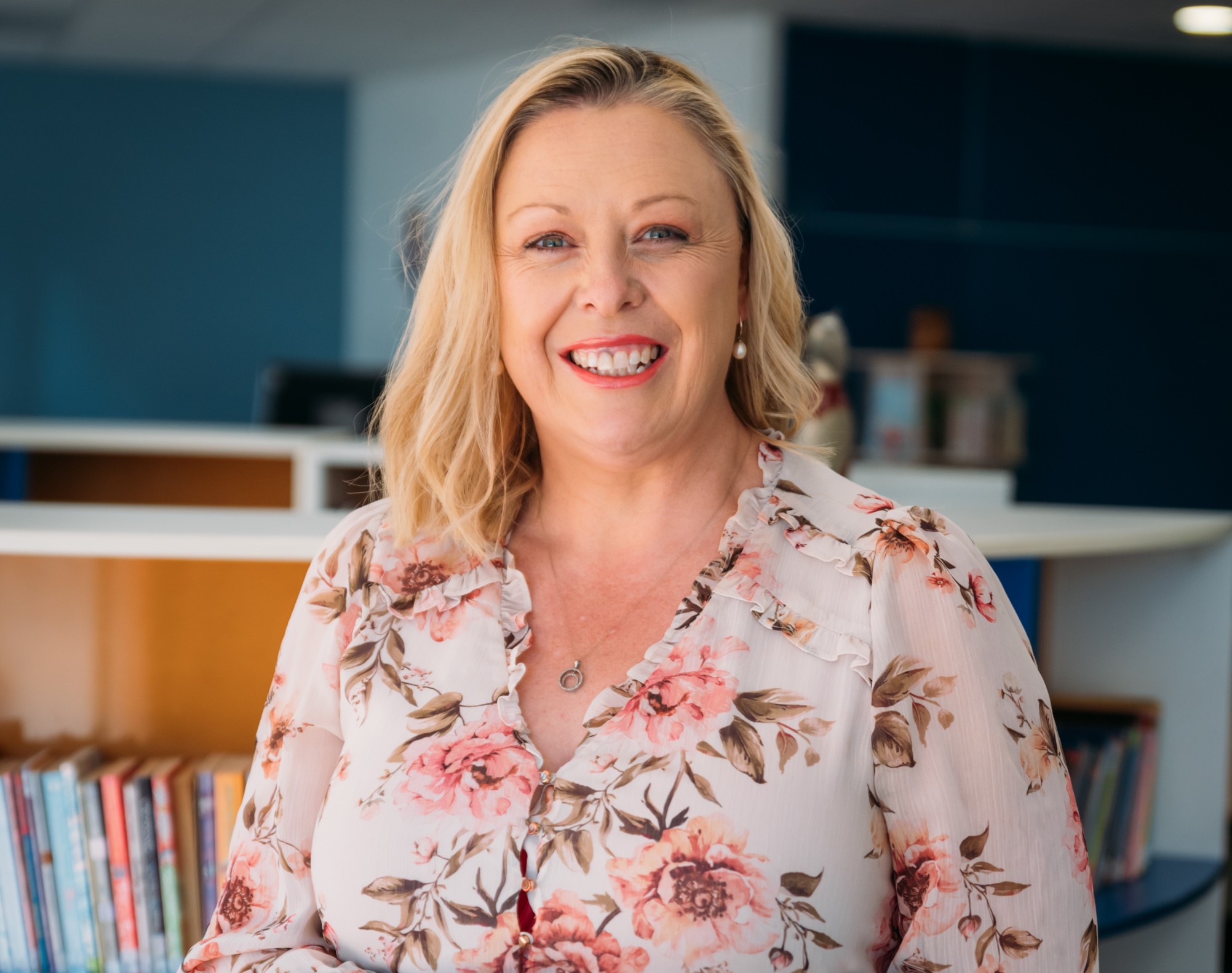
Since becoming principal at St Raphael’s School in Parkside, Emma Fowler has championed a culture of curiosity and creativity, leading initiatives that strengthen student learning through technology, community partnerships, and holistic wellbeing programs.
“That was a really deliberate career choice as a first school to cut my teeth on and really learn through throwing myself in the deep end essentially, supporting individual children was a top priority to me,” she shares.
“The second school I taught in was in quite an affluent area. It was really important to me to have that really different experience to make sure that I was able to cater to, as an early career teacher, to cater to the different kinds of needs of different communities, because different types of backgrounds come with ... different care and expectations.”
Back in Australia, Fowler then spent ten years at Nazareth Catholic College, was mentored by several ‘amazing’ principals who saw in her an aptitude for leadership and so fast-tracked her, while she developed a strong interest in the area of digital technology.
“From Nazareth, I was employed as the technology advisor for all of Catholic Ed, and in that role across 12 months I was really able to steer some great initiatives around STEM, particularly in close collaboration with the defence and space industries,” Fowler says.
But the pull of school communities and day-to-day working with children proved irresistible, and so after spending two years as assistant principal St Joseph’s Kingswood, the young educator landed her first principalship at St Raphael’s in Parkside, where she’s now been for two years.
What a two years it has been
Fowler’s multi-award-winning success recognises her extraordinary leadership, commitment to innovation in education and dedication to fostering engaging, future-focused learning experiences for her students and staff.
Since becoming principal at St Raphael’s, she has championed a culture of curiosity and creativity, leading initiatives that strengthen student learning through technology, community partnerships, and holistic wellbeing programs.
Fowler says there were a range of areas requiring improvement when she arrived, in terms of academic growth, in terms of school culture, in terms of supporting neurodivergent learners, and in terms of really being innovative and at the forefront of not just technology, but also educational practices.
“There’s something, however, that I’m really quietly proud of that’s not as publicly celebrated,” she says.
“And that’s the work we’ve done around inclusion and creating a place where neurodivergent learners are seen, heard, celebrated and supported.
“We’ve been able to really have some huge impact and make some real difference in the lives of our learners because of the really unique approach we’re taking in that space, being highly proactive, because a lot of schools live in the reactive stage when working with children who have additional needs, as opposed to being proactive in [what] they’re putting in place for these children.
“I’ve been really strategic around that, and personally I feel like it’s the area in which we’ve succeeded the most, though it’s not as public for others to see.”
Celebrating and harnessing diversity
Fowler says her school is “really vibrant and diverse”.
“We have a range of different cultural and socioeconomic backgrounds within our school community, neurotypical, neurodivergent, gifted children. We’ve got the full spectrum going on within the school environment.
“It creates a really lovely opportunity to build a really inclusive, welcoming culture where everyone feels valued and important.”
Fowler has helped shape a learning environment where there’s a smooth flow between years, a dedication to continuity and a clear understanding between teachers of what they’re covering and their teaching methods.
“In society at the moment, the rate of change is unprecedented, it’s something we haven’t seen before,” Fowler says.
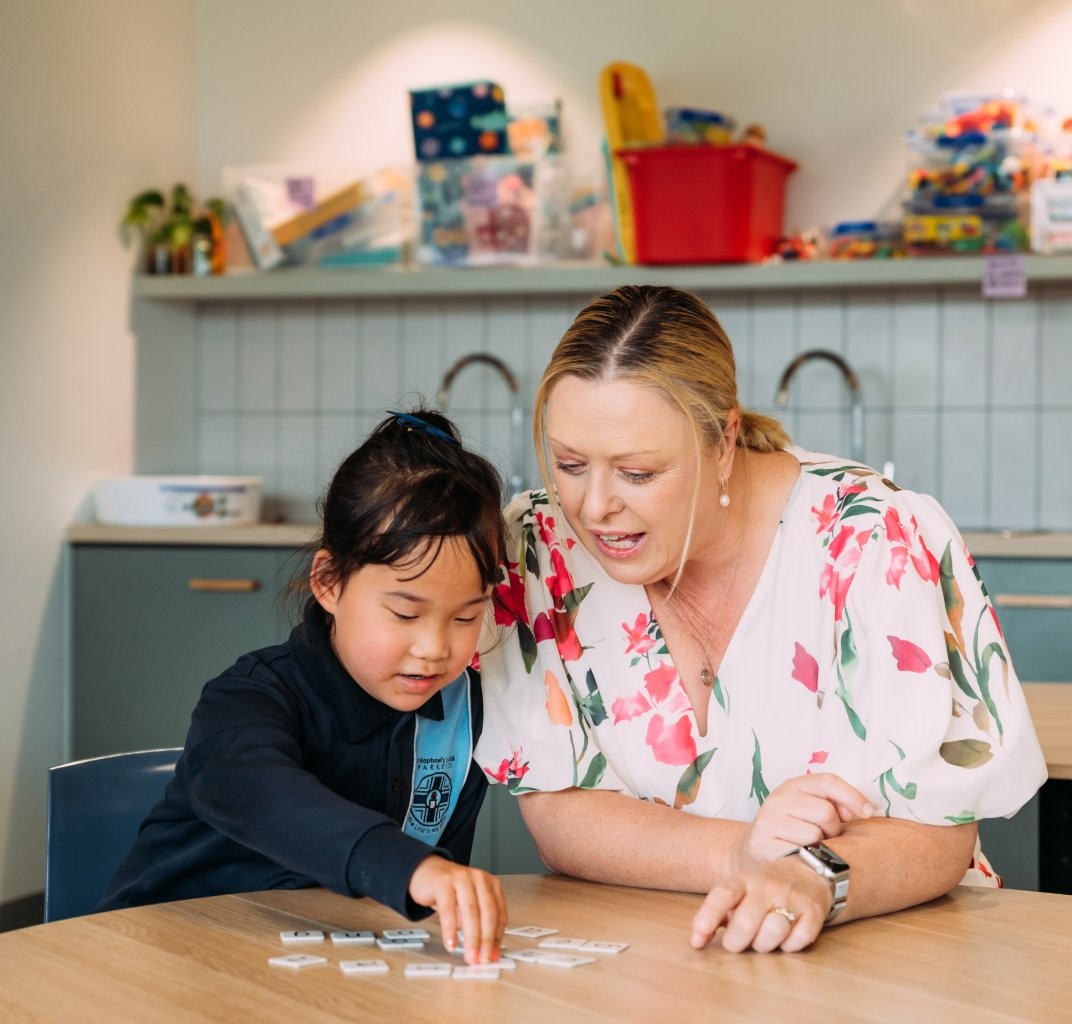
Fowler says while they’re learning the fundamental skills, children need the opportunity to apply that in real world life experiences and opportunities – “so seeing the purpose behind what they’re learning and building that connection and that understanding of ‘why’”.
“So having that predictability, that familiarity for children, knowing that when I come to school, this is what it’s going to be, this is what I can expect year in, year out, just feels safe and comfortable.
“That predictability, that familiarity, whilst we can have emerging technologies happening within the school - look at 3D printing and all of those cool things - it’s the day-to-day predictability that allows the children then to take risks in their learning. It allows the children to try something new that they haven’t done before because everything else is predictable for them.
“…it’s the right kind of setting to allow them to be the best they can.”
A razor sharp pedagogical approach
Not surprisingly, Fowler is very clear about pedagogy and preferred instructional methods in the school, and says her staff are doing a number of things that are all seen as the gold standard in education at present.
“So for us it’s about making sure there’s explicit instruction occurring, especially around those fundamental skills like phonics and maths and so on.
“We’re making sure that we do daily reviews. We understand the brain so much more now - so we get (cognitive) load and we understand that children actually have to see things so many times and they have to practice that retrieval process, so they have to go into the brain, pull out the information and use it on a regular basis for that to turn into long-term memory. So, to create those neural pathways.”
Fowler says allowing children to have that transfer of information is really important as well.
“So whilst they’re learning the fundamental skills, they need the opportunity to apply that in real world life experiences and opportunities – so seeing the purpose behind what they’re learning and building that connection and that understanding of why.
“A lot of times that’s missed in some schools – they’ll do the explicit instruction, they might understand a bit about cognitive load, but they’re forgetting that transfer and that real world application, that ‘why’ that kids need as well.
“We make sure that that’s really at the forefront of what we’re doing.”
Fowler says again, it’s about ensuring that consistency across the school, across every classroom.
She’s also ever mindful that teaching has to continue to be high impact, to ensure that students remain engaged.
“We know that attention spans have reduced in our children. That’s just where they are,” she says.
“People say it’s due to technology and accessing social media, YouTube, whatever – I’m not going to debate why it exists, but we know that attention spans have reduced.
“So we have to almost be making sure that our learning is fast paced, that we’re mixing things up a bit.
“We’re using actions, we’re using things like coral recall, those interactions with kids, to keep them engaged. And that’s really important as well.”
You’ve got to make work fun
Fowler has a few core leadership non-negotiables or philosophies that she lives by.
Work/life balance is critical she says, as is ensuring that everyone is mentally healthy, and that’s done through connection, through creating space for her staff to connect as a community and – vitally – looking for the moments of joy and laughter.
“Your workplace should be fun. There’s a time and a place, but people should be laughing, they should be enjoying themselves, and as a leader, you’ve got to lead that from the front.
“You can’t put that aside and say, ‘oh, that’s up to the social team to organise’ or ‘that’s other people’s responsibility’.
“As a leader, that is your top priority, creating that positive, happy environment where people want to be.”