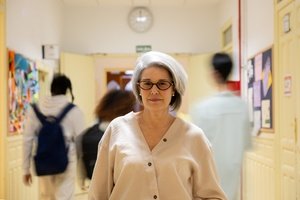


In the average class of 30 students, it’s likely that at least one will have a lesser-known visual processing problem that could be severely hindering their learning and school experience, a NSW educator says.
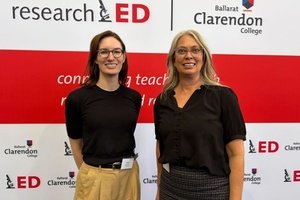
Dr Samantha Kneeshaw, Ulladulla High School’s head of sciences, was once one of these students who slipped through the school system undiagnosed with Irlen Syndrome (pronounced “EAR-len”) – a disorder that manifests as a cluster of symptoms that occur when the brain has trouble processing light and visual stimuli efficiently.
Kneeshaw is now calling for a universal screener to ensure children with the syndrome are picked up early on in primary school.
Early intervention and awareness will change lives, the teacher says.
Kneeshaw recalls her own school experience as one marked by confusion, frustration and embarrassment.
“It all started in primary school where I couldn’t work out why I could not do simple things like tell the time and other things that my friends could do…
“I was sent down (a grade). I could read books – I got really quite interested in some books – but I was slow and I could not read them out loud.”
One particular teacher, whose treatment remains lodged in Kneeshaw’s memory, told her to ‘shut up’ in English during reading time and sent her down to the lower grades to select from the ‘baby books’.
This was a deeply infuriating and humiliating experience, she says.
Despite such challenges, Kneeshaw went on to university, even completing a PhD before training to become a teacher some 14 years ago.
It wasn’t until she’d entered the tertiary sphere that she got tested for dyslexia.
“I was found to be really quite dyslexic,” Kneeshaw says.
“Dyslexia is so broad, [but] my dyslexia diagnosis [involves] long and short-term memory loss; my long and short-term memory are shot, they’re hopeless.
“It’s one of the most difficult things I find being a teacher, remembering names, it’s really simple things. But my knowledge of science ... is very good and I’m very good at research.”
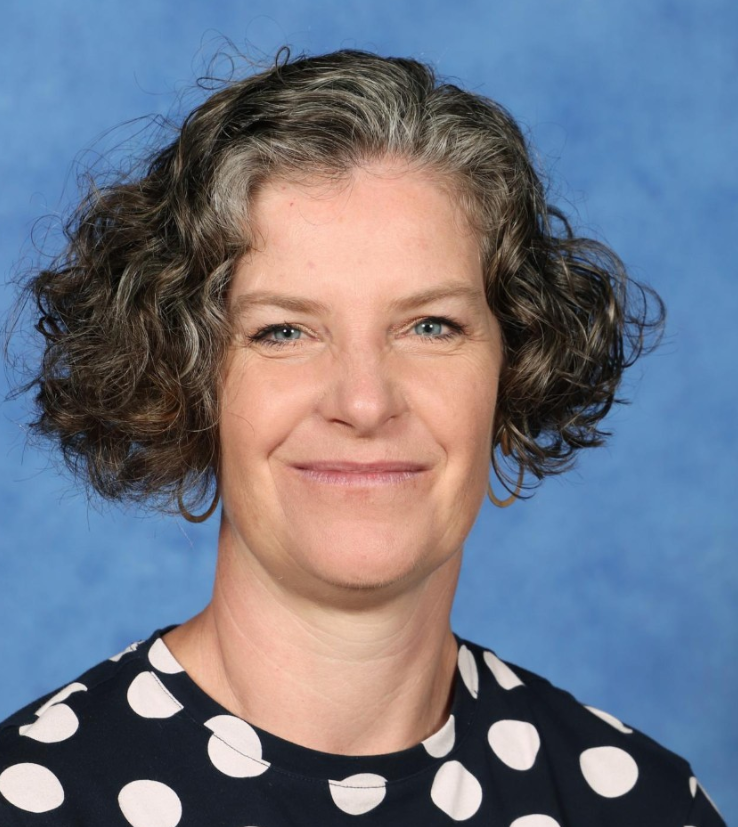
"I'm a scientist, but when I got these coloured lenses to put over the page, I cried. I could see the [whole text]," the head of science recalls.
One small mention of Irlen Syndrome during her teacher training prompted Kneeshaw to take action.
“It changed my life,” she says of the diagnosis.
“And I was a real sceptic as well. I’m a scientist, but when I got these coloured lenses to put over the page, I cried. I could see the [whole text].
“I just cried because [my life could have been] so much easier.”
To receive Irlen Syndrome diagnosis and treatment, you must visit a licensed Irlen diagnostician. The Irlen Method uses specific coloured overlays and filters, often worn as glasses. In Australia it can reportedly cost around $700 for the coloured lenses alone.
Yet in 2018, the Royal Australian and New Zealand College of Ophthalmologists (RANZCO) came out strongly against Irlen Syndrome, declaring there was no evidence the condition existed or that the treatment of reading difficulties with Irlen lenses actually worked.
In its position paper, RANZCO went about dispelling the reasons why anecdotal evidence from parents indicated Irlen lenses were effective.
“The real concern with diagnoses of Irlen Syndrome is that it can distract from genuine diagnosis and treatment, such as a comprehensive evaluation by an educational psychologist followed by the appropriate remedial educational input," RANZCO spokesperson Professor Frank Martin said at the time.
“Any interventions that distract from and delay this evaluation could be detrimental to the effective treatment of any learning disabilities.”
But Kneeshaw says her lenses have been “a game changer” in every sense.
“Just the colour across that page, and it has to be specific.
“What I saw was only one word at a time, and I thought everybody [saw it that way], and it was blurred around the outside.
“You don’t realise that you’re different from other people, because you just think everybody else is seeing the same thing.
“So [finally it became clear that this was why I read disjointedly] from word to word, and I couldn’t read it out really well and wouldn’t understand what I read.”
Kneeshaw has dug into the research behind Irlen Syndrome and says brain scans reveal why people with the disorder don’t absorb what they’re reading and struggle with immense fatigue – two ‘classic symptoms’, she notes.
“They’ve done brain scans with normal people reading. There’s one area of the brain going off, and with someone with Irlen Syndrome, there’s about four areas of the brain going off.
“The minute they put colour across their eyes, like a specific one for them, [their brain looks like that of] a normal reader...”
The educator has gone on to spot numerous students in schools she’s taught in that have been referred to Irlen specialists. Even a colleague has now been diagnosed, she reports.
“These students are now working towards their actual capabilities, instead of struggling with reading. I understand that other countries screen all students, why can’t we?” she implores.
One Year 12 student studying physics with Kneeshaw recently found out he too had Irlen Syndrome. A ‘really, really bright’ student, the teacher says, he wasn’t quite reaching his full potential.
“He stayed behind (after class) and talked about how he can’t do these things that he felt like he should have been able to, and we talked about his reading…”
Kneeshaw went on to email the student’s parent, suggesting she might consider getting him tested.
“And he has just flown. He’s got a diagnosis, and there’s a massive change in him now.
“And this is Year 12, imagine what it could have been (like for him) at Year 7 or 8.”
The consequences for those who are not picked up can be quite dire, Kneeshaw warns.
“I know there’s been studies with people in jail, and they’ve got a high rate of people with this syndrome because they’ve not been able to read properly.
“You do feel really stupid. And often, especially with boys, they’re more likely to misbehave in class and therefore get into more trouble.
“Often … they can be really quite bright, and can get into even worse trouble because they’re smart enough to do quite a lot of things.
“I feel if they were diagnosed earlier, they wouldn’t go down the path or they wouldn’t be as naughty.”
Kneeshaw now knows the genetic origin of her diagnosis.
“This is inherited – I got mine from my father. He was horrendous at school, he’d get caned all the time.
“He was a really, really bright person...”