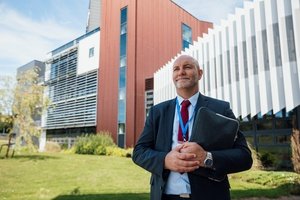
It was Kadri who organised the ground-breaking school exchange program featured in the SBS and Netflix documentary The Swap.
The popular TV series took place in 2022/23 and aimed to bridge gaps, dismantle barriers, and create connections among students from varied backgrounds and faiths.
It is exactly that type of thinking that has been front and centre for inclusive educational organisation Together For Humanity’s first ever Queensland and Northern Territory Youth Summit, at Queensland’s Parliament House.
A key outcome of The Swap was that students in the experiment realised they could maintain their identities while respecting others, and the key to any collaboration, they learned, was not similarity, but mutual respect.
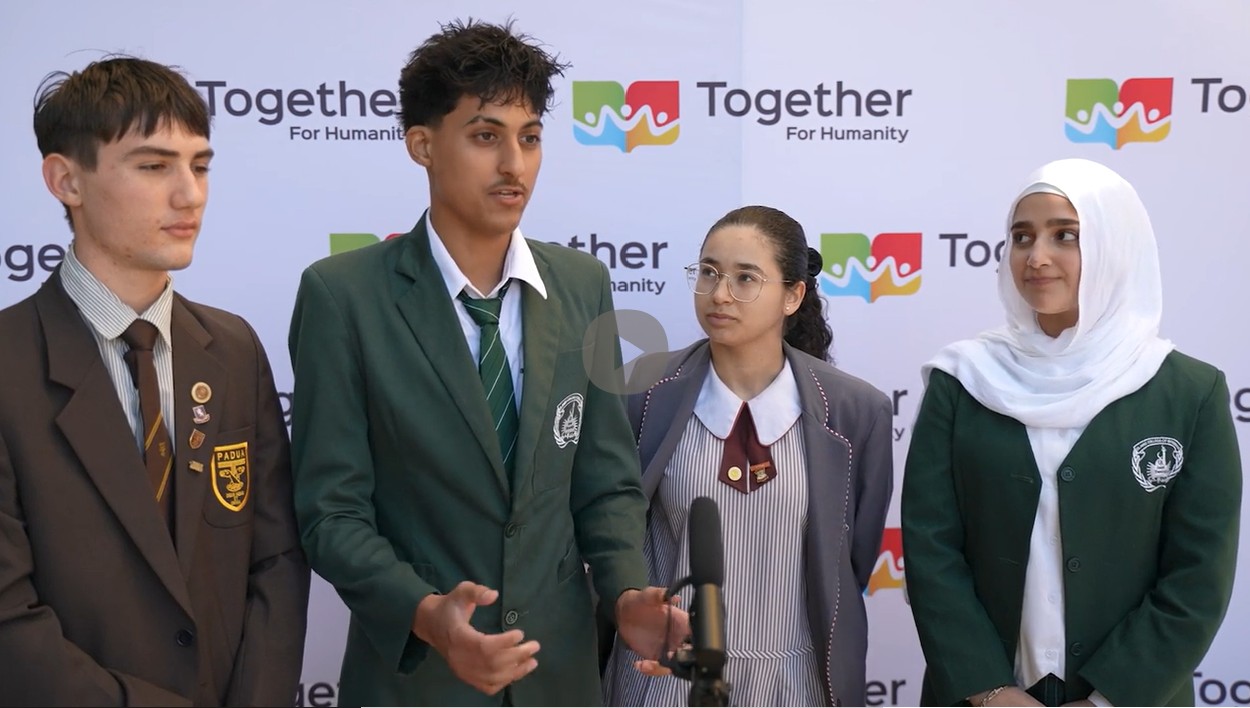
Centred on the theme ‘Bridging to the Future: Navigating Identity and Differences Together’, the Summit involved more than 100 students from 14 schools across Queensland and the Northern Territory, and gave students an opportunity to share their vision for an inclusive, prejudice-free Australia with community leaders and politicians.
Dignitaries in attendance included Queensland Minister for Education and the Arts, John-Paul Langbroek, Minister for Aboriginal and Torres Strait Islander Partnerships and Minister for Multiculturalism Fiona Simpson, and former Queensland premier, now opposition leader, Steven Miles.
They were joined by the members of parliament of each school in attendance, along with dean and founder of TFH, Rabbi Zalman Kastel AM and a range of school leaders, including Kadri.
“The highlight of the Summit for me was how easy it was for the kids from different backgrounds, faith backgrounds, to come together and share common values,” Kadri tells EducationHQ.
“So these are values which are taught to them in school, taught to them at home, and we often talk about our differences, but we hardly get to talk about the things which unite us and are common across us.
“These kind of summits, and this one in particular, was an opportunity for young people to get to know each other and get to know that at the end of the day, what matters to them personally matters to the other person of a different faith as well.”

Students were joined by cultural performers, mental health educators, and community leaders who helped spark discussion on identity, belonging, and respect.
Students from government, independent, and Catholic schools in Brisbane, Toowoomba, Mackay, Darwin and Alice Springs took part in group discussions and collaborative brainstorming sessions and worked together in interactive sessions where they presented their ideas for addressing diversity and inclusion concerns to politicians and community leaders in attendance.
They were joined by cultural performers, mental health educators, and community leaders who helped spark discussion on identity, belonging, inclusion, empathy, dignity and diversity.
It’s now three years since The Swap was filmed, but the bonds established between the three schools of faith featured – Islamic College of Brisbane, Padua College and Mount Alvernia – continue to this day, now solidified across different year levels.
The students who participated in the series might have graduated, but Kadri says the next generation are building their own relationships.
“It (the series) has brought a massive positive change within our school community, and also within the wider community, because things which people would be otherwise afraid of, as in their children losing their identity, didn’t happen to any of the students, and the relationship with Padua and Mount Alvenia has only become stronger for us,” Kadri says.
So, are we any closer to a more harmonious and understanding country? Are schools in a better place now than they were before the TV series?
“Look, it’s a work in progress,” Kadri offers, cautiously.
“The analogy I like to use is that if you plant a tree, you don’t just water it once and forget about it, otherwise it will die, you need to continuously water it and provide nutrients and minerals, because if you don’t then no matter how strong that tree is it will collapse.”

Since 2016, TFH’s Youth Summits have supported student voice and leadership, hosting hundreds of students from diverse government and non-government schools.
Similarly, he shares, mutual respect requires that continuous effort at many levels.
“The Swap was one effort and this summit is an effort on the educational side of things, but I think society-wide we need to do a lot more because there are wildfires of division which are just around the corner waiting for us to let the trees of diversity dry out and die so they can burn them.”
For now, the efforts being made by a passionate and committed few are building powerful foundations and hopefully inspiring more schools of faith to actively seek out others for opportunities to learn about each other and the worlds in which they live.
“… the relationships we have forged are only getting stronger ... we’re playing a small part in watering that plant, and every opportunity we get and every collaboration we can make to make that happen, we will be looking forward to it,” Kadri says.
“Absolutely it’s an ongoing process, and I think the students who’ve participated in it have come out much more united than they would be otherwise.”
Established in 2002, Together For Humanity is a not-for-profit educational organisation that works with schools to eliminate prejudice, so all young people feel they belong.
Its diverse team of educators provide face-to-face and online programs that teach students how to deal with differences and support teachers to make classrooms more inclusive.
Together For Humanity’s programs have reached more than 500,000 young Australians and are supported by the Australian Government Department of Education through the Connected Youth and Communities initiative.