
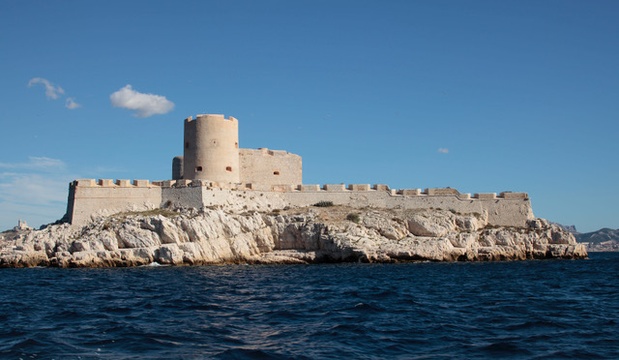
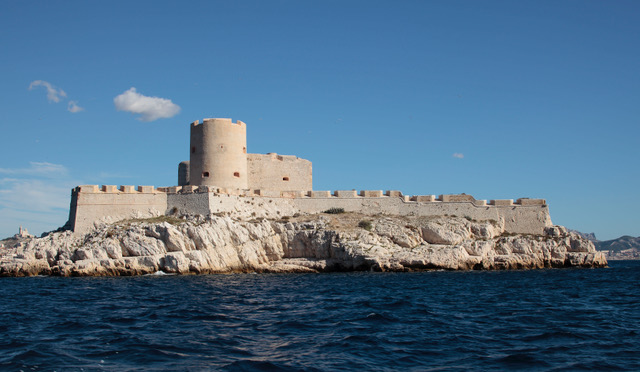
For example, if Gregory Gerberon, deputy head of cultural activities at Château d’If in Marseille, had not generously offered to do an online interview at 6am in the morning from France to share his passion for this mysterious castle – which happens to be the setting in ‘le Comte de Monte Cristo’ novel – my Year 9 students would had never plunged into the story of Edmond Dantès and uncovered a mystery within ‘l’histoire de France’.
I must confess that I had hesitations about this exercise. I considered my students’ level of French skills, the technical aspects involved, and all kinds of fallacious reasons that pop up when you are out of your comfort zone.
But ‘l’occasion était trop belle’. So, I set out on a virtual adventure to take my students to Marseille, where you need to take a boat to reach le château d’If.
This fortress, ordered by the King Francois Ier, which was used firstly as a defensive element to protect Marseille, soon became a prison for the opponents of the King of France. Fortunately, it closed down in 1880.
Nowadays, le château is opened to the public, and Gregory is the master of ceremony. He is used to organising the cultural activities for visitors, including school students, as well as online visits.

PHOTO: Centre des monuments nationaux
But this time, he accepted my invitation to talk about himself, about his passion for history and to offer his feedback about the film Le Comte de Monte Cristo. I was also keen for him to paint an impression about the harsh life endured by prisoners at the château for my Year 9 students.
My class had previously researched le château d’If and its history, and watched numerous videos, so they knew well the context and the atmosphere he was speaking to.
I taught them how to ask a question in French, which they did well.
Then came the pronunciation and the fear over sounding silly or wrong, which was quickly forgotten and replaced by excitement.
My students discovered that Marseille has been attacked by Spanish invaders on boats in 1423, who burnt and looted the city, and this is why l’île d’If became a strategic piece of land.
Students were interested to learn how a passion can lead to your dream job.
‘Pourquoi avez-vous choisi ce métier? Est-ce que vous l’aimez?’ they asked.
Gregory explained that history has always been his passion from a young age, and he wanted to share this with others.
‘Mon travail, ce n’est que du bonheur’, he explained.
He noted that this castle has 500 years of history.
‘Mais habitez-vous sur l’île?’ asked one of my students
‘Non, j’habite dans un village près de Marseille,’ he replied.

PHOTO: Centre des monuments nationaux.
Gregory is also a tourist guide for l’Abbaye de Montmajour, another historical site.
He said that 2024 saw a record number of 115,000 visitors to le château.
The good news is if you are aged under 25, the self-guided visit is free.
‘Pensez-vous que les murs du château gardent la mémoire des prisonniers qui ont souffert?’ asked another student, enquiring about the the print left by prisoners.
Gregory explained that the conditions for prisoners were very harsh, firstly due to the position of the castle, which was beaten by the winds and rough seas.
Secondly, conditions within the 14 cells were rough.
On the ground, there were the ‘poor’ prisoners who were kept as a large group in a cell, with little light and no facilities. There were insects, rats, scarce food, illness and despair. So, death was always very present.
If they attempted to escape, which was impossible, they were punished with no food and put in ‘le cachot’, an underground cell with worst conditions.
A lot of prisoners died early.
But on the first floor, the conditions were slightly better with individual cells reserved to wealthier prisoners who could pay to have better food and conditions.
Here you can see messages and signatures scrawled by prisoners on the walls of the castle, with messages of love to their fiancée by some.

PHOTO: Centre des monuments nationaux.
As one of my students summarised, ‘le chateau symbolises à la fois un message d’espoir et d’injustice like the film’.
And then came the question: ‘Avez-vous aimé le film?’
Gregory said that it was a good film, although there were some new characters who did not exist in the novel written by Alexandre Dumas.
The reason why people think the character of the novel, Edmond Dantès, actually existed and are looking for his cell at the castle is because Dumas had visited the castle and did some lengthy research on le chateau d’If.
Furthermore, his dad’s friend had been incarcerated in the prison, so he had very precise details, which makes the story so real.
‘L'Histoire de Monte Cristo, c’est une histoire de vengeance et de trahison…but probably une histoire d’amour aussi.’
My students have experienced this kind of language immersion before, but I could see the effort they were putting in to focus on pronunciation and to try and understand the answers from a native speaker.
Luckily, Gregory was speaking very clearly and calmly to increase their confidence. After the interview, we had a debrief about what they learnt and how much they understood, and the results were extremely encouraging.
They understood that fluency does not come in a month and sometimes you understand the general idea of a sentence before every single word.
But they all agreed that the experience gave them more confidence.
They have started to watch the film ‘Le Comte de Monte Cristo’ with the French actor Pierre Niney, and I will introduce them to the shortened version of the novel very soon.
Gregory summarised very well what history is all about : ‘L’Histoire, ça explique qui nous sommes aujourd’hui’. (History explains who we are today.)
Sometimes, to explain French history and encourage your students to discover French literature, you need to take a different path.
Working on boosting their imagination here is always a win, too.