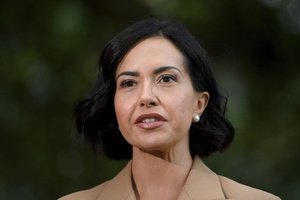


As she noticed farming families battling to juggle work and parenting, she led the charge to build a community preschool in Trangie, west of Dubbo in NSW.
These days, with her three children now grown up, she is working on a new chapter helping country families navigate the complexities of accessing high school education through her organisation The Boarding School Collective.
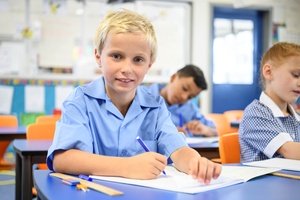
Rural students across Australia experience higher rates of school non-completion than their city peers and face greater challenges attaining a Year 12 qualification, according to a landmark study by Victoria University’s Mitchell Institute.
Educational barriers include teacher shortages and dwindling rural populations that leave fewer schools able to offer the broad range of subjects available in the cities.
After rolling disasters like floods, fires and COVID-19, there has also been a steep increase in young regional people disengaged from education, employment and training, a 2025 Jobs and Skills Australia report reveals.
Families in the bush have little choice but to either leave small towns behind or send their children to boarding school.
Boarding school could be seen as elitist when it was often key to keeping working parents in small communities and rural economies afloat, Ferrari said.
“If we lose experienced tradies, qualified professional women and men, then our farm workers leave and our little towns get drained of critical mass.
“You need that critical mass to invigorate so many things, whether that’s the local primary school, the rugby club, the tennis club and all the little things that make towns work.”

CPA Australia Federal President Louise Martin says families are “fed up waiting for fairness” after years of inaction on critical issues such as the Assistance for Isolated Children (AIC) Allowance, Youth Allowance eligibility and support for Distance Education supervisors.
She is among a vocal group of rural leaders highlighting much-needed reforms for country kids’ education, with the Isolated Children’s Parents’ Association lobbying in Canberra in early November.
Representatives from ICPA Australia’s Federal Council met with MPs and departmental officials, including the Assistant Minister for Social Services Ged Kearney, Senator Pauline Hanson and Nationals leader David Littleproud, to press for urgent reform of support measures that have failed to keep pace with the realities of regional life.
They emphasised the widening gaps in rural education inequities and called for the Assistance for Isolated Children allowance to be restored to cover 55 per cent of the average cost of boarding.
ICPA also wants financial recognition for Distance Education supervisors in geographically isolated locations, who currently perform a mandatory, unpaid teaching role to ensure isolated children can access schooling.
It has also lobbied for the reforming of Youth Allowance eligibility to reflect the true cost of relocation for rural and remote students, and an amendment of In-Home Care rules to reflect the realities of remote life, enabling educators to care for multiple families and their own children while addressing critical workforce shortages.
ICPA Australia Federal President Louise Martin said for decades, rural and remote families have shouldered the cost of delivering education the Government promises should be free.
“We’re not here to play politics. We’re here because the system isn’t working,” Martin said.
“The inequity has become so entrenched that families are being forced to make heartbreaking decisions about their futures. When access to education becomes a postcode lottery, something is very wrong.”
Ferrari’s work brings boarding school representatives to remote towns for expos, including several in western NSW and outback Queensland in 2026 so they can grasp the vast geographic barriers families face.
She has also created resources on dealing with homesickness, particularly targeting a first generation of boarding students whose parents have moved to the bush for energy or mining jobs.
“You shouldn’t be limited by your postcode,” Ferrari agreed.
Born and raised in Sydney, Ferrari used to say she had taken a wrong turn when she left the city as a young woman, imagining she belonged in the southern highlands rather than way out west.
She doesn’t make that joke any more, having found her calling to keep small farming communities thriving.
“I landed exactly where I needed to,” Ferrari said.
(with AAP)