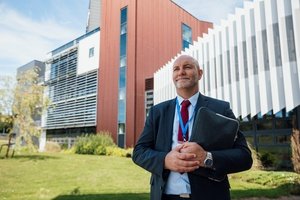
That’s the provocative question Associate Head at St Michael’s Grammar School, Dr Ross Phillips, posed to education leaders during his recent presentation at the Australian Science Education Research Association (ASERA) conference.
His PhD research suggests that when students select subjects like physics or chemistry, they’re not acting with full agency.
Instead, their choices are shaped, sometimes constrained, by a complex tangle of school structures, teacher availability, subject prestige and socio-economic context.
Subject choice as a social practice
Phillips opened with a challenge: “We often look at subject selection as an individual decision, but what if we understood it instead as a social practice?”
Drawing on Pierre Bourdieu’s theory of social fields, Phillips analysed enrolment data and conducted 16 semi-structured interviews with curriculum coordinators and pathways counsellors from eight schools across suburban Melbourne.
He found that many schools reinforce “a long-standing hierarchy of subjects” with implications for who feels encouraged to pursue science, and who does not.
“Even though we see strong enrolments in general mathematics and psychology,” he said, “subjects like physics and specialist maths remain small and tightly held.”
Phillips argued that such patterns are not solely the result of student interest or aptitude, but a reflection of systemic forces at play.
More students, more subjects? Not quite
While schools with larger cohorts do tend to offer a broader range of subjects, that doesn’t automatically mean greater choice for all students.
Phillips presented graphs showing that schools offering both VCE and vocational options (like the former VCAL or VET certificates) often have fewer VCE subject choices overall.
“Where there’s more choice in type of certificate, there may be less choice within each,” he explained.
Students in schools with strong industry or university partnerships were often steered implicitly or explicitly towards subjects that aligned with those relationships, said Phillips.
The academic hierarchy
A major influence on subject availability and uptake is what he calls “the prestige puzzle.”
Subjects like physics, chemistry and mathematical methods — what he terms the “academic subjects” — have been embedded in senior secondary schooling since the 1890s.
“They’re abstract, long-view subjects,” he said. “You’re unlikely to walk out of school and use the photoelectric effect in daily life.”
In contrast, newer subjects, such as psychology and health & human development, are often seen as more accessible and immediately relevant, particularly for students from less advantaged backgrounds.
“But even now,” Phillips argues, “the traditional academic subjects hold a status that newer subjects are still trying to catch up with. That affects what schools prioritise, and in turn, what students perceive as valuable.”
Who teaches what - and who stays
Teacher expertise and availability also play a crucial role in shaping subject offerings. A school may want to offer physics, but without a qualified or charismatic teacher to lead it, that subject may not run or may quietly be discouraged.
“There are all these invisible levers,” Phillips said.
“A teacher goes on leave. A subject is timetabled awkwardly. A school doesn’t invest in equipment. Students pick up on that. It signals which pathways are truly supported.”
Even teachers’ own career interests can shape student choices.
“We might not think of it this way,” he said, “but schools are workplaces too. Teachers promote their subjects to students, not just in the student interest, but to keep their jobs.”
Capital, habitus and what’s ‘normal’
Phillips used Bourdieu’s concepts of capital and habitus to show how students’ subject choices are often limited before they even reach Year 10. Students arrive at school carrying different types of capital: economic, cultural, and social.
Over time, they internalise what is considered “normal” in their context.
“If I go to a school where most families are university-educated professionals,” Phillips said, “my idea of what’s possible is very different from someone at a school where most parents are in casual or unskilled work.”
This stratification is evident in data from the Index of Community Socio-Educational Advantage (ICSEA). In high-fee independent schools, 80 to 90 per cent of students may come from the top socio-educational quartile.
In others, most students may fall in the lowest. These different environments shape what students see as attainable, or even thinkable.
When student voice meets school policy
Of course, student agency still matters. But Phillips warns that it can be constrained in subtle ways.
“We talk about student choice, but how much freedom is there if your school doesn’t run certain subjects, or discourages VET due to concerns about ‘mixing’ with the wrong crowd?”
Some schools openly champion vocational subjects as prestige-enhancing add-ons. Others treat them as fallback options. These perspectives shape student perception and potentially, student futures.
Even school rules, like prerequisites for subject entry or timetable clashes, can limit options.
“We’ve constructed these subjects in particular ways,” Phillips said. “But they don’t have to be framed that way. Change is possible - but it’s slow.”
Provocations without easy answers
Phillips concluded his talk with a series of provocations. If student subject choice is more socially determined than we admit, he asked, are we comfortable with that? And if not, what can we do?
Several audience members pushed back gently. Professor Linda Hobbs from Deakin University noted her own path from a rural town to academia, questioning whether Bourdieu’s reproduction theory left enough room for individual agency.
Others spoke about growing career awareness initiatives and alternative schooling models that broaden access.
Phillips acknowledged these points. “I’m not saying students have no agency. We need to be honest about the patterns we see and who gets to make truly free choices.”
A call for reflection
His research isn’t an attack on teachers or schools. Rather, it’s an invitation for educators to examine the structural forces within their own contexts.
Are certain subjects favoured because of tradition, staffing, or hidden assumptions about who belongs? Are schools signalling, in subtle ways, that some choices are better than others?
“We all want what’s best for students,” Phillips said, “But we need to ask: are we really expanding their options? Or are we just reinforcing the same old hierarchies?”
As schools across Australia double down on efforts to lift STEM enrolments, his research is a timely reminder: boosting numbers won’t work unless we address the forces beneath the surface.