

In undertaking the review, researchers argued that without an adequate understanding of “what works” for adolescents with reading difficulties, informed by rigorous review of existing evidence, there is a risk that educational policy and schooling practices may endorse or even mandate the adoption of interventions that have limited effectiveness for this group.
Published in Educational Research Review, the systematic review and meta-analysis included 106 studies, involving more than 156,000 students from countries including Australia, the United Kingdom and the United States.
The interventions focused on different key components of reading, including comprehension, fluency, decoding, phonological processing, and vocabulary. Each of these components is critical for reading proficiency.
Overall, researchers say their review findings confirm the effectiveness of school-based interventions for older students with reading difficulties, provide novel insights into the field of reading intervention research, serve as a resource for educators in considering interventions or strategies for implementation, and indicate important directions for further research.
Lead author Dr Callula Killingly, from QUT’s Centre for Inclusive Education, said targeted reading interventions for older students produce positive effects, particularly when focused on comprehension and vocabulary.
“Our analysis shows that it’s never too late to make a difference,” Dr Killingly says.
“Interventions targeting the specific skills students need can significantly improve outcomes for students in upper primary and secondary school, even for those with persistent reading difficulties.”

“These findings highlight the importance of continuing to improve reading beyond the early years of school,” Dr Callula Killingly, lead author and postdoctoral research fellow in The Centre for Inclusive Education at QUT, says.
The review found interventions were equally effective when delivered by teachers or researchers and some of the strongest vocabulary outcomes were shown for teacher-led interventions.
It also found there were no differences as to whether interventions took place in small groups, in the classroom, or in one-on-one settings.
Findings showed interventions were effective across all grade levels and classroom settings, and when delivered by either teachers or researchers, with implications for the implementation of intervention within an MTSS framework.
Researchers said approaches were particularly beneficial for students with learning disabilities and those from language backgrounds other than English, with consistent effects reported irrespective of socioeconomic status.
“The research shows that it’s not so much about where the intervention happens, or who is delivering it, as long as it is targeting the right skills,” Killingly explains.
“These findings highlight the importance of continuing to improve reading beyond the early years of school.”
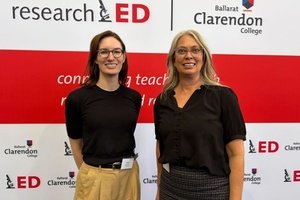
The research team included Dr Callula Killingly, Dr Sandra Matheson, and Dr Laura Bentley (formerly from QUT and now at The University of Queensland), alongside Dr Elizabeth Swanson from The University of Texas in Austin, US.
To read the full paper, titled ‘Interventions for students with reading difficulties in Grades 4-12: A systematic review and meta-analysis’, click here.