
Unbeknownst to you, thousands of eyes are watching. A live video has been shared online – and it is going viral.
The students’ parent sitting across from you, previously relaxed and amiable, suddenly erupts. What began as calm dialogue, escalates into hostile accusations of bullying, bias and systemic sexism.
What you don’t know is that the parent has been broadcasting your every word through his smart glasses to thousands of followers.
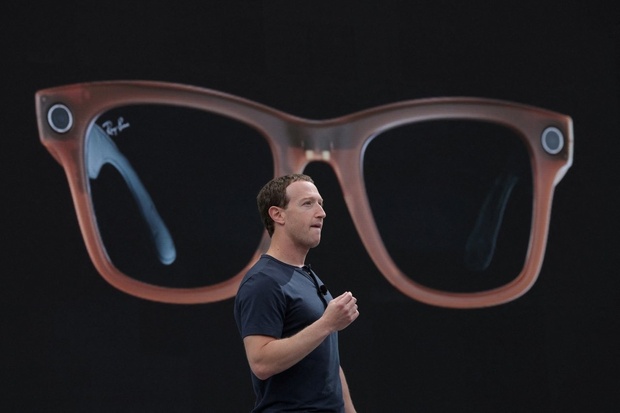
Smart glasses are wearable computers, or what Victoria University researchers Dr Janine Arantes and Dr Andrew Welsman call, ‘a phone on your face’, and frighteningly, they can share our movements and interactions at school with big tech companies.
Marketed as fashion accessories, they closely resemble popular brand sunglasses, they are also cheaper than the average mobile phone retailing at an average A$450 (or as low as $100) and can be fitted with prescription lenses, further blurring the line between everyday eyewear and normalised covert surveillance.
But while schools regulate mobile phones, education policies have yet to keep pace with smart glasses – and without proper policies in place to guide and protect students and teachers, the fast pace of this emerging tech may inflict more harm than good.
“Smart glasses embed commercial surveillance, AI biases, and data extraction into everyday prescription eyewear,” new report A Phone on Your Face? Rethinking Mobile Device Policy when Smartglasses are mainstream in Education, reads.
“Yet … current Australian educational policies remain grounded on notions of mobile phones as distractions, failing to anticipate the sociotechnical complexities of wearable devices.”
Welsman, who co-authored the report with Arantes, says although smart glasses provide greater opportunities for inclusivity, such as object recognition for students with vision impairments and reading support for students with dyslexia through voice prompts, they present a real threat to the fundamental protections for students in classrooms and for staff in their workplaces.
Arantes says of real concern is the technology’s application to the creation of deepfakes.
She says while they can be generated from any online images, smart glasses enable the covert capture of new images and footage in classrooms and school settings – unlike the more visible mobile phone.
“The discreet design of smart glasses, at a price point many can afford, makes covert recordings less noticeable, increasing the risk of misuse without detection – until the harm is done,” Arantes says.
“This concern is particularly urgent given the rising incidence of sexual harassment against female teachers and students, and the relative ease with which deepfakes can now be created.”
Arantes and Welsman’s paper found that without specific policies governing the devices, their potentially covert presence in classrooms will only increase. They want governments to develop policies to promote safe use and tackle misuse of the technology.
“We’re calling on government and industry to raise awareness of smart glasses’ unique form and functionalities,” Welsman says.
“And to consider to what extent their policies promote the safe use, and tackle the misuse of this technology, to make sure educators and students are safe in the classroom.”
Any cursory glance at optometrist stores online, be it Specsavers, or OPSM or even tech specialists like JB HiFi, will reveal that smart glasses are being heavily promoted.
They’re multi-modal and are integrating AI, “they really are like a phone on your face in terms of the functionalities that you have,” Welsman tells EducationHQ.
“Foreseeably, they could be in a lot of schools already, there could be a lot of students already wearing them, and teachers are just blissfully unaware.
“… we need to find that out - that’s a major point of attention for us, is that we need to understand who’s wearing this technology, who’s using this technology, whether or not that includes a significant presence in schools, we just do not know,” Welsman says.
The pair’s paper contends that smart glasses represent not only a surveillance risk, but also a form of educational assetisation, transforming classroom interactions into rent-bearing data.
“Smart glasses have many beneficial features, especially for those students with hearing or vision disabilities. However, without guardrails smart glasses and similar technologies, could become very dangerous,” Dr Welsman warns.
“They’re targeted at the recreational consumer, someone who would be using them to take photos, stream video to their social media, basically be hands-free in terms of how they engage with that,” Welsman explains.
“I guess the point is, like any technology with a host of functions, they can have very good use cases, but of course they can be misused if people are not aware of what they can do.
“We just haven’t hit that point in the public consciousness yet where people appreciate exactly what these things can do in terms of assistive benefits or otherwise. And that’s the conversation that we need to have.”
It’s a call to action about awareness and for schools to examine their own policy about wearable technologies.
“Are smart glasses articulated in your policy? Have you considered them? Because what you’re not aware of, you won’t be able to regulate – and any kind of reaction will be after the fact.”
Welsman says the AI policy space as it relates to schools, is an evolving conversation with no consensus yet about the place of AI and more significantly, is there a place for embodied AI in the classroom if somebody is wearing it on their face?
“We’re hoping to explore in our future research what the socio-technical implications of having AI on your face and in your ear all the time are, and not just in your pocket as it might be on your phone.
“That’s a significant question which we don’t have the answer to.
Welsman says, as with the consideration of any tech tool that teachers use in the classroom, that they fully understand what they have in front of them.
“What’s the full suite of functionalities that the tool has? What can somebody do with this? And moreover, how would the use of that tool potentially intersect with the moments in the classroom and the moments in the school hallway, your day-to-day interactions with students and parents - those relational instances?
“Because you might say that the real concern is always in the details that you don’t anticipate, the things you don’t know that you don’t know, so to speak, I guess.
“I call on teachers to consider that whatever technology you’re putting in the classroom, have a conversation with your school leadership, have a look at your existing school policies, really interrogate the functionality of the technology so that you are sure that a), it’s in the interest of the students to be using it, and b), that it’s in your interest to use it as a professional. And I think teachers are very, very good at that.”