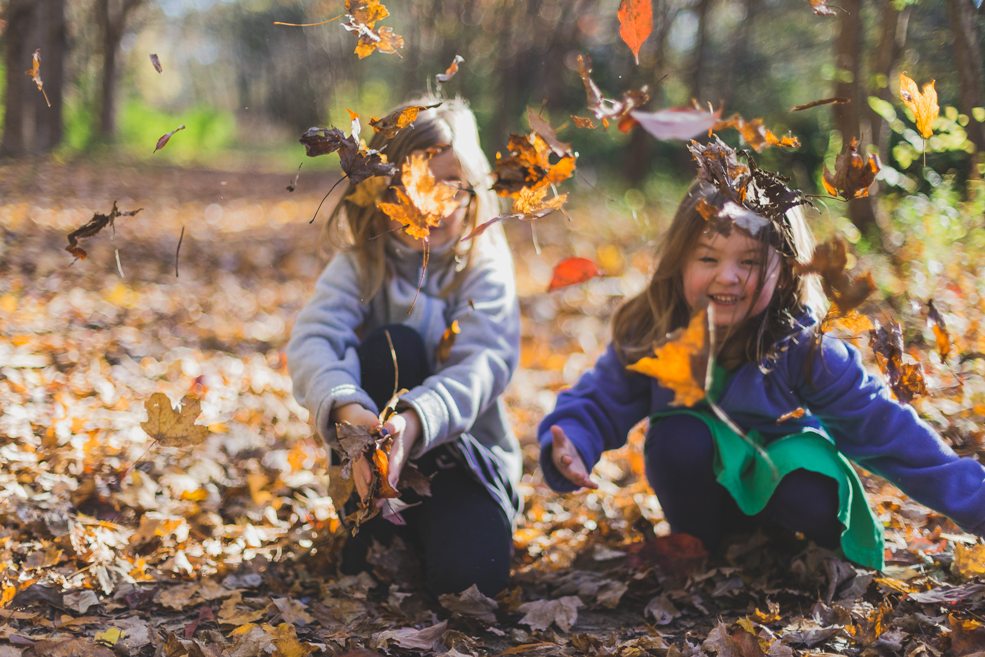
It’s really about nurturing a child’s innate curiosity, compassion, and understanding of the world, including beliefs, values, and the exploration of questions about life and death.
All these things we would imagine to be intrinsic to early years learning, yet while spiritual education programs are commonplace around the world, here in Australia it’s an often overlooked foundation for children’s lifelong growth and mental health.
In response, a new practical guide has been developed to help educators nurture spirituality in the early years.
Launched in Perth last month, A Framework for Young Children’s Spiritual Capabilities is designed to equip early childhood and early primary school teachers with age-appropriate strategies to foster 0- to 8-year-old children’s sense of identity, belonging, connection and meaning – the core elements of spirituality.
The framework was developed by experts in early childhood education and spirituality, Edith Cowan University’s Associate Professor Christine Robinson, Dr Brendan Hyde, from Deakin University and Chair of the International Association for Children’s Spirituality, and Dr Megan Best, from the University of Notre Dame Australia.
“A real focus was in providing a framework that educators could easily access,” Robinson, a former Associate Dean (Research) for the national Faculty of Education, Philosophy and Theology at The University of Notre Dame, tells EducationHQ.
“It’s been designed so that educators can duck in and out of it.
“It’s not like a textbook where you have to read it from front to back, it’s user-friendly and with the aim of improving the opportunity for children to have their spirituality nurtured and promoted … and we’ve taken the approach of really informing educators around what spirituality is.”
Including research-based insights, the guide includes 10 capabilities and how each capability relates to a way that educators can nurture spirituality.
It provides practical ideas and suggestions for different age brackets – birth to three, three to five, five to eight-year-olds – and what educators can do in their classrooms to nurture and promote spirituality.
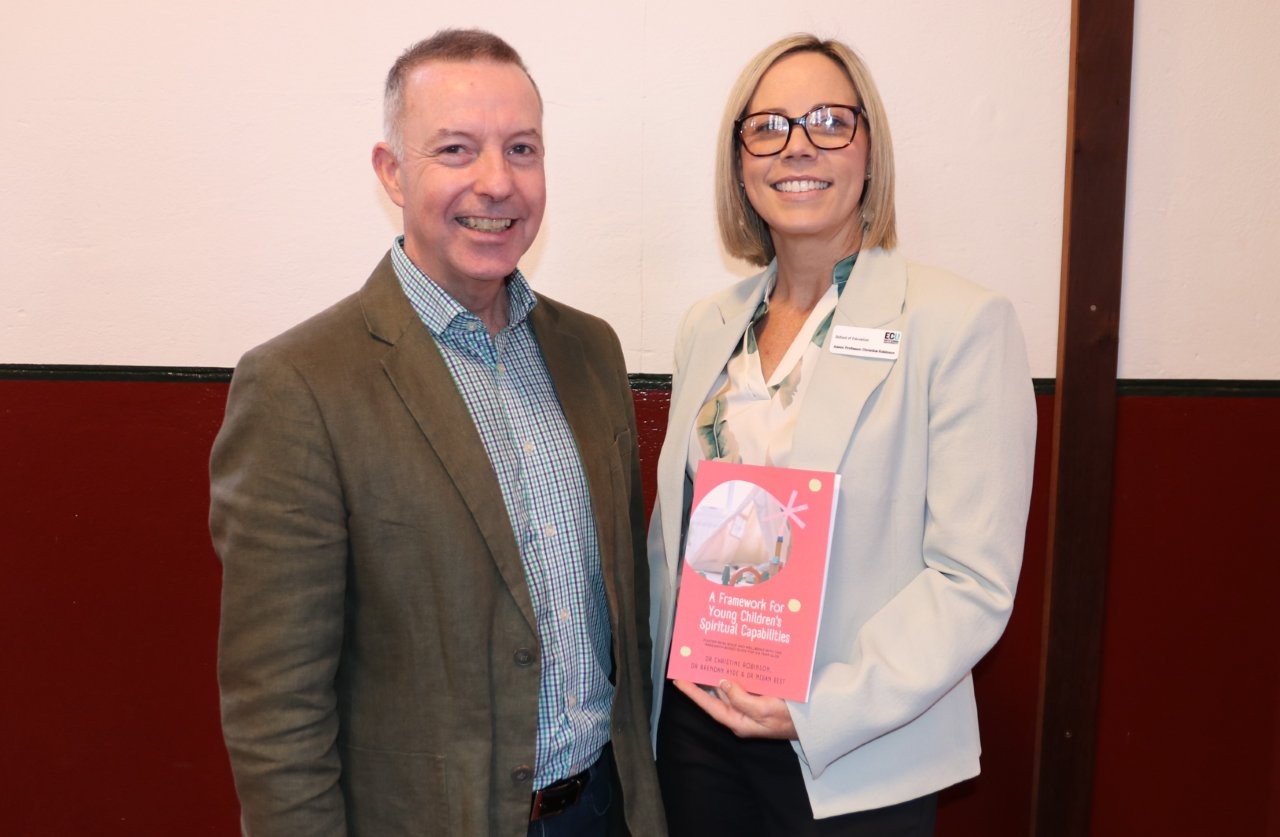
Assoc Prof Robinson, pictured above right with Dr Brendan Hyde, says, “the research is clear: when educators actively support children’s spiritual development, they’re helping to strengthen resilience, boost self-esteem, and promote positive mental health – all critical outcomes in today’s world.”
Robinson, who during her career has taught in Catholic schools and been an assistant principal prior to entering academia, says a great deal of research has been undertaken mostly in the health domain, looking at the benefits of investing in a spiritual capacity throughout life.
“Because it’s the capacity that we draw on in times of adversity, when we experience trauma, death, disconnection, anxiety - and we hear so much about that and the struggle particularly for adolescents, and their spiritual capacity is about this connection,” she explains.
“We’re seeking connection and meaning and purpose, so if we’re someone who has invested in that in our childhood, like anything, the foundation’s there and when those times hit us where we do feel anxiety and disconnected and we experience trauma of some kind, we can only draw on the skills and strategies and that capacity if we’ve invested in it.”
One of the things Robinson and her team found in their research that led up to the framework was that spirituality is very much misunderstood.
“Often when I start to talk about spirituality people immediately think of religion and take their thought process down that path and possibly disregard it because of that,” she explains.
“The research really shows that, whilst for a lot of people it is connected to religion, because they’re religious people and they have religious beliefs, we view spirituality as part of the whole person so that everyone has the capacity, it’s part of holistic development which we advocate for in education, and then we’ve tried to describe it as something that goes beyond the self to focus on connectedness, getting meaning and purpose in life, and ethical responsibility.”
Robinson’s interest in nurturing spirituality in early years learners has grown and evolved over the years.
“From a professional viewpoint it was really that the early years learning framework, which is mandated in Australia for early years educators to use, talked about the need to attend to children’s spirituality, so that’s a role of the educator, we recognise it’s a capacity, while children have a physical, a cognitive, a social-emotional, they also have a spiritual (capacity).
“And then I was working with preservice teachers in a unit around planning, and we would often plan looking at those different domains and what we would be doing to link curriculum to those domains of development, and we’d get to this box around spiritual and moral and unless people had a religious framework, they weren’t really sure what to put in there.
“So it started to just emerge as this gap that existed and I became really interested in it.”
Robinson says another of the compelling findings out of the research is that, while teachers can offer opportunities for spiritual promotion, it’s often child initiated.
“Children naturally engage with their spiritual capacity by wondering, by asking existential questions about why things are the way they are and the meaning of things, and they’re trying to find their place in the world all of the time,” she says.
“So when an educator is attuned to that, so they understand the value of those moments in connection to spirituality, then that educator is going to embrace them, they’re going to help that child to develop that sense of who they are, that they belong in the world, the person that they are, that they have connections with nature, appreciate nature, care for nature so that there’s something beyond the self - which is really central to spirituality.”
The researcher says the educator who understands that, is going to see all of those moments as being worthwhile and the educator who doesn’t, or doesn’t promote, recognise and understand spirituality, is going to move the child on to something that seems to be of more value which is usually an academic task.
The framework, the academic says, is perfectly set up to cater to educators who have very little experience in or understanding of spirituality.
“I think they’ll be pleasantly surprised that actually it’s a lot of things that maybe they’re already doing.
“That was the other thing we were really conscious of (in developing the framework) – this isn’t another thing for educators who are already overwhelmed with curriculum changes and the amount of documentation they now have to do, this is about recognising that some of the practices that perhaps you’re engaged in already, because you think it’s good practice, is actually underpinned by research around spirituality specifically.”
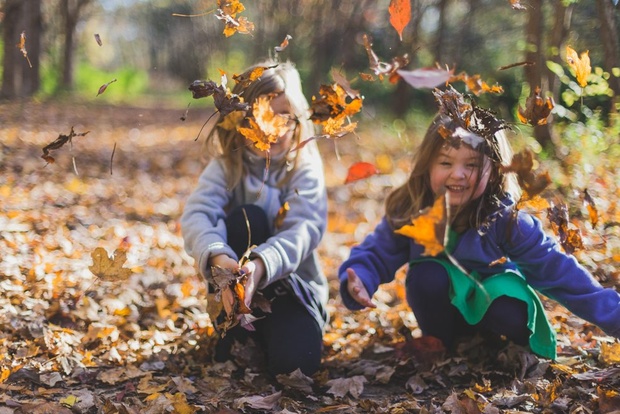
A good example that, she says, is early childhood educators now are really aware of the value of nature and how important nature experience and nature play is for children.
“But why is that? So looking at that from a spiritual lens of when people feel connected to the world, they’ll care for the world, they’ll appreciate the world and in times of stress they’ll go out and sit and look at the world, whether it be the beach or the bush or whatever.”
Robinson says spirituality is about wonder, connection, identity and meaning – and it deserves a place in every early learning environment.
“Our hope is that the early learning sector recognise spirituality beyond religion, to understand the connection between spiritualty as a part of being human.
“If this can happen, we really can attend to the whole child.”
For more on A Framework for Young Children’s Spiritual Capabilities, click here.