The study, led by New Edith Cowan University (ECU) researcher Dr Mary-anne Macdonald, surveyed 536 secondary students in non-government Western Australian schools to investigate their perceptions of education.
Participants hailed from a wide range of schooling environments, many from remote or regional Western Australia, and approximately half attended boarding schools in Perth or regional towns.
The study compared students’ experiences at school and the family support they received with the aim of gaining an understanding of how experiences, similarities and differences between Indigenous and non-Indigenous students shape their education aspirations.'
Notably, it only canvassed students who were engaged with schooling.
The power of relationships – and the harm of racism
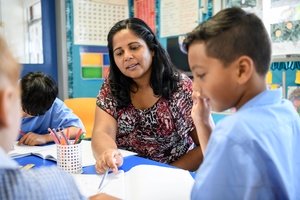
Indigenous students were highly likely to report that admiration of a teacher would positively impact their school attendance, the report said.
“This finding could reflect differences in cultural attitudes to the importance of a relational approach, as well as the effect of high-expectations relationships,” it read.
“The existence of a positive relationship with one staff member does not preclude concurrent negative experiences with other staff or peers, however, this finding suggests that an avenue to increasing Indigenous attendance rates in secondary school could involve improving the quality of relationships that teaching staff develop with Indigenous students.”

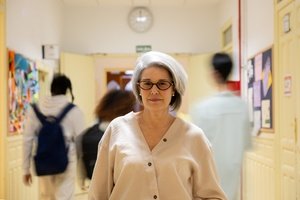
“We need to capitalise on [non-Indigenous] students’ desire for education and address some of the resourcing roadblocks that impact education attainment,” Dr Mary-anne Macdonald, pictured above, says. PHOTO: ECU
Macdonald, who is based in Kurongkurl Katitjin, ECU’s Centre for Indigenous Australian Education and Research, says this tells us that relationships with teachers really matter.
“When students feel respected and supported by their teachers, they’re more likely to stay engaged – and that’s especially true for Indigenous students.”
The damaging effect deficit discourse
The research also found evidence of the harmful effects of “deficit discourse” – a pattern of thinking that assumes Indigenous students are less capable or less interested in learning.
“These assumptions can be incredibly damaging,” Macdonald says.
“Our data shows that Indigenous students have strong self-belief and motivation – so when teachers or institutions have low expectations, they’re undermining students who are doing everything they can to succeed.”
The prevalence of deficit discourse, the report stated, is evidence of the superficial understanding that many teachers have (and broader society has) of the way education engagement is shaped by social, cultural, historical and economic contexts as well as by interpersonal teacher–student relationships.
“Breaking down structural and teacher discrimination is essential to levelling the playing field for all students in Australian schools,” it concluded.
Macdonald, whose recent research explores practices that enable non-Indigenous educators to engage authentically with Aboriginal peoples and knowledges, says the study showed Indigenous students and their families were keen to achieve benefit from education and recognise the importance of school attendance and completion.
However, despite their positive beliefs regarding Year 12 completion, they were less likely to picture themselves pursuing further education beyond Year 12.
“This finding is likely tied to structural inequity,” Macdonald says.
“Higher education in Australia is geared towards students who reside in urban areas, have higher family education and income levels, and have access to ICT and education infrastructure.
Accessibility impacts desire for further education
The study found Indigenous students were more likely to value school attendance and completion than non-Indigenous students and while both Indigenous and non-Indigenous students shared similar aspirations, family support, and belief in the value of education, Indigenous students were less likely to see tertiary study as part of their future.
Indigenous students less frequently had access to computers and internet at home or lived with family who had completed tertiary education, despite attending schools of similar socioeconomic status, with some of these differences reflecting the ongoing effects of historic racism in education settings.
The study also found WA non-government school students experience significant variability in school quality, with schools differing widely in the level of support they provide with homework completion, career information and post-secondary transitions, positive school culture and promotion of Indigenous culture.
School-level differences had a greater impact on students’ experiences than cultural background, particularly regarding support services and sense of belonging, the report found.
Call to address inequities
Macdonald is urging policy makers and education leaders to invest in addressing the equity gap in public and rural schools – particularly when it comes to access to quality teachers, internet and computers for homework, tuition and education role models.
“Our study shows that secondary education is equally desirable amongst Indigenous and non-Indigenous students, but it is not equally accessible.”
“We need to capitalise on students’ desire for education and address some of the resourcing roadblocks that impact education attainment.”
The paper ‘Desiring education, exhibiting agency, experiencing systemic obstacles: Re-examining the perceptions and experiences of education amongst Indigenous and non-Indigenous students in Australia’ is published in ‘The Australian Journal of Indigenous Education’.