


As Dyslexia Awareness Month kicks off this month, Code REaD Dyslexia Network is keen to highlight the new diagnostic clarification and says the update from the publishers of the Diagnostic and Statistical Manual of Mental Disorders demands an urgent review of common practice amongst Australian teachers and clinicians.
Marshall Roberts, Code REaD chair, says if a child has received quality classroom instruction that has targeted their specific weaknesses and they still struggle to keep up with their peers, there is no need to wait six months before seeking a dyslexia diagnosis.
“We’d encourage people to be on the lookout sooner, rather than assuming that [students] can’t be considered for diagnosis until Year 2, for example, which we’ve heard around the traps is often stated as a thing – and which the APA have said that’s certainly not necessarily the [right approach],” Roberts tells EducationHQ.
Now that a growing number of school systems around the country are shifting to structured literacy and dropping discredited ‘balanced’ instructional approaches, children at risk of reading struggles will likely be easier to identify, he adds.
“You can diagnose within six months of (a child) starting schooling … obviously, it’ll be the struggling kids with dyslexia, or any reading struggles, that they will stand out even more, hopefully, because the evidence-based instruction should be getting pretty much 60 to 80 per cent of kids out of the blocks pretty quickly.
“So, the ones that need that extra, targeted help can hopefully get it sooner.”
Roberts warns that the most significant cost of delaying a dyslexia diagnosis is missing the ‘optimal window’ for intervention.
He notes research shows that upwards of 95 per cent of children can be taught to be literate with targeted support, but warns “the speed and effectiveness of remediation diminishes substantially with age”.
Yet in a perfect world, there would be no need to diagnose students with dyslexia at all, he argues.
“Ideally, we say that a diagnosis shouldn’t even be necessary, especially with multi-tiered systems of support in place.
“Because those kids who are struggling will automatically end up in tier 3 intervention and be getting that early intervention faster and sooner, which is all you can do, really.
“The best way you’re possibly going to ameliorate dyslexia is through targeted intervention.”
Code REaD are not advocating for educators to seek out a diagnosis over literacy intervention, he clarifies.
“It’s just that we don’t want to be holding off on it for the sake of it, especially if a kid is in high school, then you don’t want to be saying, ‘let’s wait another six months’.
“You just want to get on top of it straight away.”
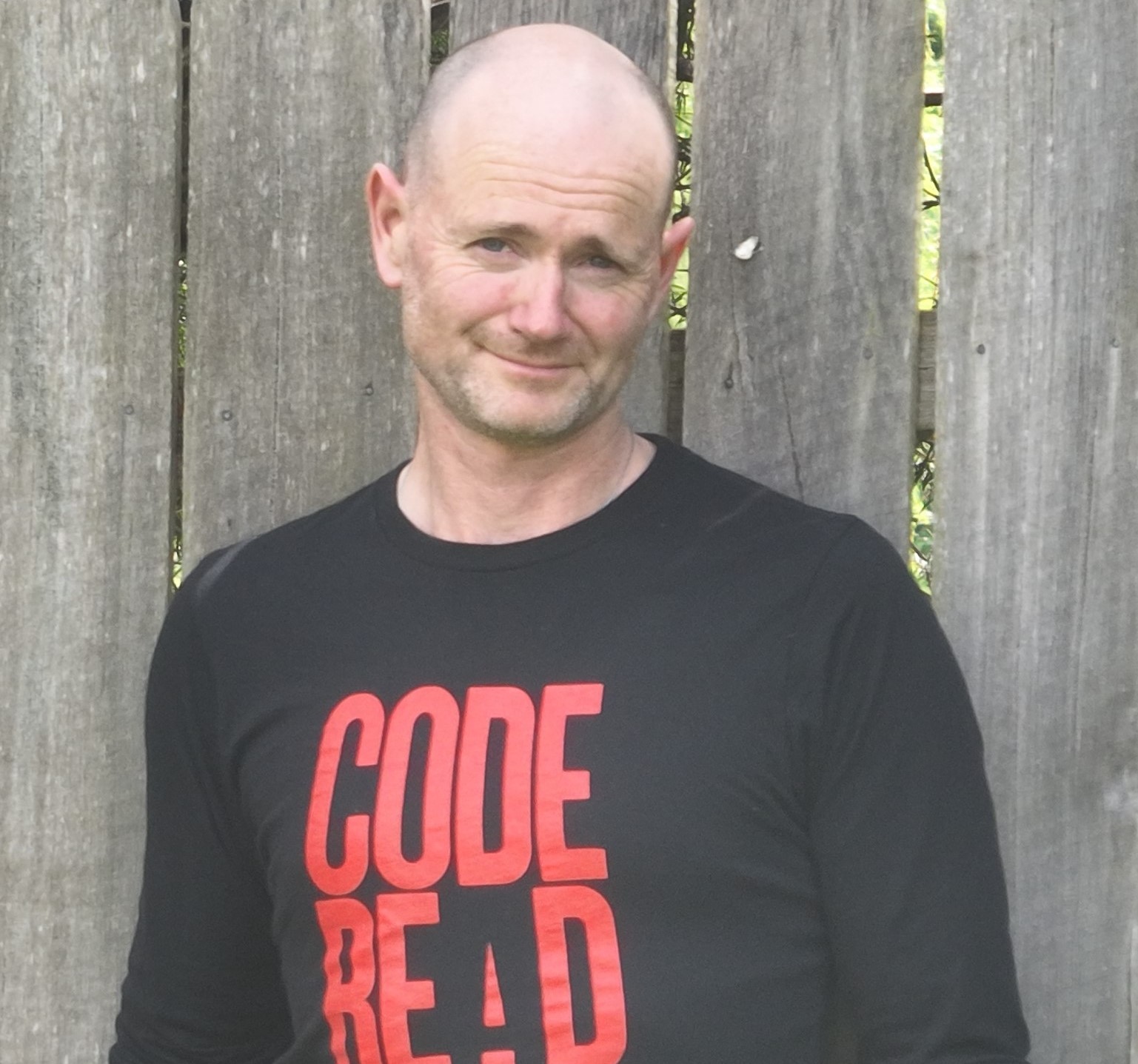
Marshall Roberts says we know it takes four times as many resources to remediate a child struggling to read in Year 4 than it would have in the earlier years.
Code REaD has written to peak bodies in Australia who are set to decide how APA’s clarification should be applied in our context.
Roberts says the widely held understanding that you must wait half a year before looking into a dyslexia diagnosis most likely boils down to a fundamental misinterpretation.
“…it’s probably a misunderstanding of what is arguably a quite ambiguous part of The Diagnostic and Statistical Manual of Mental Disorders,” he says.
“Criterion A actually mentioned six months of intervention, but they didn’t actually mean it to be separate to just regular schooling, necessarily.
“So I think part of it’s come about because, with balanced literacy holding sway, you could reasonably argue that a lot of schools weren’t giving six months of targeted intervention just through normal schooling, because it wasn’t actually targeting [the students’] weaknesses…
“It wasn’t that evidence-based instruction that was systematic and explicit and so on.”
Now that schools are ‘coming on board’ with evidence-aligned literacy instruction, it means we can count regular schooling as that six-month intervention window, he explains.
Psychologist Scott Shirren, a board member of Code REaD, says the diagnostic update has been welcomed by his colleagues.
“Many report they will immediately amend their practices to reduce the time and financial burden placed upon clients and their families.
“It will also have a significant impact on the mental health of young people struggling to read, as they get the validation and support they need that much sooner,” Shirren says
As Dyslexia Awareness Month unfolds over the coming weeks, it pays to remember that literacy acquisition sits on a continuum, Roberts says.
“It’s on a spectrum. As [La Trobe University’s] Professor Pamela Snow says, you’ve got to get kids ‘over that bridge’ in the first three years of schooling.
“And we know for a fact that early intervention is the most important thing you can do to get even those quality instruction-resistant readers across the line.”
Time really is critical here, he emphasises.
“The sooner you can identify that there is an issue there and that things aren’t clicking for those kids as easily as others, the more you can do for those (students) early, it’s going to pay dividends.”
We know that it takes four times as many resources to remediate a child in Year 4 than it would have in the earlier years, Roberts adds.
“It’s just a social justice issue, they’ve got to be able to access the curriculum and if they’re not at where they should be in the first three years, then it’s going to be really hard to catch them up.”