


According to Noah Bloch, co-head of curriculum at not-for-profit Consent Labs, part of the solution lies in removing blame from the equation.
Bloch runs a positive masculinity program that’s sought after by schools across the country that are grappling with escalating effects of influential 'manfluencers’, the likes of Andrew Tate and Adin Ross.
He says there’s been a clear rise in overt misogyny and harmful rhetoric from boys and young men in classrooms, with female teachers, girls and gender-diverse students the targets.
“It’s often something which you can basically tell has come directly from a video that they’ve seen online or from a popular influencer that they follow online,” Bloch tells EducationHQ.
“The optimist in me likes to think that those young men and boys don’t really know the implications of what they’re saying or the context behind what they’re saying.”
Having led the development of the targeted workshop, Bloch says the aim is to disrupt and uproot harmful cultures of masculinity brewing amongst students.
“Those cultures have always existed – in-person, in schools and in environments where there are some harmful masculine stereotypes which are consistently idealised,” he says.
“[So the module] talks about the pressures that young men and boys face to have to live up to typical masculine stereotypes, like being strong or being the provider or the breadwinner, or always having to have sex.”
The harms are unpacked before healthier versions of what it means to be a man are role modelled.
“At the centre of the program … is a strengths-based approach where we don’t blame young men and boys for the way that they have been brought up, for the way that they’ve been socialised, but we outline that it is their responsibility to make sure they don’t do harm to others as a result.”
As researchers warned this week, commercially-motivated influencers in the manosphere prey on boys’ feelings of uncertainty and insecurity, encouraging them to blame their anxieties on girls, women and ‘the woke agenda’, while offering ‘solutions’ based in male supremacy, self-improvement and ‘the grind’ mindset.
It pays to remember that many boys are turning to these figures as a means to deal with an underlying sense of isolation, Bloch says.
This can be harnessed as part of schools’ intervention, he adds.
“Usually, a lot of the content that they’re tuning into is probably really attempting to be divisive and actually further isolate them even more from mainstream conversation about these topics.
“So, if we can actually show them that we’re not going to lean into the divisiveness and that we’re here to listen to them, then it really allows young men and boys to let their guard down and be a lot more open to hearing this conversation play out.”
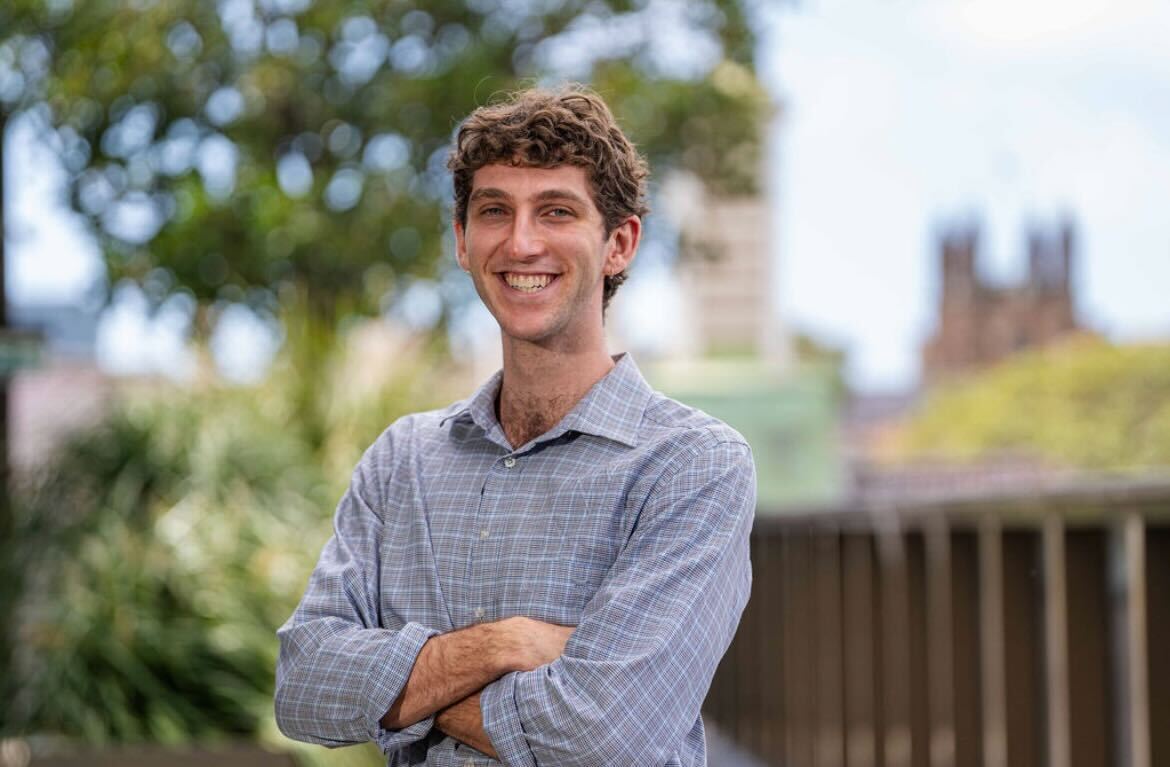
"The optimist in me likes to think that those young men and boys don't really know the implications of what they're saying," Bloch says.
A powerful message delivered to students is that the full suite of stereotypical masculine traits can be reframed, Block adds.
“Like, it’s strong and brave to be vulnerable and to share your emotions. It’s strong and brave to stand up for what you know is right or to stand up for people with less power.
“We’re not saying, ‘ditch these traits, masculinity is bad, toxic masculinity is an attack on men’.
“We’re saying ‘let’s take these traits and apply them into different situations where you can actually be a positive role model for all of the young men and boys around you’.”
You can see the change in students as they engage in the workshop, Bloch says, recalling the case of one very popular and disruptive young man who was prompted to drop his entire persona during a recent session and open up about the poverty, abuse and addiction that had shaped his upbringing.
“It was amazing to facilitate that discussion, because I could see the rest of these young boys realise that there are pressures that they’re all facing in similar, but also in very different, ways.
“Not everyone’s perfect, and even the person hypothetically at the top of the food chain is dealing with something.”
While much of the public conversation about the manosphere focuses on how boys and young men fall into these spaces, a new study by the Australian Institute of Criminology has investigated why and how some men have managed to extract themselves.
“These stories matter because public discussion about the manosphere often focuses almost exclusively on its harms. Those harms are real and serious,” two researchers say in an article for The Conversation.
Yet rather than assume those who fall into the manopshere are permanently lost within its matrix, we must “be hopeful the scale of the problem can be arrested”, they note.
“Schools, policymakers and families all need these first-hand perspectives. They offer more than just insight into why boys and young men fall down the rabbit hole: they provide a crucial road map for how we might help pull them out.”
Bloch says Louis Theroux’s new documentary Inside the Manosphere showcases to great effect how its key figures are ‘monetising misogyny’.
“He does just a great job at showing [their] true intentions … and he lets them self-destruct a little bit … all they care about is making money, at the end of the day.”
What’s missing though is the very real impact it’s having, Bloch notes.
“It could have [focused] a lot more on young men and boys and also on women, girls and gender-diverse folks. I think that is the next step of the conversation.
“And for me, one thing I always come back to is replacing harmful role models with positive role models.”