


Among the four key areas ACARA has identified for improvement is the inclusion of explicit content on foundational mathematics for consumer and financial literacy.
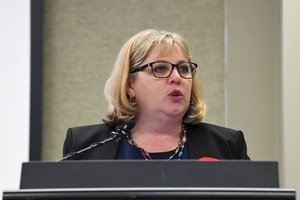
Speaking at the Sydney Morning Herald’s Schools Summit this week, ACARA chief executive Stephen Gniel said, “we must prepare our children for their responsibilities and also the tricks of the trade around … consumer and financial literacy”.
The iterative review will also focus on prioritising mathematical content, giving teachers greater clarity about what students will learn at each year level, and providing more specific content sequencing.
The most recent NAPLAN data shows that around one in three Australian Year 3 students are failing to reach challenging but achievable numeracy proficiency standards, and one in ten are in need of additional support.
This is the first time that consumer and financial literacy has been flagged for inclusion in the F-2 curriculum.
Dr Greg Ashman, deputy principal at Ballarat Clarendon College in Victoria, told EducationHQ the main idea behind this was misconceived.
“It is common for people to think about mathematics teaching for a few minutes and decide that it should focus on things they think are important, but that's no way to design a curriculum,” he argued.
“It also feeds the idea that mathematics should be only about its usefulness in everyday life, neglecting the powerful ways it enables us to think about the world.”
This unfortunate yet common judgement is not applied in the same way to other subjects, the school leader said.
“We don't say 'when am I going to use my history knowledge when I am at the supermarket or filling in an online banking form?'”
In Ashman’s view, curriculum planners have long laboured under another misconception.
“…armchair curriculum planners always assume that lessons based on real-life content and the needs of adults will be motivating for children, but they forget that real life can often be mundane and the everyday lives of adults are not always full of thrills and spills.
“Little kids don't want – and certainly don't need – earnest lectures about credit card debt,” he said.
Ashman offered some direct words of advice to ACARA heading into the review.
“Focus on mastery of maths facts such as number bonds and multiplication facts and focus on the four basic operations of addition, subtraction, multiplication and division using the standard algorithms.
“First, master those. Then some more advanced number work and basic measurement. Until then, all else is decadence.”

Maths fluency is an equity issue that’s playing out in schools, Associate Professor Chrissy Monteleone says.
Associate Professor Chrissy Monteleone, co-director at La Trobe University’s Science of Mathematics Education (SOME) Lab, said the current F-2 Maths curriculum is missing a crucial element.
“It's a sound curriculum, but … what it's currently doing is telling teachers what to teach, but it's missing when, because order of teaching in mathematics matters.
“So, what a great curriculum in mathematics would be something that takes away that cognitive load for teachers so that they don't need to think about what comes next – it's already planned for them in a sequential way,” the former primary teachers and school maths leader said.
Developing children’s mathematical fluency in particular needs greater attention in the curriculum and also in classrooms, Monteleone noted.
“What we do really well as classroom teachers across the country is get children to acquire the maths knowledge, so to know how to add, to know how to subtract.
“But what we don't do well is get them to do it accurate and fast, which is the fluency piece.
“That in itself is a sequence; first students need to know how to do the maths topic or the maths content and then they need to get really fast at it, because ultimately what we're trying to get children to do is to problem solve – so they need to be really fast (and) fluent to be able to apply that in mathematics problem-solving settings.”
Maths fluency is a huge equity issue that’s playing out, the expert warned.
“If not all students are fluent, then that gap between those who are fluent and those who are not widens – that compounds over time, and by the time children get to really complex mathematics early in the upper grades or into secondary school or beyond, they're using too much of their working memory to think ‘what is that multiplication fact that I need to apply to fractions?’.
Students that reach Year 3 and sit their first NAPLAN tests without having built up solid fluency skills are going to be “really out of their depth, unfortunately”, Monteleone said.
It’s widely reported that Australia is falling well behind on maths excellence.
Just 13 per cent of Year 4 students met the ‘advanced’ maths proficiency benchmark in the 2023 Trends in International Mathematics and Science Study, compared with 22 per cent in England and 49 per cent in Singapore.
Last year Grattan Institute called on governments and Catholic and independent school leaders to commit to a 10-year ‘Maths Guarantee’ strategy, with researchers calling for far more ambitious targets to be set.
Ashman said multiple factors could be driving our poor maths outcomes, including teacher preparation, teacher quality and the focus within primary schools.
“However, the deeply unambitious curriculum does not help,” he added.
“Despite being crammed with all sorts of elaborations and various thought bubbles generated by education bureaucrats, the actual mathematics it expects students to be able to master is deeply unambitious when compared with countries like Singapore.”
ACARA said it will now work closely with primary school teachers, school and system leaders, and mathematics curriculum experts during the iterative review to “ensure that any strengthened content changes are fit for purpose, and that the curriculum provides clear sequencing of content and prioritisation of key concepts”.
Gniel explained that while initial consultations with stakeholders highlighted ‘overall satisfaction’ with the current curriculum, some key areas for refinement and improvement were identified.
“Ultimately, this will help support our teachers to be more confident in teaching this important learning area, as well as deliver improvements for Australian students.”
Ashman suggested three of the focus areas sound promising but that the devil will be in the detail of what ACARA produce.
“As an organisation, they have a history of engaging with ideologues who have profound and harmful convictions about how mathematics should be taught and who will try to distort the review so that it addresses their priorities,” he contended.
“ACARA need to engage widely and early with grassroots teachers and researchers outside their usual bubble.”
The iterative review will offer advice and recommendations to education ministers in Term 3.