
Failing to learn such a critical skill not only impacts the ability to learn across all subject areas but it can have rippling effects on a young person’s self-esteem, school engagement, and classroom behaviour.
Catching struggling readers in the first two years of school is essential if we are to address the unacceptable numbers of young Australians who are unable to read proficiently.
Luckily, Queensland has joined the early adopter states of South Australia and NSW in requiring Year 1 students across all government schools to undergo a phonics screening check.
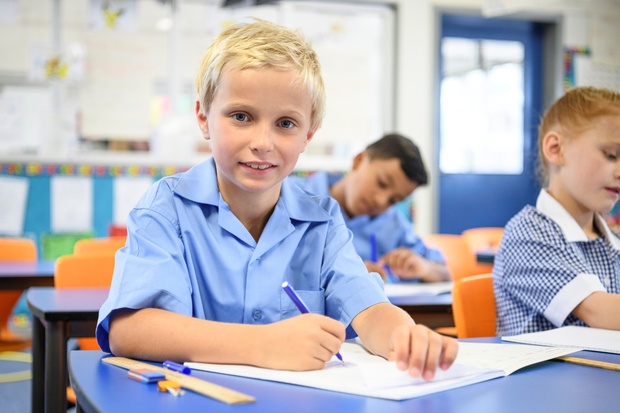
For many of the pint-sized Year 1s who participated in the check last term, it may have be the first time they have undergone a formal assessment process.
However, to label the phonics screening check a “test” – therefore conjuring up images of intimidating exam halls – misrepresents what it is and what it has been able to achieve.
Developed in the UK and adopted first here by South Australia, the phonics screening check takes about seven minutes and involves a child’s own teacher sitting one-on-one with the student, assessing their ability to read basic words, all of which they would have been taught to read in class.
It also assesses the ability to read some non-word letter combinations – for example, ‘bip’, ‘steg’ or ‘shromp’ – which helps confirm that the student can decode using their knowledge of letter-sound combinations rather than relying on memory.
This is important because decoding words by relying on phonics knowledge is the basis of learning to read.
When South Australia first introduced phonics screening in 2018, only 43 per cent of students met the benchmark of correctly decoding at least 28 out of a total 40 words. That has since risen to 70 per cent, which is a commendable achievement.
Importantly, the phonics screening check was introduced as part of a broader package of measures that included a statewide shift to evidence-based reading instruction, including the explicit teaching of phonics, and the provision of training and resources to upskill the teaching workforce.
Queensland has now started down that path as part of the government’s Reading Commitment policy. Having completed the screening check last term, teachers will now have a better idea of where their students are at and which students may require additional support.
With 38 per cent of Queensland’s Year 3 students still falling short of proficiency standards according to 2025 NAPLAN data, evidence-based teaching across all classrooms is the best chance we have to address the learning gap. Phonics screening is a critical safety net.
Critics of the check have described phonics screening as “high-stakes,” and it is – but not in the way they mean.
Teaching children to read well is critical, and we educators only have a short window of time to get it right.
If we get it wrong, the consequences can be devastating and life-altering.
Let’s embrace this simple seven-minute check that will help keep us on track to closing the reading gap.