

Amid the growing demand for anti-racism education, a new research paper authored by a team of international children’s literature and social justice experts draws on the researchers’ collective experiences to expand how children learn to use metaphorical concepts of mirrors and windows when reading and analysing a text.
Head of the research group, Associate Professor Helen Adam, from the School of Education at Edith Cowan University (ECU), says teachers and parents need evidence-based strategies for facilitating critical conversations that help children challenge stereotypes and think critically about fairness and representation.
She says while books may serve as both a mirror and window for children’s diverse perspectives, the researchers’ framework aims to empower children to be critical readers by teaching them how to identify five different mirror types.
“The nuanced framework we’ve presented provides educators with increased confidence and strategies for infusing the curriculum with diverse literature for children,” Adam says.
“We know that when books serve as windows, children can see the characters and experiences different from their own and, through this, can learn appreciation, respect, and empathy for those different from themselves.
Adam explains that when books serve as windows and aren’t limited to reflections of a child’s own lived experience, it helps disrupt potential development of prejudice and misunderstanding of others.
“It fosters critical consciousness regarding social justice issues,” she suggests.
Conversely, children may feel excluded and unengaged in their classroom learning if they don’t see themselves and their culture represented in the books they read.
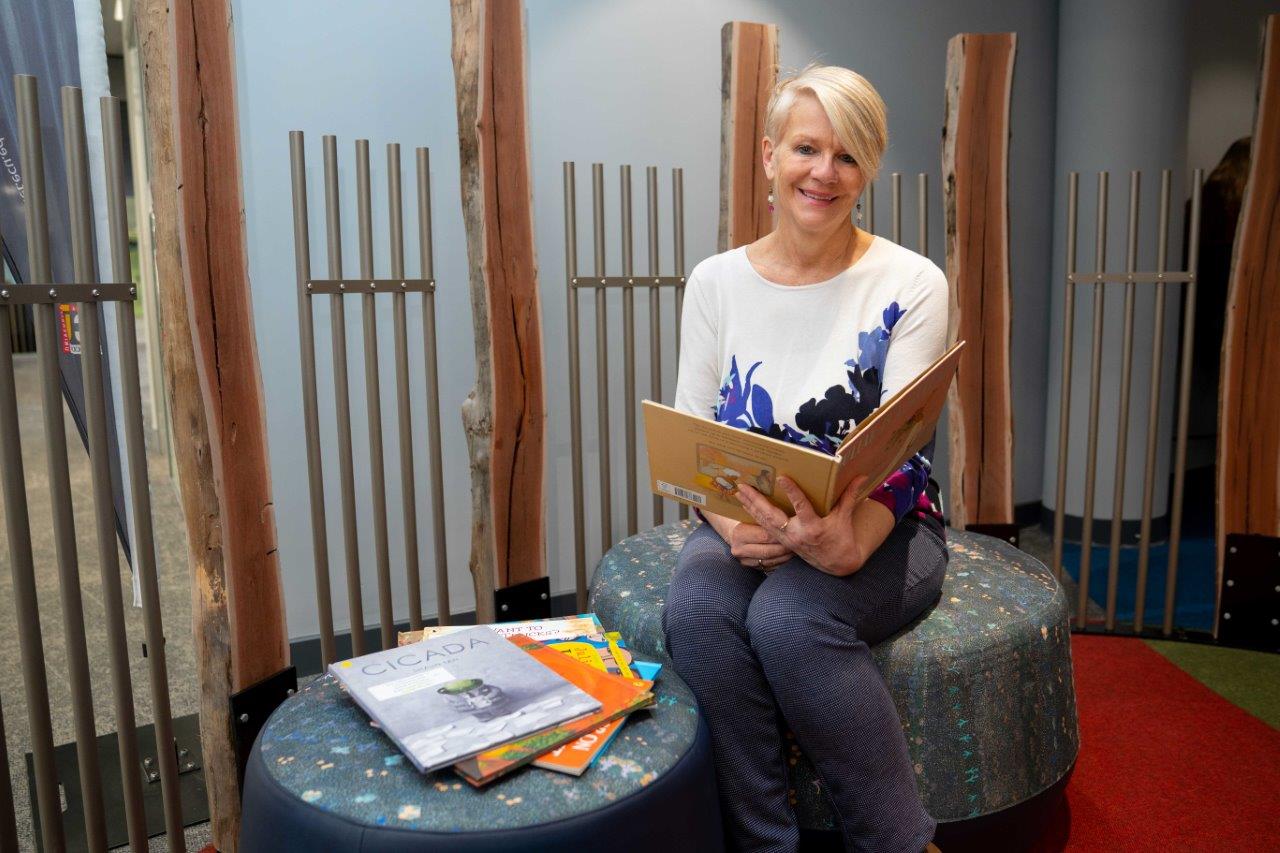
Associate Professor Adam and her team have provided a systematic and relevant framework that bridges the gap between theoretical understanding and practical implementation, while remaining accessible to both educators and children.
Adam says most existing frameworks continue to treat the concept of mirrors as relatively uniform in their function without accounting for the different qualities of reflection that books might provide.
“Our framework of differentiated mirrors recognises that mirrors themselves exist on a spectrum of reflective quality,” Adam shares.
“Unlike previous frameworks that have treated mirrors and windows as largely separate functions, our approach acknowledges that books frequently serve as both simultaneously.
“By focusing on different types of mirrors based on the physics of actual mirrors (plane, concave, convex), in addition to magic mirror and fairground mirror recognition, we provide a systematic and relevant framework that bridges the gap between theoretical understanding and practical implementation while remaining accessible to both educators and children.”
Types of mirrors
The foundation of the framework encourages children to build their understanding through connecting new and existing knowledge.
- Plane mirror: Books often read by children as something that is familiar to them.
- Concave mirror: These books magnify and focus attention on specific aspects of children’s identities or experiences, bringing particular elements into sharp relief that may have been previously unnoticed or undervalued.
- Convex mirror: Some things in the book may be familiar, but other aspects are new to children’s line of vision. The book can likely be both a mirror and a window simultaneously, providing broader perspectives that contextualise familiar elements within wider contexts.
Mirrors for careful consideration
While these can be used to teach critical literacy they should be used with caution.
- The magic mirror: The fictional magic mirror that lies to its viewer to reinforce a superior sense of self. This is often seen in monocultural book collections more broadly, rather than individual books.
- The fairground mirror: This type of mirror is evident in books that promote stereotypical or distorted reflections of diverse groups, often promoting an exotic or condescending portrayal.
Practical application
Adam recommends implementing the differentiated mirror framework with children through a three-pronged approach:
- Teaching the framework to children
- Identifying different mirror types in practice
- Building critical consciousness
The aim of the framework is to help children and educators move beyond passive consumption of literature toward active, critical engagement through emphasising critical consciousness and problem-posing education.
“By distinguishing between different qualities of reflection, we can help prevent children from developing a distorted view of oneself and of the world, where white culture is often normalised and oversaturated,” Adam offers.
When children learn to identify different types of mirrors, they develop tools for questioning whose stories are told, and whose voices remain absent.
In the research paper, co-author and educator Madison Kozeny suggests children do not just passively consume stories, they interrogate them, they question who is included and excluded, and make deeper connections to their own lives.
Click here to read the recently published paper, titled “This is like a mirror! That’s like me!” Differentiated literature mirrors for diverse children