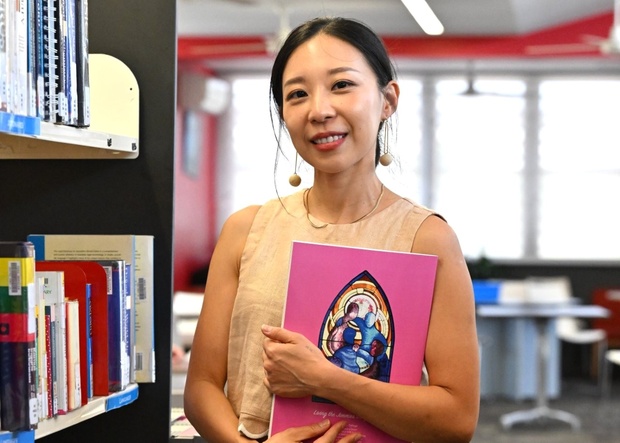
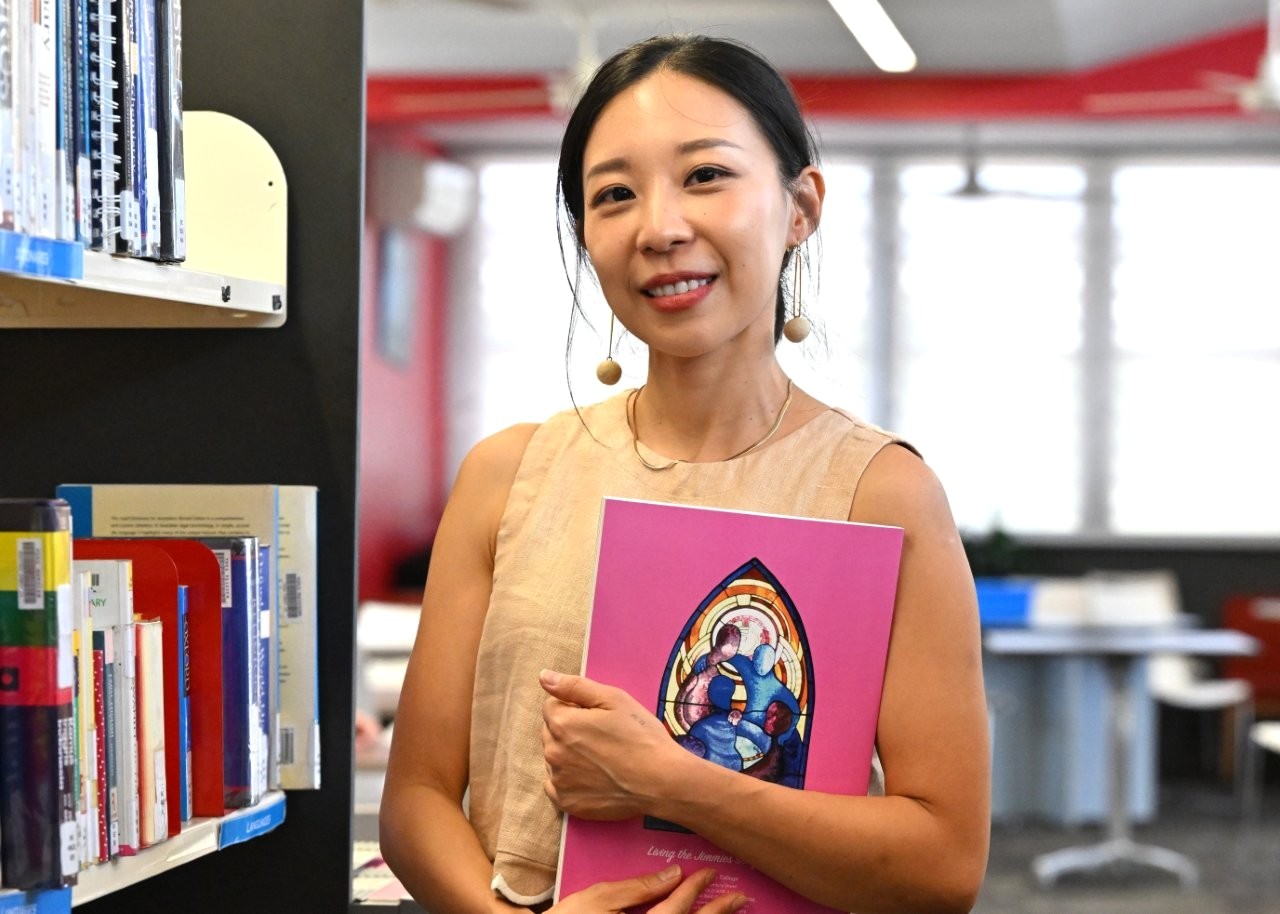
Having won the Queensland College of Teachers TEACHX Excellence in Beginning to Teach Award back in 2021, the ex-pat Taiwanese educator has recently completed certification as a Highly Accomplished Teacher through QCT.
Chen arrived in Australia from Taiwan in 2014, and having grown up in a high-stakes, test-driven education system, in her time as an educator here, she says she’s appreciated the difference where learning is about passion and not just results.
Like all secondary teachers, she is deeply invested in her own subject area, but several years ago Chen was at a point in her career where she was keen to not only continue her research work, but to take a big step in her development as an educator.
The HAT process, she says, has forced her to step out of that comfort zone and as part of the certification process, she has had to demonstrate how she could support colleagues across disciplines, whether that be in assessments, behaviour strategies, or differentiated learning.
Chen says being a HAT is mostly about helping colleagues to support their students to thrive.
“I would say 20-30 per cent is about yourself, about you being an expert in your subject area or behaviour management, those cross-curriculum things, but the other 70 per cent is about how you support colleagues to get there and working alongside them.”
Along with the ‘many, many things’ she has learned, like the importance of collaboration and leadership, she says a huge transformation has been the understanding and internalising of the concept of ‘coaching’.
“When we think about coaching, it's like you have a coach who is an expert, they watch you to help you to be better, however, to me it's more about teachers supporting each other's professional growth without hierarchy.”
Chen sees this as far more powerful than endless PD that takes up precious time and ultimately adds little to an educator’s arsenal.
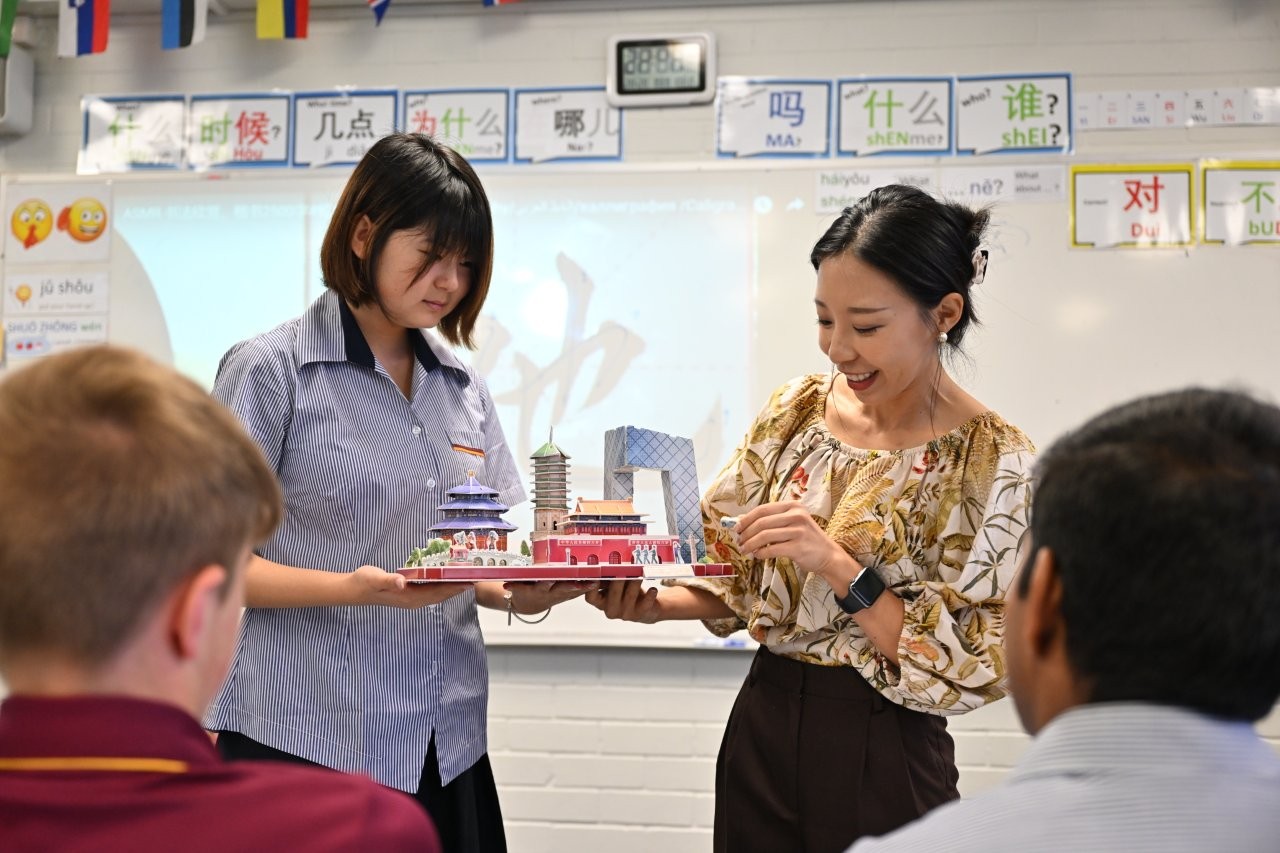
Chen uses the Teaching Proficiency through Reading and Storytelling (TPRS) method of language learning, where rather than using language drills or memorisation, students instead take part in “fun class stories”, use visual aids on classroom walls and more.
As an example, she presented at a conference in 2023 on the Teaching Proficiency through Reading and Storytelling (TPRS) languages method, and afterwards was approached by ten language teachers hoping to learn more.
Chen went on to initiate what was to be called the Mandarin Teachers Mentoring Project, where the group worked together to apply the research-based method to transform their teaching approaches.
Several in the group were far more experienced teachers than Chen, some with 10, 20 years of teaching behind them.
What stood out to her, she says, was the mutual learning and support.
"Some of these teachers had more experience than I did, yet we came together as equals, exploring new strategies and growing collectively. It was inspiring and very productive teamwork.
“So this coaching element makes a difference to any teaching practice, because we all go to PD every day, you have that compulsory 20-hours, I think, but very little actually happens in the classroom. Why? Because we don't have time, life is too busy, the curriculum is too busy, the timetable is too busy.
“You need that critical friend, that critical other alongside you. You try things in your classroom, you come back, you have a chat, and they offer the next little things, and support you along the way, because the situation is very different in all classrooms.”
Teamwork is clearly front and centre at St James. The school’s student cohort is a rich tapestry of young people from a vast array of more than 50 different cultural backgrounds.
Many are refugees from war-torn, often traumatic backgrounds, with 62 per cent speaking English as a second language, and the school is proudly home to a high percentage of students with learning needs.
Any good school has parents beating down the door to get their kids enrolled, but for St James, things are on a whole different level.
With unprecedented interest in the school, due to the its growing reputation and a targetted strategic marketing plan, enrolments have doubled in the past five years and with the recent purchase of a new building and a change in principal, the College is set to continue its success.
“We grew from 600 to 1000 from last year and with lots of new enrolments, new buildings have been required, and we’ve also needed a lot of new teachers,” Chen says.
It’s lucky then that the young educator almost has a figurative crystal ball. St James already has in place a program catering specifically to newly arrived staff and beginning teachers, coordinated by Chen and the college's leadership team.
Having spoken to early career teachers on staff and keen to push herself, she commenced a survey, conducted personal interviews with beginning and new staff, and collected data, which she showed to the school.
“I was like, 'this is how they feel, these are the areas they need most support’ and then I designed a program based on that data," Chen explains.
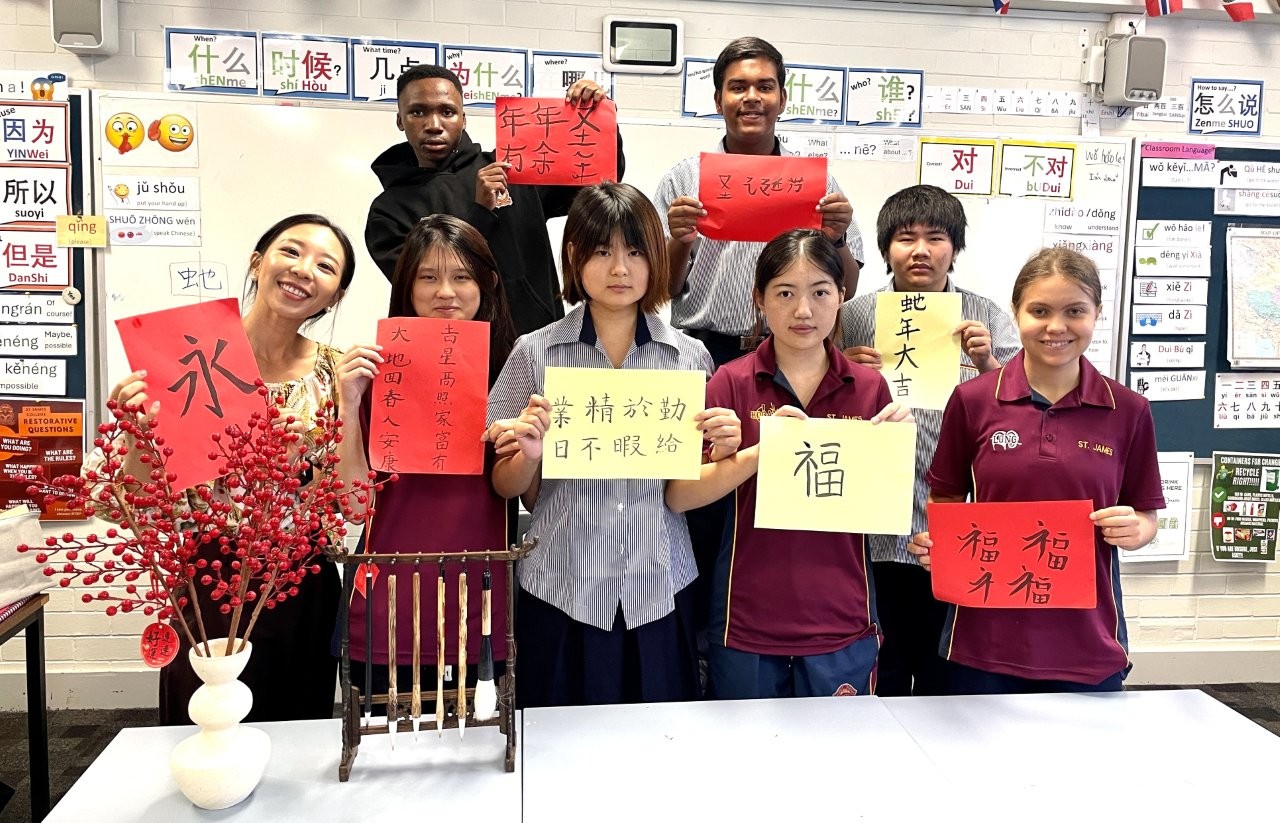
Chen says her school’s diversity, be it cultural, neurodiverse, and socioeconomic, has taught her a great deal about humanity. “It’s changed how I approach education, focusing on strengths rather than deficits,” she says.
Friend and colleague, Catalynne MacAllister ran the program alongside Chen until 2023, their focus on the practical actions and strategies that teachers can use in the classroom.
This year Chen is working with an AP, a Director of Teaching and Learning, and a Director of Student Wellbeing to run the program. AP Nick Hurley and Chen are focussing on supporting beginning teachers while the two directors are working with new staff with more than four years of teaching experience.
“The two groups run at the same time. We support them to understand the way we teach and the way we do activities and help them to understand the context of our school, because it's quite different and quite complex.”
Chen says she is excited by new principal Andrée Rice’s approach and ideation for the school’s future.
“She gave us a presentation at the beginning of the year and said one of her visions is to promote St James to be a lighthouse school in the inner city for excellence and equity driven innovation.”
It’s a familiar driving motivation for Chen. Four years ago when she won her Excellence award, she said she wanted to help her students to lift their expectation of themselves, and direct their self-esteem with their special challenges and to realise what they can achieve,
“If you make them see, they will believe and that’s very crucial to changing their life, it opens many doors and more possibility of success in the future.
“We are very, very diverse with a high percentage of students with special needs, but we see excellence every single day. And we learn more about humanity every single day – me as a person, not as a teacher, and that’s the equity driven innovation. That is very exciting for me.”
“Through research, I’ve learned that teaching is about exploring alongside colleagues and students. I tell them, ‘I don’t know everything, but let’s find out together’. This collaborative approach fosters growth for everyone involved.”
As for Chen’s opinion of the high-stakes, test-driven style of her former home country, she says increasingly, particularly due to Google and generative AI, they will be forced to adjust to a system favouring process far more than result.
“I can see lots of changes in this area, and teachers here have already started to change their assessment measures,” she says.
“Some teachers encourage their students to use AI-supported tools, including me – I think it’s a great way to learn languages. It has helped me to improve my writing as well.”
When using generative AI in her classes, Chen asks her students ‘how can you change the prompt to get better quality?’
“’And why is the answer now better quality?’ So it’s that analytical skill that is important in today’s world.
“I don’t know what kind of testing they do in Taiwan anymore, but if it hasn’t changed already, that will go, because while there’s correct answers, it’s not a skill that people want these days. They don’t want answers, they want to know how you figured out things, the process.
“I hope this is where education in Australia is heading”