

In a new paper, the researchers from Sunshine Coast University contend that mathematics is “one of those disciplines where students can find a disconnect between what they are taught and their own experiences of the world”.
“This sometimes relates to a lack of real-world examples to illustrate mathematical concepts.
“In addition, students can sometimes be exposed to a limited (and often repeated) range of examples to illustrate mathematical concepts,” they assert.
Lead author and senior lecturer Dr Greg Watson said maths and science educators from primary to tertiary level could adopt a new ‘visual approach’ by drawing upon numerous phenomenon from the natural world – examples that pictorially illustrate a host of mathematical, scientific and engineering concepts.
“We use real-life examples of the way some organisms physically move through their environment to illustrate the connection of mathematics to the natural world and explain a variety of mathematical functions, such as sinusoidal curves and triangular wave functions,” he added.
“For example, the curving patterns that a small beach clam (Paphies altenai) leaves as it moves under the sand with a falling tide offer a wonderful opportunity to visualise how subtle changes to the various parameters, variables and boundaries affect the shapes of the curves.”
Watson said Australia’s unique scribbly gums also offer a great learning opportunity.
“The patterns that the larvae of scribbly moth (Ogmograptis spp) leave as they burrow into the new bark, not only help to give the trees their name, but images of the trail they leave can be used to teach interesting triangular wave functions,” he said.
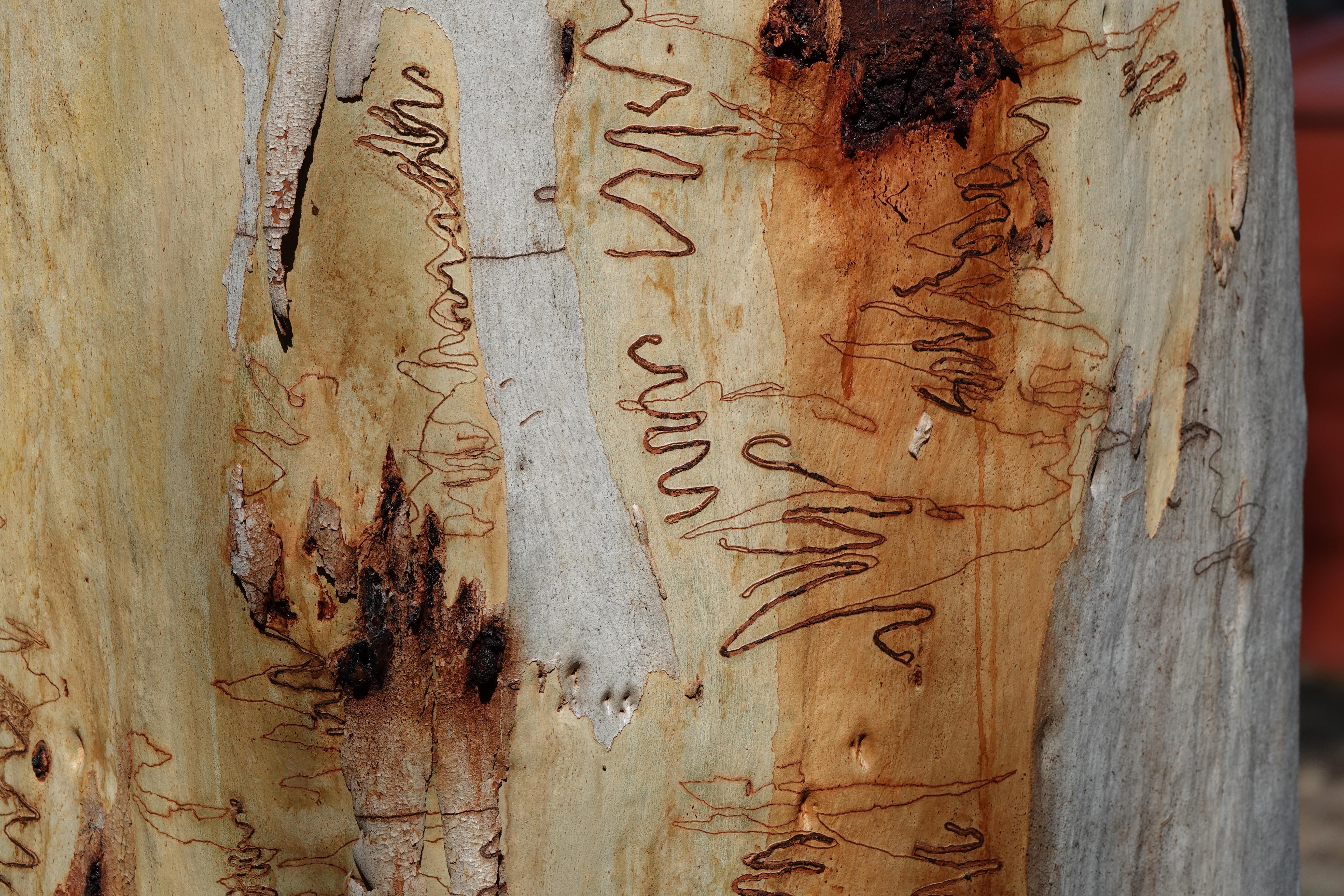
The motion of several scribbly gum moth larvae can be described as a sinusoidal function, the research proposes.
There’s more learning material to be found at the beach, he suggested.
“There are numerous wormlike species called ‘nematodes’ which inhabit the sandy beaches in Australia, and we’ve observed many hundreds of their trails of various lengths, amplitude and wavelengths as they move through the sand above beach tidal zones.
“Fossils of nematode trails have been discovered at various locations across the world that educators can also use these images for students to apply sinusoidal functions to express the organism’s trail motion.”
Co-author Dr Jolanta Watson said the content they had developed expanded educators’ options when teaching mathematics.
“Relating mathematical functions to living organisms allows them to easily adapt or change features, such as inclusion of time dependent studies [that include] calculating the time it takes to make a trail by inclusion of an assumed organism velocity,” Watson said.
“Examples and images of animal trails could be easily incorporated into future textbook editions in a variety of subjects, exposing school students and undergraduates to the applications of mathematical modelling within current and cutting-edge research in fields such as animal ecology, biophysics and biomechanics.”
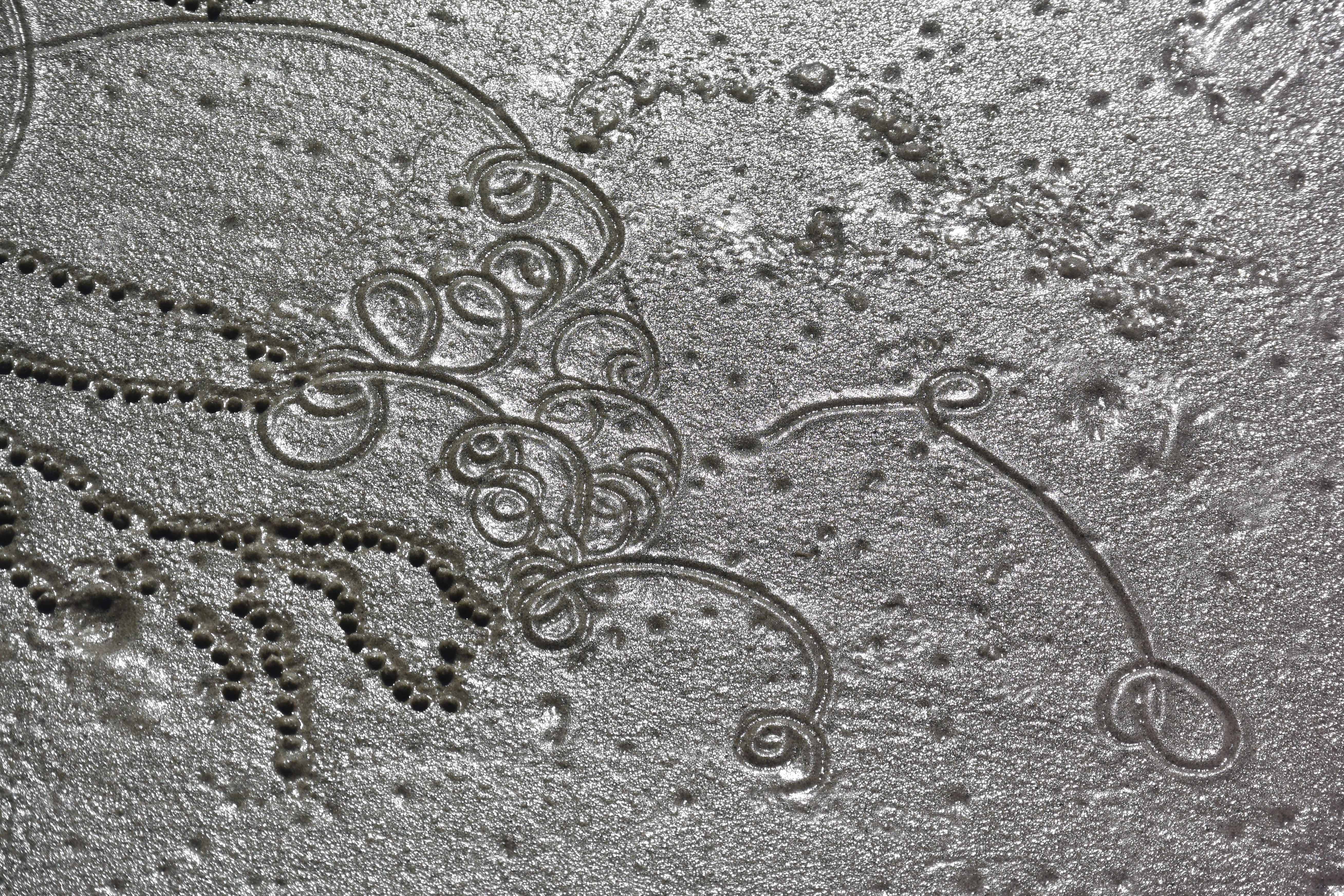
Bivalve trails offer another learning example to explore, the researchers say.
The researchers noted that looking at animal trails in the classroom could be as simple as identifying shapes and placing a flexible string along the paths to measure distances such as amplitude and wavelength, but extended also to much more complex mathematical analysis.
“Future studies progressing from the examples shown in this paper could focus on observations of animal movements in real time, for example allowing mathematics students to directly observe and record (via video) organisms moving during fieldtrips, and recording the environment in which these organisms live and survive,” the paper concluded.