

Today the book in question is Looking for Alaska, a young adult novel by American writer John Green. Written back in 2005, it’s themes of loss, grief, coming of age and relationships have continued to make it a much talked about book over the years.
Along with being a prompt for deeper discussion about issues surrounding ‘what if’s’, life and death and the search for meaning which are important to many teens, it is the language and inclusion of intimacy and relationships which have also seen the book challenged in many school and community libraries.
In 2024, it was again included on the most challenged books list of the American Library Association (ALA), holding firm at position number six. In first position on the challenged list was All boys aren’t blue by George N. Johnson, followed closely by Gender Queer: A Memoir by Maia Kobabe.
Most of the books in the top ten list are challenged for reasons related to sexually explicit content, LGBTQI+ themes or drug use.
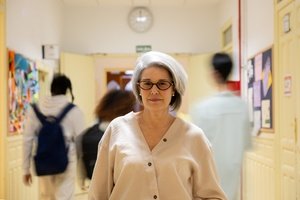
Our disgruntled librarian is in the midst of moving a selection of books including Green’s title from the teen section to a specially created ‘social issues’ section within the adult area of the library.
Access to Looking for Alaska, along with several other titles, will now be restricted to older borrowers (and enterprising younger readers who will undoubtably follow the trail leading them to the books they really want to read).
She will no longer be able to show and talk about these books freely and openly, although for now, at least, they will remain within the library collection.
She is starting to question her own professional role as a librarian these days. Earlier in her career she had felt proud of her ability to find the right book for the right young person that would fit their reading needs of the time.
Now she finds herself looking over her shoulder when she recommends a book to a teen, and thinks carefully about how a library display might be viewed by different library user groups.
She has become much more conservative and measured when she talks to teachers about book recommendations for their students, tending towards lower impact books with simple themes rather than topical, high impact suggestions.
She worries that her own ability to freely share information with the people who visit the library has been curtailed, and with it the free access to books by the people who rely on her to guide their choices.
According to the ALA, books such as Green’s have become increasingly the focus of planned, targeted attacks on the freedom to read.
Many of the books which are challenged include themes of sexuality or highlight LGBTQI+ relationships. Whereas once it was parents, library patrons and concerned individuals who challenged specific titles, now the game has changed.
Many book challenges arise from planned campaigns by pressure groups, board administrators and government officials. Only 16 per cent of book challenges came from parents, and 1 per cent were from teachers.
In contrast, 72 per cent of censorship attempts were from pressure groups and decision makers. The ALA recorded attempts to remove a total of 2452 unique titles during 2024 – a sharp rise from the average of 273 unique titles per year that were challenged annually during period from 2001-2020.
Far from being merely an American story, attempts to ban books have become a feature of the Australian reading landscape, too.
Librarians are experiencing a rise in challenges to book titles from organised groups and individuals within local communities.
A recent controversy surrounding the children’s book Same Sex Parents published in 2018 was briefly withdrawn from Cumberland Library in Sydney following a motion put forward by councillor, Steve Christou.
The book was later reinstated following a public outcry and protests by community members, as well as the NSW Premier Chris Minns who called the ban ‘a joke’.
The ban proposed by Christou is not an isolated incident but rather a high profile case that reflects a growing and disturbing trend. In 2024, there were 155 individual challenges to books across Australia, with the majority of titles centring around themes of race, sexuality and LGBTQI+ relationships.
There has also been a rise in ‘shadow banning’ where a book is not specifically removed from a collection, but instead is highly restricted by placing it in a particular section with the intent of reducing access to a smaller, select group of potential readers.
As our frustrated librarian continues removing Looking for Alaska from the shelves of her library, we await the sequel to the book banning story and the implications it brings for all young readers who want to read books that allow them to learn, explore, discover, reflect, challenge and most importantly, to think about the world around them.