Branch secretary of the non-government school staff union, Terry Burke, said for students from remote communities, boarding isn’t a preference – it’s their only path to a secondary education.
“No state, territory, or federal government will establish and fund a full secondary education facility in these regions,” Burke said.
“As a result, boarding schools remain the only feasible option for secondary education.”
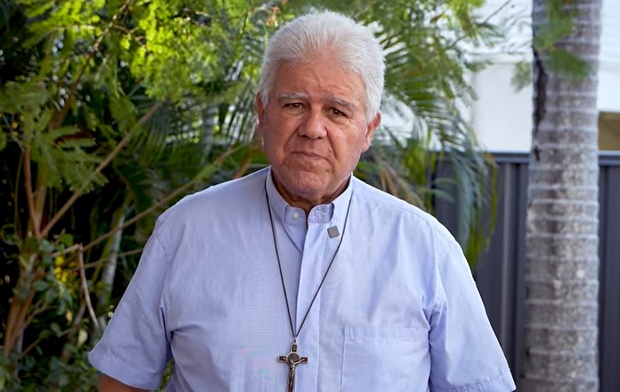
Catholic Education Northern Territory (CENT) announced on Friday its plans to close the facility at the end of the 2025 school year following the Bishop of Darwin, Most Reverend Charles Gauci’s endorsement of a recommendation made by the Council of Catholic Education Northern Territory.
CENT said the “difficult decision” comes after years of careful consideration and consultation, including an extensive review into the improvement of educational outcomes and financial sustainability of the Catholic education system in the Territory.
The boarding facility, which has until now included many students from the Tiwi Islands, Wadeye and Daly River regions, has operated at a significant financial loss for more than 20 years, CENT shared.
Bishop Gauci said the strain of its ongoing operating deficit, the need for significant infrastructure upgrades and declining boarding enrolments means it is no longer financially viable without compromising the broader mission of Catholic education in the Territory.
“It deeply saddens me that today we announce the closure…” Bishop Gauci said last Friday.
“The college has been a pillar of education in the Northern Territory for remote and regional Aboriginal Territorians for more than 60 years and this decision is not one we have taken lightly.
“However, there is no feasible way to continue operating the boarding facility.”
The Bishop said the Catholic Church is now “focused on supporting ongoing spiritual and educational enrichment for our Aboriginal sisters and brothers throughout this transition”.
CENT, the school and the Catholic Diocese of Darwin are supporting boarding students, their families and boarding facility staff to develop individual transition plans and identify suitable alternative options.
Over the years St John’s Catholic College has produced a number of sports stars, including AFL champions Maurice Rioli Snr and Jnr, Daniel Rioli, Michael Long, Nathan Buckley, Andrew McLeod and Cyril Rioli, as well as Australian hockey and athletics star Nova Peris — many of whom were also boarders.
Burke said while boarding schools receive significant sums of money to operate, the amounts are clearly inadequate.
“Additional funding support is essential, and notwithstanding that the cost would still be a lot less than a fully provided secondary school in remote locations,” he said.
“The national reliance on under-resourced boarding schools is unsustainable and unfair.”
Burke explained that if governments are serious about closing the gap in educational outcomes for First Nations students, then meaningful investment in secondary education provision for remote communities is essential.
“That starts with fully resourcing boarding facilities – without such systemic change, students from remote communities will continue to be left behind,” he said.
CENT and the school have acknowledged their gratitude to the 27 boarding staff impacted by the closure who they said “have faithfully cared for students over many years”.
“A transition plan will be made available to all affected staff with a focus on opportunities for redeployment within the Catholic Education system’s 18 other schools and Catholic Education Office,” a CENT spokeswoman said.