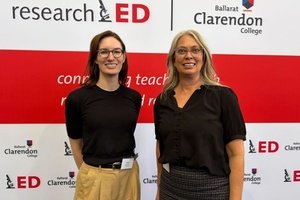


Offered as a coming together of researchers, Autistic community members, practitioners and families, it was a chance to share and learn across disciplines and research areas and for researchers to engage more closely with the people most affected by their work.
Researchers from the centre delivered brief snapshots of their work, sharing their progress, findings and goals for the future.
It seems the love of the acronym is alive and well in research fields, with program names ranging from the catchy Self Sense program to support self-regulation in primary school settings, through to Fit Skills which promotes a buddy approach to visiting a gym alongside a student mentor who works as a volunteer.
There was also the Bloom program which takes a quality of life approach to providing neurodiversity affirming support.
Development was also shared in researcher’s experiences using the SACS screening tool for the early detection of autism; recognised as being the most effective screening tool around the world and able to reliably identify autism even in very young children.
A new area of research was also presented which is pioneering a world-first approach to suicide prevention which will feature the first free, lived experience resource hub for mental health professionals.
The online hub will help professionals deliver support which is inclusive and well informed for Autistic and neurodivergent people at times of mental health crisis.
The inclusion of Autistic perspectives was a key element of the work of all researchers, and it was also one of the highlights of the showcase itself.
Far from simply being a chalk and talk event with researchers delivering their findings to a quietly receptive audience, there was perhaps potential for more learning to stem from the audience questions than anything else.
The audience included many people who have lived and family experience of Autism, and they were ready to engage, question, challenge and prompt new thinking after each presentation.
The questions and discussion which flowed were a chance for researchers to engage more closely with neurodiverse voices and perspectives.
Some questions highlighted the embedded ableism which can underpin approaches to education and care systems, such as the assumption that more attendance equates to more learning.
As one parent highlighted, for some children it was a false belief that attending school more often necessarily meant they would learn more – in fact it was more important to build rest days into their schedule rather than focus on attendance for its own sake.
A key feature of the research showcase was the modelling of some great ‘how to’ approaches to running an event. Neuro-affirming strategies such as using photos of the steps to take to reach the conference venue including photos of the entrance, lift buttons and door were included in the conference email.
A quiet room was included and highlighted so it could be accessed throughout the day, and stickers were provided so participants could choose a colour to identify their willingness to engage in conversation or opt out of conversation with people they didn’t know.
After each presentation, the audience either clapped quietly with two fingers together or used ‘jazz hands’ – waggling their fingers in the air as a silent clap.
This made it much easier for people who were sensitive to noise and reduced the potential for sensory overwhelm to happen.
It seems that even with the best of intentions and careful inclusive planning, there’s always room to improve.
Somewhat surprisingly, everyone in the audience sat on office-style caster chairs, creating a challenging seating experience for less mobile audience members who were at risk of their chair moving unexpectedly as they sat down.
The long, narrow room was difficult for presenters and audience members alike, as the best acoustics seemed to result from the presenter speaking facing towards one half of the room with their back to the other half!
Beyond the confines of a university lecture presentation, there are relatively few opportunities for researchers to engage directly with community members who are directly impacted by their work.
The research showcase was far more than simply a chance to share work and collect accolades; it was a meaningful and important coming together of people who will ensure that future autism research in Australia remains open, accessible, honest and ethical.