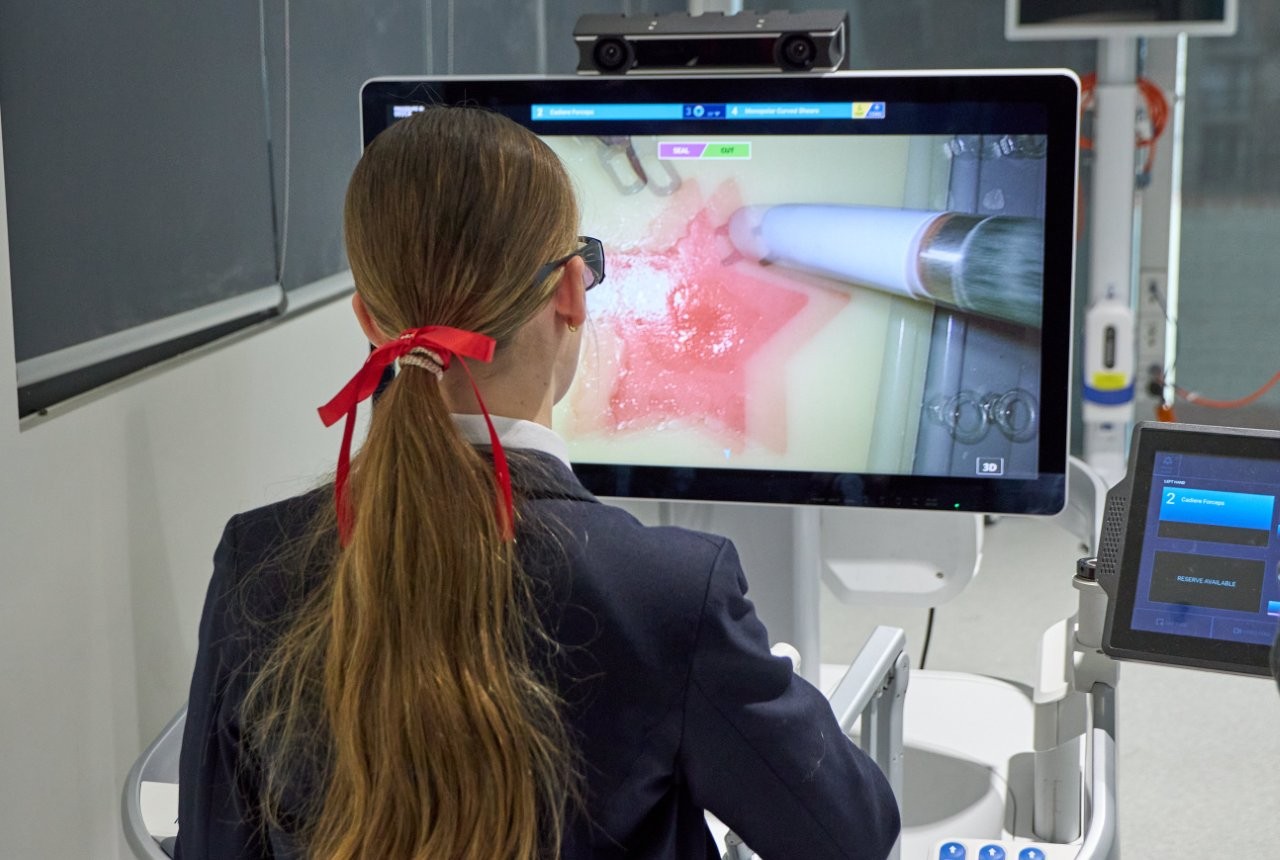
In a historic partnership with the International Medical Robotics Academy (IMRA), at the only facility of its kind in the Southern Hemisphere, the pilot program called ‘IMRA MedTech Futures - Secondary School Curriculum Package’ offers a hands-on, immersive experience where students can see, touch, and operate surgical robotics while also exploring the latest advancements in synthetic organs.
With women representing only 15 per cent of active surgeons in Australia, Kate Brown, Toorak College’s Deputy Head of Senior School, Academic Growth, says the program is a significant step in empowering young women to get first-hand experience and explore the possibilities of a path in medicine.
“We’re incredibly proud to partner with IMRA and be the first school in the country to create and trial a program of this kind,” Brown says.
“One of our core goals and philosophies here revolves around empowering young women to ignite change.
“We aim to nurture curiosity and build confidence through real life situations, and our work with IMRA provides a fantastic pathway for our students to grow, learn and be prepared for the modern workforce.”
Brown says the gender gap in the medical profession in 2025 remains disproportionately low.
“We want to change this, inspiring students to find purpose and meaning in their learning, and contribute directly to the next generation of female surgeons and, as such, increase representation of women in this sector.
“It all starts with education,” she says.
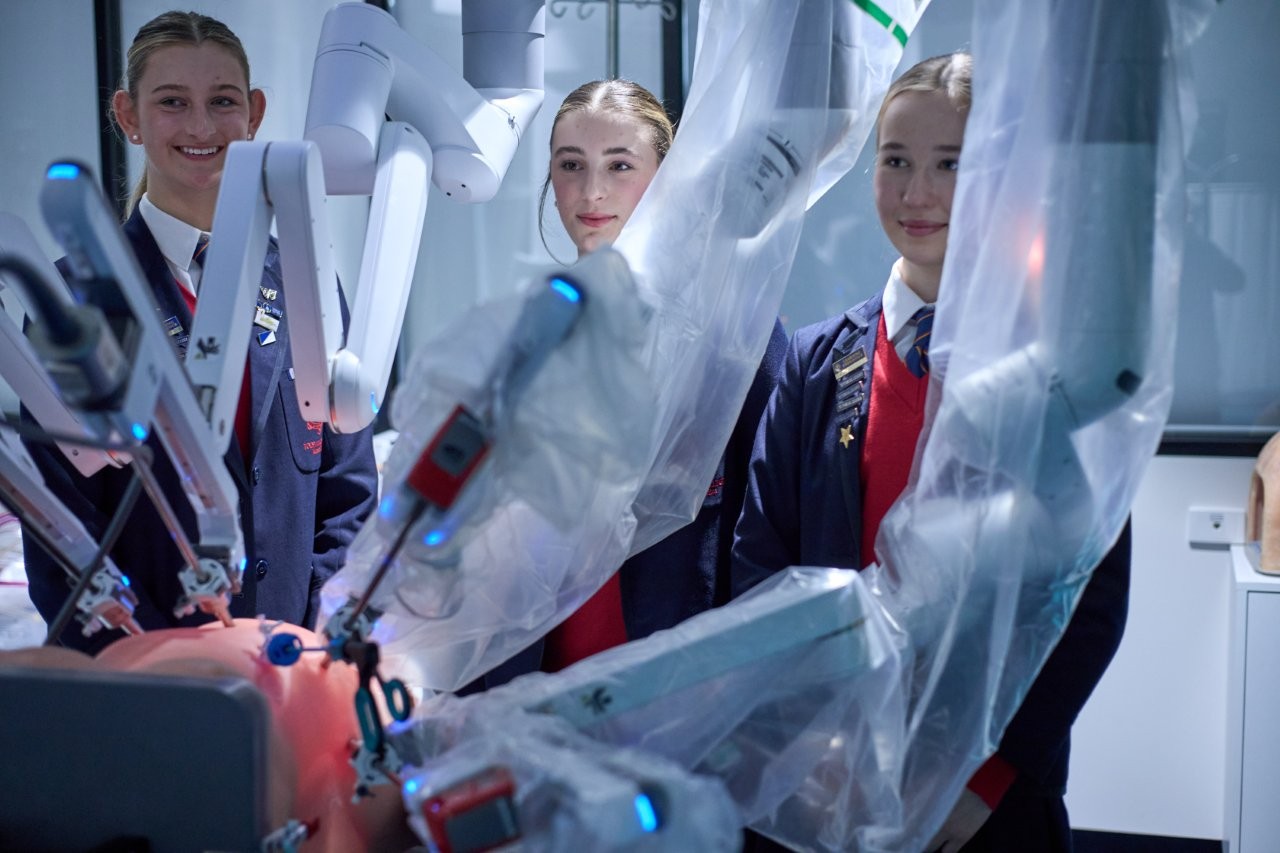
“Going to IMRA has encouraged me to follow my dreams into the medical field even further and discover job opportunities that I may have not known about prior to this experience,” one Year 10 Toorak College says.
IMRA is a world-leading centre dedicated to advancing education, training, and research in the rapidly growing field of medical robotics.
The collaboration came about after the training organisation heard about the work the school has undertaken with industry and organisation partners to promote STEM education and career pathways for girls and women in underrepresented fields, and expressed interest in meeting with the school's design team to develop a truly immersive experience.
IMRA CEO, Adam Clark, says he’s encouraged by the partnership and particularly its ability to provide more opportunities for learning and development for the next generation of modern surgeons.
“Technology is moving at an exceptionally rapid pace,” Clark says.
“The industry is constantly evolving, and our programs and education methods are revolutionising the concept of surgical training.
“This is the pinnacle of modern surgery, and we are proud to work with Toorak College to share our knowledge and resources with the next generation of surgeons in a way that is accessible and agile for the future.”
The program is one of many industry partnerships built into the school’s compulsory Year 10 Agile Learning subject.
“The programs are offered as micro-credentials and the students select three to complete across the course of the year,” Brown tells EducationHQ.
“The response from the student to the MedTech-IMRA pilot was immediate and overwhelming.
“The pilot course was offered over a four-week period, with pre- and post- sessions run at the school, and since the initial implementation curriculum has been expanded for the 2026 offering.”
IMRA’s revolutionary training uses the latest in cutting-edge synthetic models and aims to solve a number of significant challenges currently facing the medical industry; including gender equity in surgery, surgeon burnout, animal cruelty and a lack of adequate resources for surgical practice.
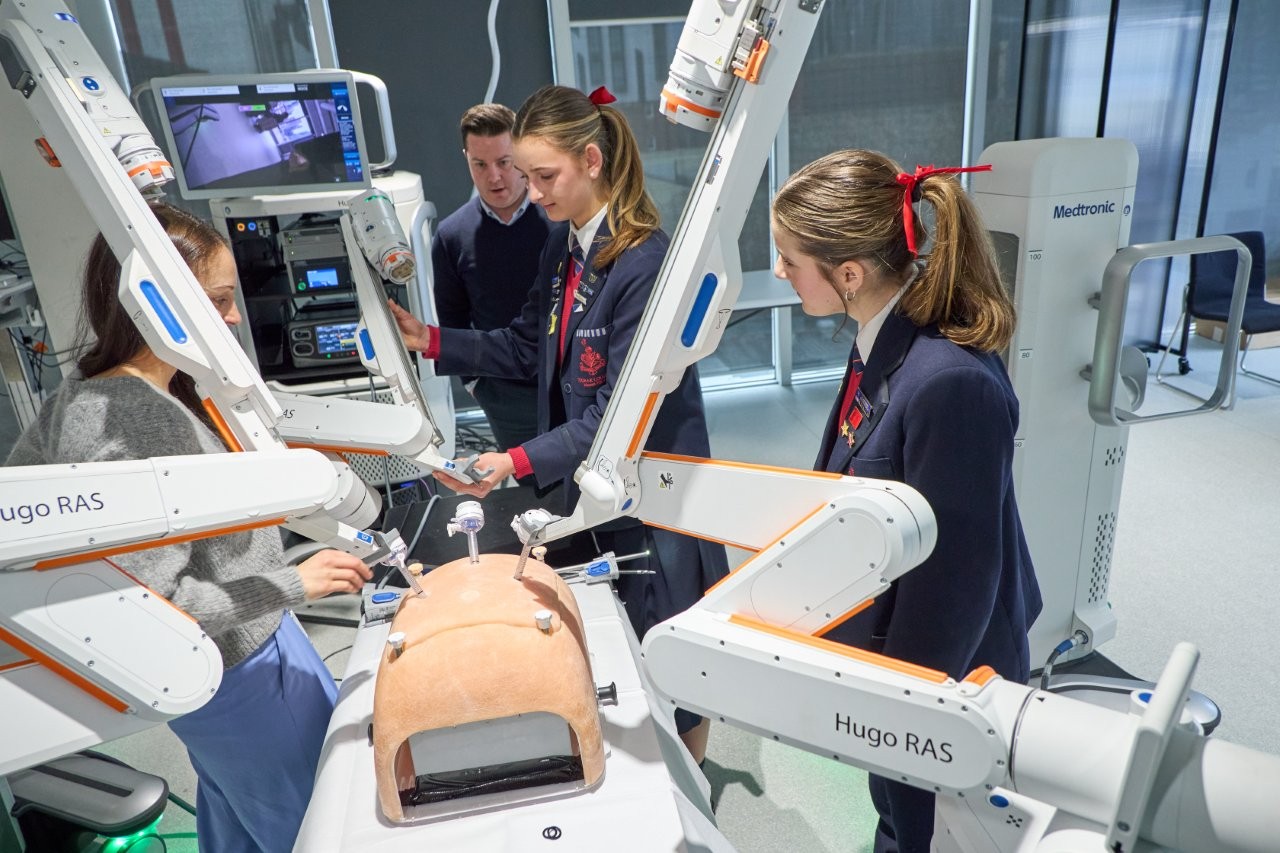
Following the pilot program, Toorak College plans to launch and share the curriculum as a ‘nationwide model’ over the next 6-12 months, helping more students access this level of education and training.
Dr Jade El-Mohamed, one of IMRA’s trainers, says in terms of gender equity, a significant benefit of the IMRA training method is the proficiency-based learning and its ability to help surgeons return to work and regain skills after prolonged periods of absence, particularly those surgeons who take parental leave.
“In most cases, surgeons who take extended leave from the workplace are women,” El-Mohamed says.
The IMRA training model provides one of the most effective ways to regain skills, shortening the learning curve with the latest surgical technology that can boost performance and help people confidently return to the workforce.”
So far, 21 Toorak College students have completed the micro-credential.
One Year 10 student called the program a ‘once in a lifetime opportunity’.
“Being able to go into a company that combines robotics and surgery, truly opens your eyes to how the medical field is evolving and how surgery is becoming less invasive,” she said.
“Going to IMRA has encouraged me to follow my dreams into the medical field even further and discover job opportunities that I may have not known about prior to this experience.”
Another said It was “an amazing opportunity to gain an insight into what the future of surgery may look like, as technology continues to rapidly advance”.
“The IMRA opportunity allows you to experience techniques used by surgeons in this quickly developing field through a hands-on approach.”
Following the pilot program, Toorak College plans to launch and share the curriculum as a ‘nationwide model’ over the next 6-12 months, helping more students – across both independent and public sectors – access this level of education and training.
“Unfortunately not all schools have equal resources, and one way we can help beyond our gates is to share what we have learnt and provide a ‘ready to go’ curriculum along with any advice on implementation," Brown says.
"The curriculum documentation includes multiple program lengths and focus points. We've designed a program for Year 10 students that is a ‘general introduction to robotic surgery’ but then can be extended with either robotics or a science-based focus, depending on the interest of the student group.
"The course is predominately taught in a classroom setting, with an on-site visit built into the program."