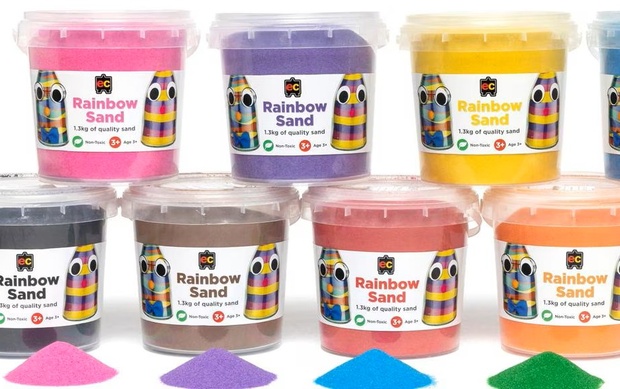
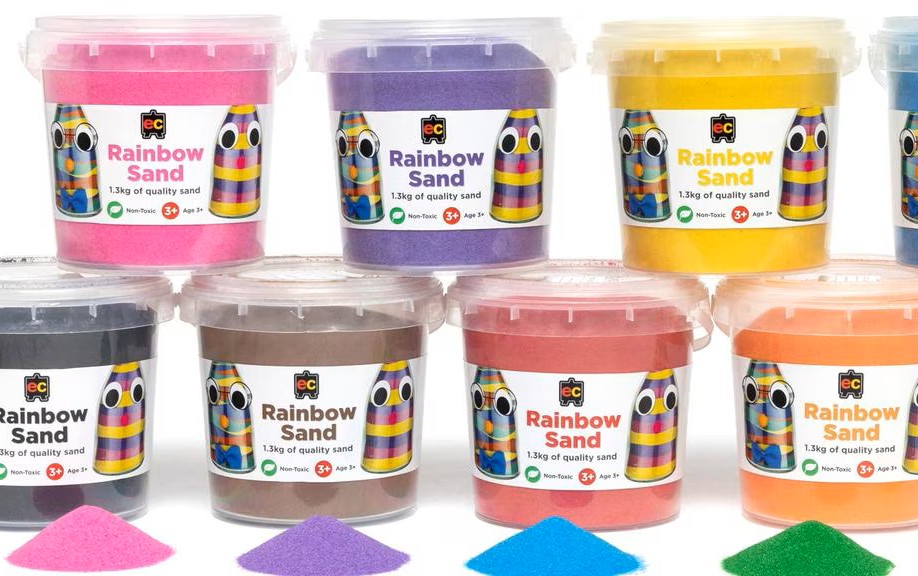
In South Australia, while the number of public education sites that have reported coloured sand linked to the contamination scare has risen above 350, education authorities in the state say there is no plan for closures at this stage. Two Catholic schools remain temporarily closed, however.
More than 70 ACT schools were closed on Monday for decontamination after testing detected traces of asbestos in play sand products.
At least five NZ schools were shut down after using the affected sand products with more than 100 contacting the Government seeking advice.
The ACT Government said more than 50 schools reopened on Tuesday with another 16 “partially open”. About 25 will remain closed.
Nine Tasmanian Catholic schools where the sand has been used closed or partially close on Tuesday to allow for testing and cleaning.
“While expert advice indicates the risk to our students and staff is very low, we are taking every precaution to ensure our school environments remain safe,” Catholic Education Tasmania executive director Gerard Gaskin said in a statement.
Schools were initially shut in Australia on Friday after a national recall notice for sand products supplied by Educational Colours.
More shutdowns were announced after recalls were issued by Kmart and Target on Saturday for a sandcastle building set as well as blue, green and pink magic sand.
Safety alerts have been issued in nearly every state and territory urging schools, consumers and service providers to stop using the recalled sand products.
South Australia education chief Professor Martin Westwell has left open the option of removing all coloured sand products from public schools regardless of their brand.
At about 140 SA schools and preschools, the sand has been reported as “loose”, but the department said it had already been removed from several sites.
The department said the sand has either been secured at a majority of the locations or has been confined to isolated areas.
“The sand’s in a pot, in a bag, it’s safe, it’s away, and we’ll get to those sites and collect that,” Westwell told ABC Radio Adelaide.
“The other sites are sites where perhaps the sand is out, maybe even kind of stuck up on the wall, on artwork or out on a table somewhere, and the advice from SafeWork has been to get asbestos removal contractors to get in and remove that and that’s exactly what we’re doing.”
Parents have been urged not to be unduly alarmed about a contamination threat, with experts saying testing had only identified trace elements of asbestos.
The types found in the play sand were chrysotile and tremolite, less hazardous than blue asbestos and not a respiratory threat, University of Adelaide biomedical lecturer Ian Musgrave said.
“You won’t get these fibres lofted into the air and inhaled,” Dr Musgrave said
“It still doesn’t mean there’s zero risk but the risk is very low.”
Asbestos diseases were more associated with years of industrial exposure, while low or fleeting exposure posed low risks, he said.
Expert Anthony Linton agreed asbestos did not appear to be airborne in the latest scare which helped minimise the risk, saying the contamination threat at the schools was considered “very low”.
“However, you can never say 100 per cent and that’s why the appropriate amount of caution is essential,” Dr Linton, from the Asbestos and Dust Diseases Research Institute, said.
Authorities were taking reasonable action by closing schools to remove the sands, the experts said.
Parents have also been urged to be on alert for toxic sand disposal at their homes.
People who find the suspect sand should put on disposable gloves, place the product in a container then use a double-taped heavy-duty plastic bag.
They should then go to the Asbestos and Silica Safety Eradication Agency website for guidance on safe disposal and not put it in the household bin.
(with AAP)