
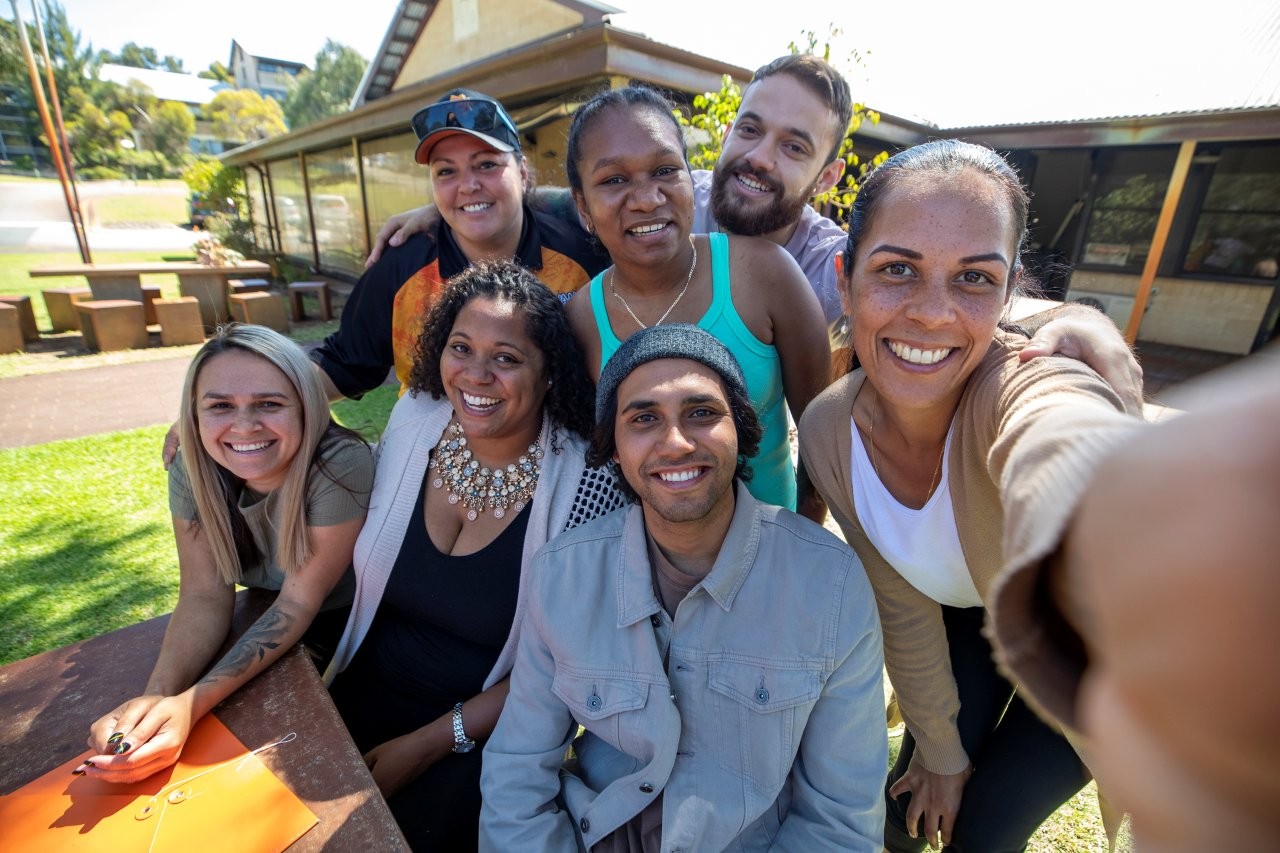
It’s clear, however, that in order to optimise the learning and opportunities of the next generation of indigenous leaders, more teachers with Aboriginal and Torres Strait Islander backgrounds are needed, particularly in schools with high populations of First Nation students.
Professor Rhonda Oliver, a leading researcher in applied linguistics and second language acquisition at Curtin University, says it’s a matter of urgency that ITE courses nationwide prioritise more students with Indigenous backgrounds.
“Good teachers identify their students’ strengths and needs and provide the type of teaching support – or scaffolding – to help their students to learn, moving them from where they are to where they need to get,” Oliver tells MCERA.
“In schools with high population of First Nation students, gaps appear because non-Aboriginal teachers may not have the background nor be sufficiently aware to provide the type of culturally and linguistically appropriate support their students need.
“Instead, generic ‘one-size-fits-all methods and off the shelf programs (often developed elsewhere and for other cohorts of students) are imported and used, with these running roughshod over the context and background of the learners.”
In South Australia, in a special collaboration, ACER (the Australian Council for Educational Research) is responding by partnering with the UniSA to ensure financial pressure is not a barrier to Aboriginal students completing teacher training.
Professor Shane Dawson, Executive Dean of UniSA Education Futures, says after the first year of study it can become challenging for students to juggle their studies with work commitments and practicum demands, and the university had seen many Aboriginal students ‘dropping off’.
“This partnership is a significant step forward in addressing the inequities that too often prevent Aboriginal students from realising their potential in education,” Dawson says.
UniSA has also been taking steps to address shortcomings in First Nations knowledge and curriculum inclusion of its non-Indigenous ITE students.
In a study released in April last year, UniSA researchers found that pushing preservice teachers outside their comfort zones helped educate them about the injustices faced by First Nations’ people – including racism, prejudice and discrimination – and to more confidently integrate Aboriginal and Torres Strait Islander content into their lessons.

“Clearly there is a need for more Aboriginal teachers – particularly those who will stay and work long-term in their own communities,” Professor Rhonda Oliver says. “They can be instrumental in providing the type of learning that is engaging for students.”
Encouraging preservice teachers to prioritise First Nations knowledges into their teaching is an essential element of the Australian Professional Standards for Teachers to deliver the best possible educational opportunities for Aboriginal and Torres Strait Islander students.
It also stipulates that teachers must engage all Australian students with current, accurate and culturally robust knowledge about First Nations histories cultures and languages.
But it’s not always easy, especially when most Australian teachers, preservice teachers, and teacher-educators come from European-Australian backgrounds, UniSA Adjunct Associate Professor Kathy Paige, says.
“What this means is that their knowledge of Australian histories and living cultures is limited by what they’ve been exposed to,” she says.
For a group of UniSA student teachers, the opportunity to teach in remote South Australia offers more than cultural immersion – it’s a chance to connect with community, embrace new ways of learning, and potentially spark a career in Aboriginal education.
During NAIDOC Week, UniSA has been highlighting its remote teaching placements in the Anangu Lands, spanning Anangu Pitjantjatjara Yankunytjatjara (APY) and Yalata Lands, aiming to inspire future teachers, while addressing workforce shortages in regional and remote Australia.
The timing is significant, with the State’s Aboriginal Education Strategy, Impact Report showing that teaching support in the APY Lands has helped deliver the highest average preschool attendance in five years.
Already, four of last year’s eight placement students have returned to continue teaching in the APY Lands while completing their degrees.
With more than 30 years’ experience in Aboriginal education, UniSA’s Associate Director: Regional Engagement, Dr Sam Osborne, says encouraging students to explore remote teaching placements is vital to building the remote workforce.
“When there’s a teacher shortage in Australia, we know there’s a desperate teacher shortage in rural and remote Australia,” Osborne says.
“These areas can seem daunting – they’re unfamiliar, far from family and friends, and may lack creature comforts – but they also offer incredibly rewarding experiences in close-knit and supportive communities.
The placement program provides UniSA third-year education students with a unique opportunity to spend six weeks living and teaching in Anangu communities, alongside the world’s oldest continuing culture.
“They live, learn and teach between the classroom, and on Country. Whether it’s working with Elders to link native plants with science, teaching kindy kids colours in Pitjantjatjara and Yankunytjatjara, or making maths fun by tallying bird species observed on Country.
“Importantly, students are supported by the community as they learn their craft in a cultural and language context that few Australians ever encounter.”
Oliver is renowned for her work with child language learners and Aboriginal education.
Her research has shaped national conversations around dialect acquisition and educational equity.
She acknowledges the importance of non-Indigenous student placements in remote communities and the part teachers from outside of communities play in addressing shortages, but says in the long-term it is vital that Indigenous students are not only taught by Indigenous teachers, but those willing to stick around.

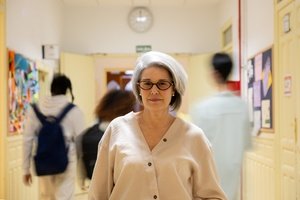
As well as supporting their students in the key areas of learning, culture and community, Aboriginal and Torres Strait Islander educators can be role models for those reaching the end of their schooling. PHOTO: Julia M Cameron
“In regional and remote schools, the situation is exacerbated by the constant turn-over of non-local staff,” Oliver explains to MCERA.
“As a result, students do not have the time or opportunity to develop the type of relationships that enhance their school engagement.
“Clearly there is a need for more Aboriginal teachers – particularly those who will stay and work long-term in their own communities.
“They can be instrumental in providing the type of learning that is engaging for students (e.g., ‘both-ways’ and ‘On Country’ learning).
These teachers, Oliver says, are important as they provide role models that Aboriginal and Torres Strait Islander students can aspire to, increase education outcomes among students, and develop a better Indigenous cultural understanding for all.
Encouragingly, RMIT University has launched a new centre Yoonggama Ma Nga, which will support self-identified land-based learning and research opportunities for First Nations people.
The centre will operate autonomously, however, a dedicated hub has been established at the RMIT City Campus in Melbourne to provide a physical meeting point for First Nations students and academics.
Deputy Vice-Chancellor Design and Social Context and Vice-President Tim Marshall says the university’s vision is for Yoonggama Ma Nga to be the first stepping stone towards a sovereign, self-determined First Nations academy.
“Yoonggama Ma Nga is part of RMIT’s commitment to carving out safe and inclusive spaces for First Nations academics, who can operate on their own terms, with operational support from RMIT,” Marshall says.
“Its establishment signifies a new paradigm, in which First Nations academics will determine their own research priorities, training and learning needs.”